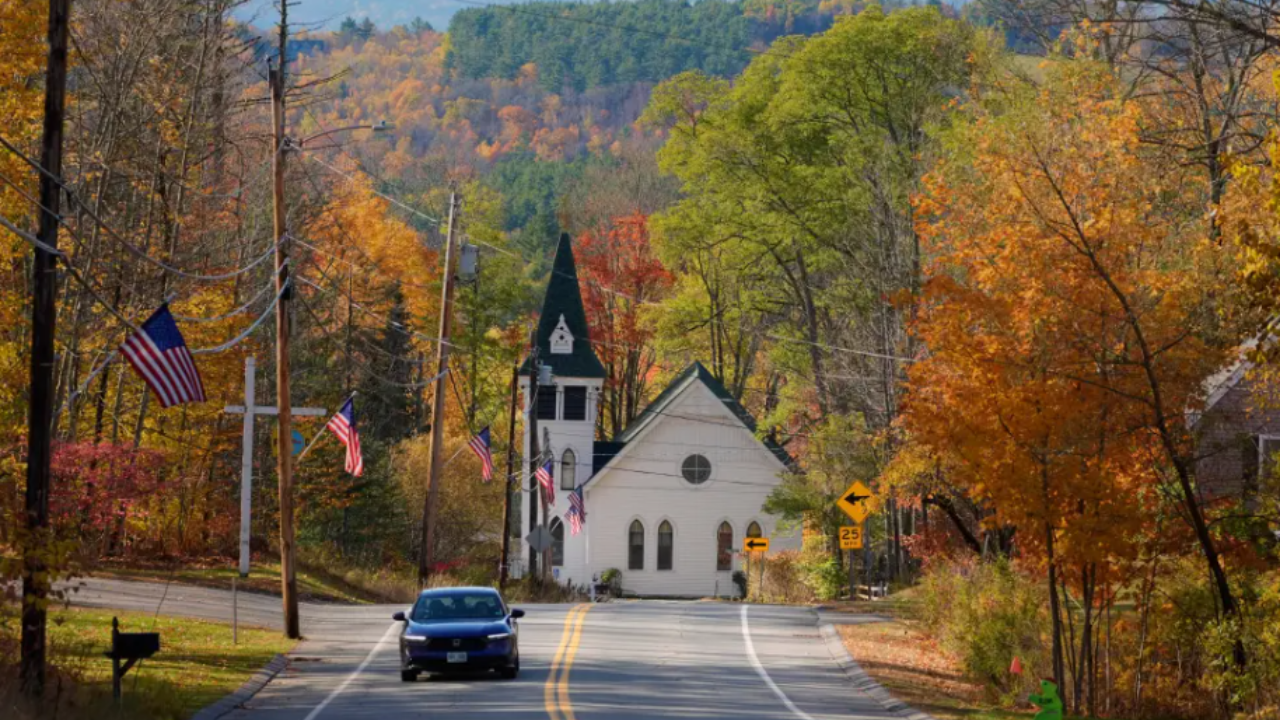
©(AP Photo/Robert F. Bukaty)
Pre-reading Questions:
I will read each question. Then, please answer them.
- Why do you think small towns might have more challenges when it comes to health care?
- What do you think makes a community feel safe and supported when someone gets sick?
Vocabulary:
I will read the words, meanings, and sample sentences. Then, repeat after me.
- reduction /ri-DUHK-shuhn/
[noun] – the act of making something smaller or less
The school made several reductions in activities because of limited money. - shortage /SHAWR-tij/
[noun] – a lack of something that is needed
There was a teacher shortage at the local school last year. - saving /SEY-ving/
[noun] – money that is not spent; money kept by reducing costs
The new bus system created savings for the city by lowering fuel costs. - unstable /uhn-STEY-buhl/
[adjective] – not steady or not safe; likely to change or fall
The company’s unstable finances made workers worry about their jobs. - strain /streyn/
[noun] – pressure or difficulty that makes a situation hard to manage
The long work hours put a strain on the team during the busy season.
Article Reading:
Please read the whole article. Then, I will check your pronunciation and intonation.
A rural health center in Franconia, a small town in northern New Hampshire, closed permanently in October after receiving major reductions in Medicaid funding. The facility, operated by Ammonoosuc Community Health Services, had provided medical care to about 1,400 patients from nearby towns such as Easton, Lincoln, and Sugar Hill. The closure took place during a period of growing financial pressure on rural health systems. Data from the Center for Healthcare Quality and Payment Reform showed that more than 100 hospitals across the United States have closed in the past decade, while many others remain at risk because of similar financial problems. Analysts stated that shrinking federal support and rising insurance expenses have created a difficult environment for community health centers, especially in regions with older residents and higher rates of chronic illness.
Ammonoosuc administrators reported that the Medicaid cuts produced a budget shortage of nearly $500,000. As a result, the organization decided to close the Franconia site, which used leased space and offered the greatest savings. A study from the National Association of Community Health Centers also reported that many facilities across the country have very limited financial reserves, with almost half holding fewer than 90 days of operating funds. Experts warned that this unstable situation may lead to reduced services and longer travel distances for patients in rural communities. Local leaders expressed concern that losing familiar medical providers could weaken continuity of care and increase reliance on emergency departments already under strain.
Ammonoosuc administrators reported that the Medicaid cuts produced a budget shortage of nearly $500,000. As a result, the organization decided to close the Franconia site, which used leased space and offered the greatest savings. A study from the National Association of Community Health Centers also reported that many facilities across the country have very limited financial reserves, with almost half holding fewer than 90 days of operating funds. Experts warned that this unstable situation may lead to reduced services and longer travel distances for patients in rural communities. Local leaders expressed concern that losing familiar medical providers could weaken continuity of care and increase reliance on emergency departments already under strain.
Comprehension Questions:
I will read each question. Then, please answer them based on the article.
- Where was the rural health center located?
- Why did the health center close permanently?
- What kind of pressure were rural health systems facing during the closure?
- What did analysts say was shrinking, making the situation difficult?
- What concern did local leaders express about losing familiar medical providers?
Discussion Questions:
I will read each question. Then, please answer them.
- Have you ever visited a small health center in your town? If so, what service did you receive there? If not, where do you usually go when you need medical care?
- Has a place you needed ever closed in your community? If so, how did it affect you? If not, what place would be difficult to lose in your town?
- Do you agree that communities should try to protect important services, like health centers?
- Why do you think many people worry when a health center closes in their area?
- What do you think a community can do to support patients when services are reduced?