©(San Diego Zoo Wildlife Alliance via AP)
Pre-reading Questions:
I will read each question. Then, please answer them.
- What animals do you think can live for a very long time? Why do you think so?
- How would you feel if you met an animal that was older than most people you know?
Vocabulary:
I will read the words, meanings, and sample sentences. Then, repeat after me.
- lifespan /LAHYF-span/
[noun] – the length of time that a person, animal, or thing lives
The lifespan of the parrot at the rescue center was more than 70 years. - wild /wahyld/
[noun] – a natural place where animals or plants live without human control
The panda was born in the wild before moving to the research center. - extinct /ik-STINGKT/
[adjective] – no longer existing because the last member of the group has died
A rare bird in the region is now extinct after losing most of its natural habitat. - rebuild /ree-BILD/
[verb] – to make something strong or complete again after it has been damaged or reduced
Scientists are trying to rebuild coral reefs that were harmed by rising sea temperatures. - survival /ser-VAHY-vuhl/
[noun] – the state of continuing to live or exist
Clean water is important for the survival of many animals during hot seasons.
Article Reading:
Please read the whole article. Then, I will check your pronunciation and intonation.
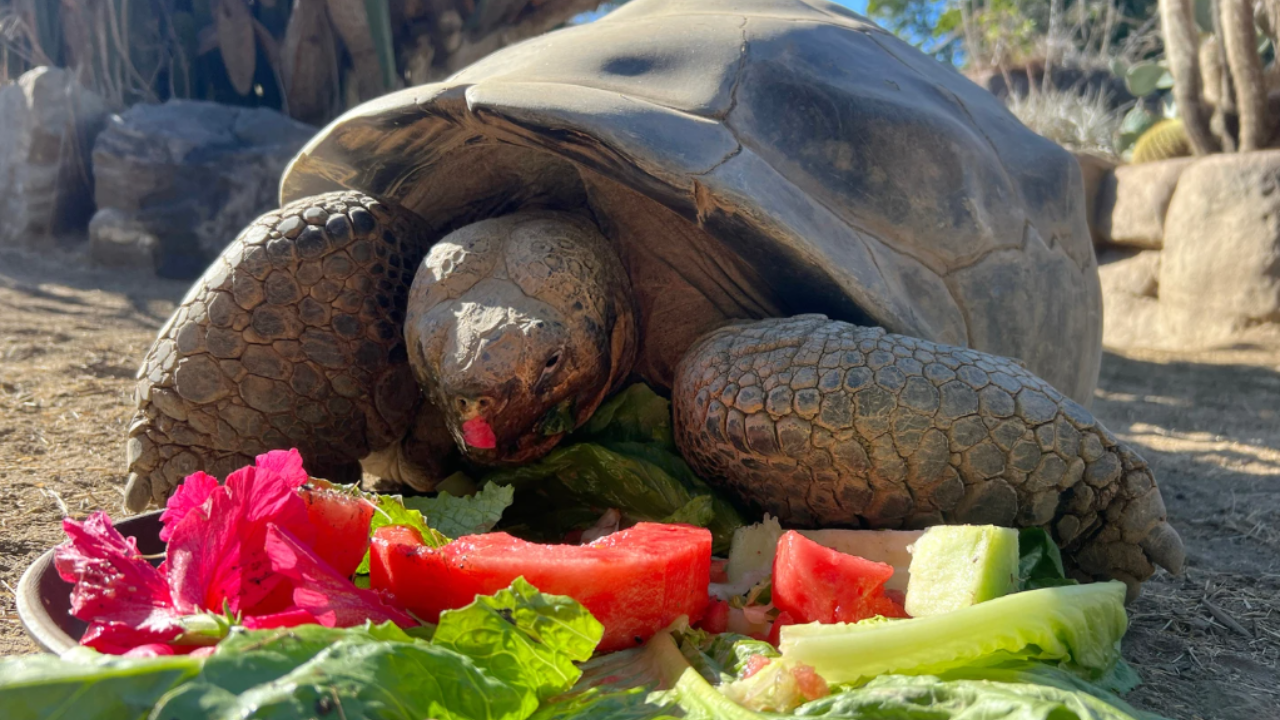
A Galápagos tortoise named Gramma died at the San Diego Zoo on November 20, 2025, after an estimated lifespan of about 141 years. Records showed that the tortoise originally came from the Galápagos Islands and later arrived from the Bronx Zoo, possibly in 1928 or 1931, for an early conservation program. Gramma lived through major global events, including two world wars and the terms of 20 United States presidents. Zoo specialists said the animal developed severe age-related bone problems that worsened in recent months, and the tortoise was euthanized to prevent additional suffering. Many visitors shared memories of seeing Gramma, and longtime guests described the animal as a symbol of endurance and natural heritage. Experts noted that Galápagos tortoises usually live more than 100 years in the wild and can reach nearly double that age with human care.
Veterinarians reported that Gramma received specialized support during the final stage of life, including monitoring for skeletal changes often seen in elderly tortoises. The zoo also described the wider conservation situation. Galápagos tortoises include 15 subspecies, with three already extinct and the remaining groups listed as vulnerable or critically endangered by the International Union for Conservation of Nature. Breeding programs have released more than 10,000 young tortoises into natural habitats since 1965 to rebuild populations. Recent hatchings at two United States zoos showed that even very old adults can still reproduce. Scientists said ongoing protection, targeted research, and careful habitat management remain essential for long-term survival.
Veterinarians reported that Gramma received specialized support during the final stage of life, including monitoring for skeletal changes often seen in elderly tortoises. The zoo also described the wider conservation situation. Galápagos tortoises include 15 subspecies, with three already extinct and the remaining groups listed as vulnerable or critically endangered by the International Union for Conservation of Nature. Breeding programs have released more than 10,000 young tortoises into natural habitats since 1965 to rebuild populations. Recent hatchings at two United States zoos showed that even very old adults can still reproduce. Scientists said ongoing protection, targeted research, and careful habitat management remain essential for long-term survival.
Comprehension Questions:
I will read each question. Then, please answer them based on the article.
- Which zoo did Gramma arrive from before living in San Diego?
- What major global events did Gramma live through during her long life?
- Why did zoo specialists decide to euthanize Gramma?
- How did many visitors and longtime guests remember Gramma?
- According to experts, how long do Galápagos tortoises usually live in the wild?
Discussion Questions:
I will read each question. Then, please answer them.
- Have you ever visited a zoo? If so, what animal did you remember the most, and why? If not, what animal would you like to see there, and why?
- Have you ever watched a video about animal care at a zoo? If so, what part of the care seemed most important? If not, what do you think zoo workers do each day to keep animals healthy?
- Do you agree that zoos should share information about an animal’s long life to help people understand its importance?
- Why do you think some animals, like Galápagos tortoises, can live for such a long time?
- How do you think zoos decide what kind of care very old animals need?