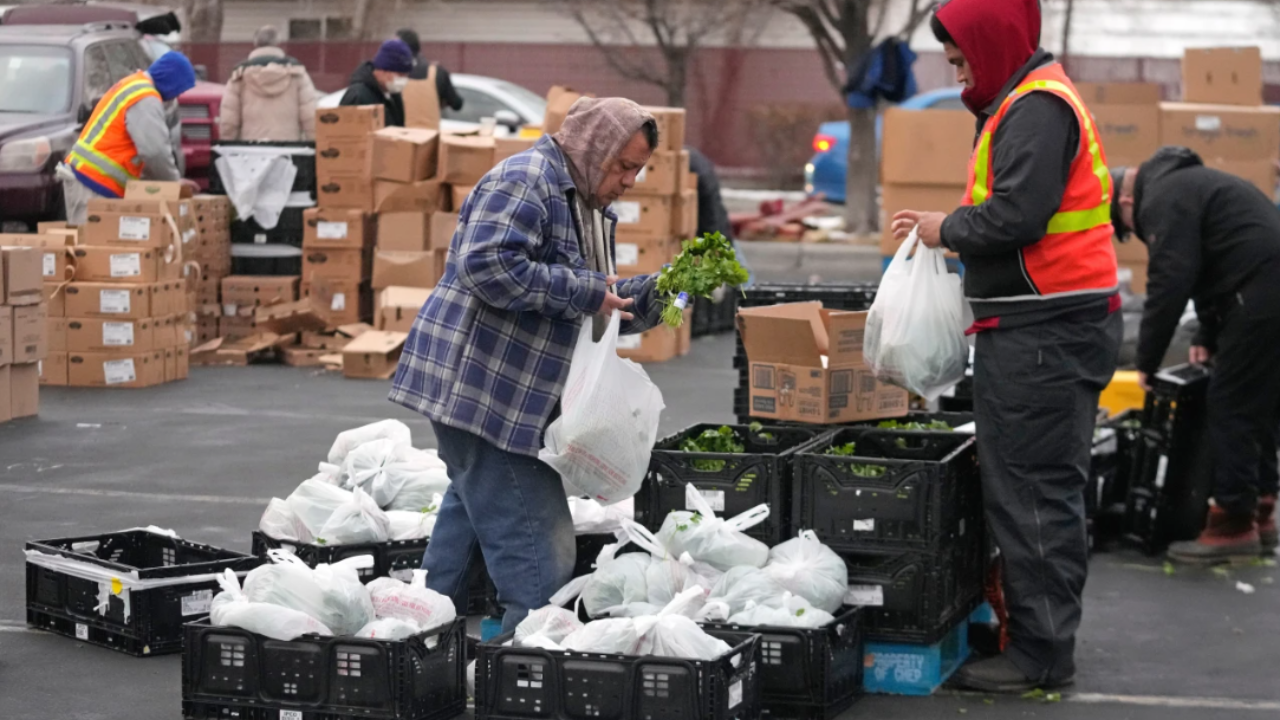
©AP Photo/Rick Bownmer, File
Pre-reading Questions:
I will read each question. Then, please answer them.
- What events in your community encourage people to help others?
- What traditions related to gratitude exist in your culture?
Vocabulary:
I will read the words, meanings, and sample sentences. Then, repeat after me.
- resonance /REZ-uh-nuhns/
[noun] – a lasting effect or emotional impact
The festival created emotional resonance for many families. - propensity /proh-PEN-suh-tee/
[noun] – a natural tendency to behave in a particular way
Many groups show a propensity to help during crises. - salient /al-troo-IS-tik/
[adjective] – showing concern for helping others
Volunteers often act for altruistic reasons. - convergence /kuhn-VUR-juhns/
[noun] – two or more things coming together
The event showed a convergence of ideas. - altruistic /SEY-lee-uhnt/
[adjective] – very noticeable or important
Gratitude is a salient theme during holidays.
Article Reading:
Please read the whole article. Then, I will check your pronunciation and intonation.
The holiday season in the United States leads to increased volunteer activity from Thanksgiving to New Year’s as food banks, charity groups, and community programs receive more support from local residents. These organizations prepare meals, organize donation drives, and assist with public spaces. Experts say the emotional and cultural resonance of the season strengthens the propensity for people to help because many traditions encourage gratitude and charitable behavior. Researchers note that the period’s customs create a salient environment that encourages participation in service activities.
Psychologists who study social behavior report that gratitude and generosity often grow together. Academic studies show a global convergence between festivals and altruistic actions in celebrations such as Christmas, Hanukkah, Diwali, Ramadan, and Eid al-Fitr. Evolutionary research adds that early human groups depended on cooperation for survival despite limited physical strengths. Experts explain that witnessing acts of kindness can inspire others to behave generously. Many older adults volunteer after retirement, joining community programs, helping with administrative needs, or assisting in disaster-response efforts. Researchers also say that simple gestures—such as greeting cards or reaching out to old friends—can rebuild relationships. These observations show how gratitude, tradition, and community support continue to influence volunteer work even outside holiday months.
Psychologists who study social behavior report that gratitude and generosity often grow together. Academic studies show a global convergence between festivals and altruistic actions in celebrations such as Christmas, Hanukkah, Diwali, Ramadan, and Eid al-Fitr. Evolutionary research adds that early human groups depended on cooperation for survival despite limited physical strengths. Experts explain that witnessing acts of kindness can inspire others to behave generously. Many older adults volunteer after retirement, joining community programs, helping with administrative needs, or assisting in disaster-response efforts. Researchers also say that simple gestures—such as greeting cards or reaching out to old friends—can rebuild relationships. These observations show how gratitude, tradition, and community support continue to influence volunteer work even outside holiday months.
Comprehension Questions:
I will read each question. Then, please answer them based on the article.
- When does volunteer activity increase in the United States?
- Which groups receive more support during this period?
- What tasks do these organizations prepare?
- What seasonal quality strengthens the propensity to help?
- What creates a salient environment for volunteering?
Discussion Questions:
I will read each question. Then, please answer them.
- What volunteer activity have you or your friends seen recently? If so, what made that activity meaningful or effective? If not, what volunteer activity would you like to see in your community?
- If you could join one service activity this month, what would it be? If so, what specific task would you want to do in that activity? If not, what type of service activity would motivate you to join?
- Do you agree that traditions can increase generosity? Why?
- How can communities encourage volunteering outside holiday seasons?
- Which small actions could create the biggest positive change in a neighborhood? Why?