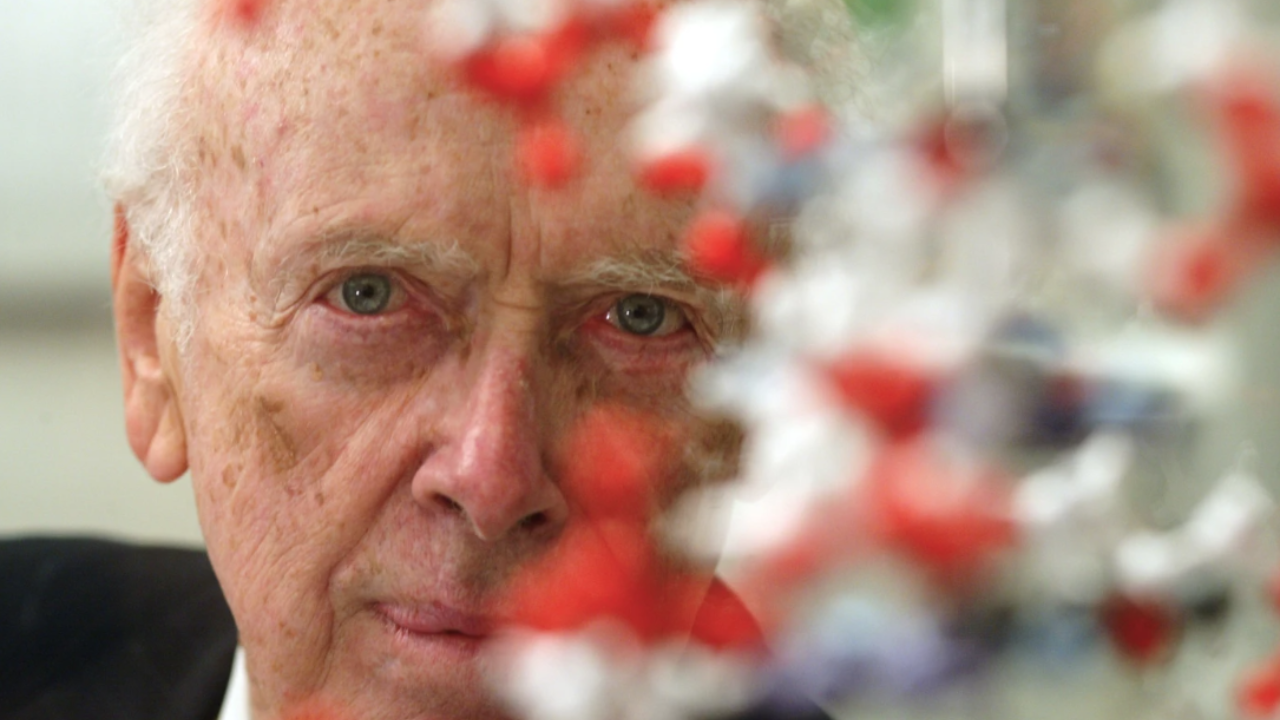
©AP Photo/Markus Schreiber, File
Pre-reading Questions:
I will read each question. Then, please answer them.
- What major scientific discoveries about DNA have been widely reported? How did these reports influence public interest?
- What controversies involving scientists have appeared in news before? How did those cases shape public reactions?
Vocabulary:
I will read the words, meanings, and sample sentences. Then, repeat after me.
- convergence /noun/
[kuhn-VUR-juhns] – the coming together of ideas, data, or conditions
The convergence of studies helped confirm the results. - precipitate /pri-SIP-uh-tayt/
[verb] – to cause something to happen suddenly or prematurely.
His remarks helped precipitate a debate in the community. - recontextualize /ree-kon-TEKS-tyoo-uh-lize/
[verb] – to place something in a new or different context
Teachers often recontextualize complex ideas for students. - disposition /dis-puh-ZIH-shun/
[noun] – a person’s usual way of behaving or thinking
Her calm disposition helped during the meeting. - ramification /ram-uh-fih-KAY-shun/
[noun] – a result or consequence, often one that is not expected
The policy change had a major ramification for workers.
Article Reading:
Please read the whole article. Then, I will check your pronunciation and intonation.
James Watson, whose name became closely tied to the discovery of DNA’s double helix, remained a prominent figure in discussions about the scientific and social effects of his work. His early collaboration with Francis Crick emerged from a significant convergence of structural data produced in British laboratories during the early 1950s. Their double-helix model clarified how hereditary information could be copied inside cells, a conclusion that quickly redirected global research priorities. Historians said the finding reshaped medicine, agriculture, forensics, and ethical discussion. The discovery also sustained long-standing attention on recognition disputes associated with the breakthrough.
Watson later became a public advocate for large research initiatives, including the Human Genome Project, where his statements helped precipitate intense debate. His efforts to recontextualize genetics within broader medical conversations, combined with a disposition toward direct commentary, strengthened discussions about scientific leadership and public engagement. Institutions noted that these developments illustrated a major ramification of the visibility held by scientific leaders. Specialists said the double helix remains central to biology, guiding advances in gene-based treatments, identification technologies, and the study of inherited disorders. Scholars emphasized Rosalind Franklin’s X-ray data and continued discussions over fair recognition.
Watson later became a public advocate for large research initiatives, including the Human Genome Project, where his statements helped precipitate intense debate. His efforts to recontextualize genetics within broader medical conversations, combined with a disposition toward direct commentary, strengthened discussions about scientific leadership and public engagement. Institutions noted that these developments illustrated a major ramification of the visibility held by scientific leaders. Specialists said the double helix remains central to biology, guiding advances in gene-based treatments, identification technologies, and the study of inherited disorders. Scholars emphasized Rosalind Franklin’s X-ray data and continued discussions over fair recognition.
Comprehension Questions:
I will read each question. Then, please answer them based on the article.
- Who worked with James Watson during the early research on DNA?
- What important conclusion did the double-helix model help explain about cells?
- Which fields did historians say were reshaped by the discovery?
- What long-term issue continued after the discovery was announced?
- What major research initiative did Watson later support publicly?
Discussion Questions:
I will read each question. Then, please answer them.
- What major scientific controversies have been discussed in your school or community? If so, what reactions or opinions did people express? If not, what kind of scientific issue might spark discussion?
- Have you observed cases where public comments affected a person’s career If so, what changes happened to that person afterward? If not, what situations do you think could lead to such consequences?
- Do scientific achievements remain valuable even when debates or disagreements arise about the research involved?
- How should scientific institutions balance achievement with accountability?
- What responsibilities arise when discoveries affect ethical or social issues?