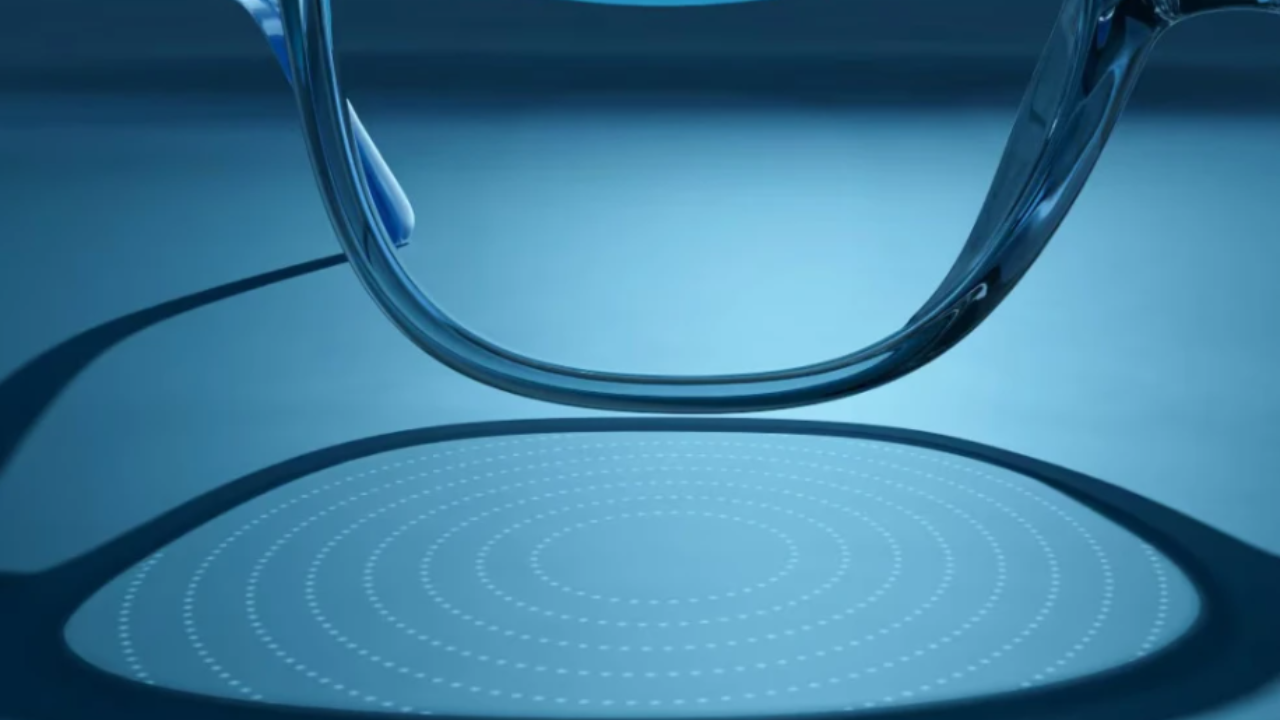
©(Luxottica via AP)
Pre-reading Questions:
I will read each question. Then, please answer them.
- What activities do children spend the most time on today?
- What do you usually do to rest your eyes after a long day?
Vocabulary:
I will read the words, meanings, and sample sentences. Then, repeat after me.
- nearsightedness /NEER-sy-tid-ness/
[noun] – the condition of not being able to see far objects clearly
Doctors checked the child for nearsightedness during a school health exam. - distant /DIS-tuhnt/
[adjective] – far away
Distant signs were hard to read without glasses. - substantial /suhb-STAN-shuhl/
[adjective] – large in amount or size
The new training program led to a substantial improvement in test scores. - pivotal /PIV-uh-tl/
[adjective] – very important and able to cause change
The invention played a pivotal role in improving public safety. - underway /UHN-der-wey/
[adjective] – already started and in progress
A new health study is underway at the local hospital.
Article Reading:
Please read the whole article. Then, I will check your pronunciation and intonation.
A new type of eyeglass lens designed to slow childhood nearsightedness was approved by the United States Food and Drug Administration in September. The decision marked an important development in pediatric eye care as myopia rates continue to rise worldwide. Myopia, also known as nearsightedness, reduces the ability to see distant objects clearly and has become more common among children in recent years. Medical experts estimate that 30 to 40 percent of children in the United States develop myopia by the end of high school. Researchers have linked this increase to lifestyle changes, including more time spent indoors and extended periods of screen use or close reading.
Until recently, most treatments corrected vision but did not slow the progression of myopia. Specialists warned that this approach was limited because severe myopia increases the risk of serious eye conditions later in life, such as retinal damage, glaucoma, and cataracts. The newly approved lenses use a specialized optical design that changes how light reaches the retina, a process believed to slow abnormal eye growth. Company studies reviewed by regulators showed a substantial reduction in myopia progression after two years of use. Although the lenses are more expensive than standard glasses, experts described the approval as a pivotal step forward. Additional studies are now underway in the United States to confirm long-term results.
Until recently, most treatments corrected vision but did not slow the progression of myopia. Specialists warned that this approach was limited because severe myopia increases the risk of serious eye conditions later in life, such as retinal damage, glaucoma, and cataracts. The newly approved lenses use a specialized optical design that changes how light reaches the retina, a process believed to slow abnormal eye growth. Company studies reviewed by regulators showed a substantial reduction in myopia progression after two years of use. Although the lenses are more expensive than standard glasses, experts described the approval as a pivotal step forward. Additional studies are now underway in the United States to confirm long-term results.
Comprehension Questions:
I will read each question. Then, please answer them based on the article.
- What kind of eye problem are the lenses designed to slow?
- About how many children in the United States develop myopia by the end of high school?
- What lifestyle changes have researchers linked to the increase in myopia?
- What did most treatments do before the new lenses were approved?
- What serious eye problems can happen because of severe myopia?
Discussion Questions:
I will read each question. Then, please answer them.
- Have you ever used a phone or computer for a long time in one day? If so, how did your eyes feel after that time? If not, what activities do you usually do instead?
- Have you ever had an eye check or worn glasses because of vision problems? If yes, what vision problem was found? If not, how often do you think eye checks should be done?
- Do you agree that spending too much time indoors can affect children’s eyes?
- Why do children today spend more time indoors than before?
- Why is early eye care important for children?