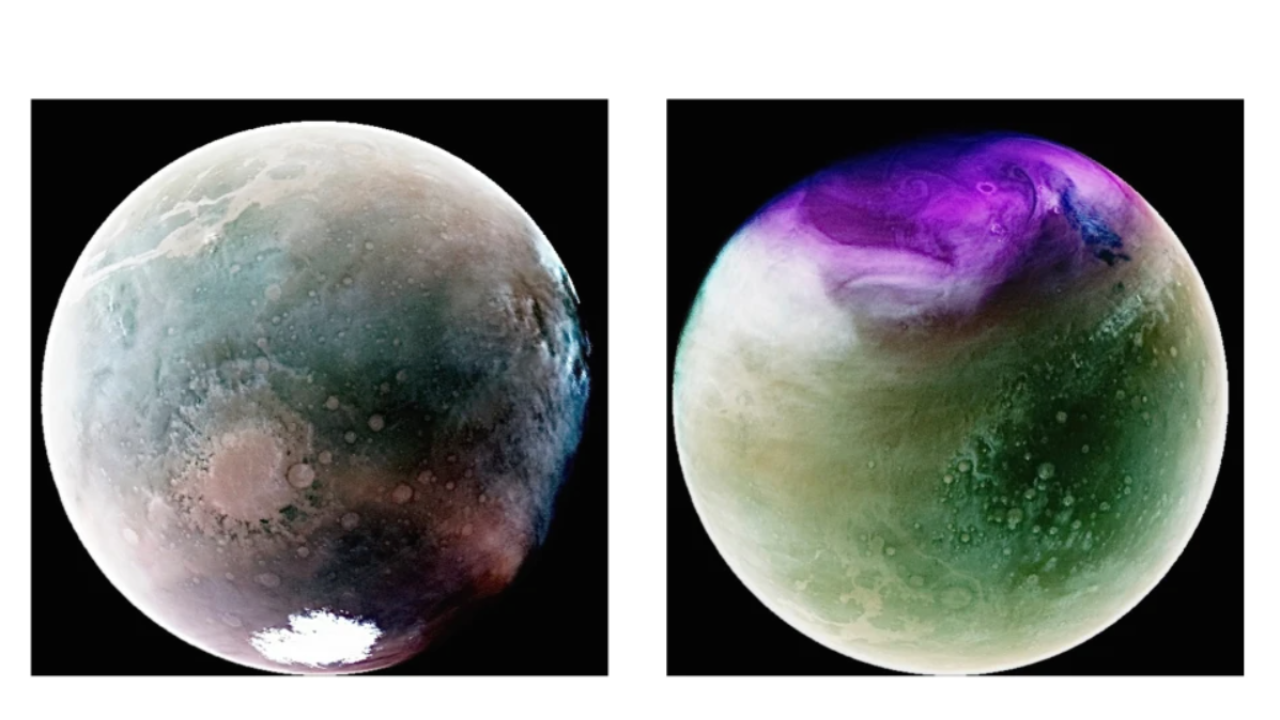
©NASA/LASP/CU Boulder via AP
Pre-reading Questions:
I will read each question. Then, please answer them.
- What news has been heard about Mars missions? What details were memorable?
- What space communication issues have been discussed before? Why were they important?
Vocabulary:
I will read the words, meanings, and sample sentences. Then, repeat after me.
- intractable /in-TRAK-tuh-bul/
[adjective] – very difficult or impossible to deal with
The team faced an intractable problem during the mission review. - obfuscate /OB-fuh-skayt/
[verb] – to make something less clear
The missing data started to obfuscate the team’s analysis. - recalibrate /ree-KAL-uh-brayt/
[verb] – to change or correct something so it works well again
NASA needed to recalibrate its communication steps. - precipitate /prih-SIP-uh-tayt/
[verb] – to make something happen suddenly
The silence could precipitate new plans for the Mars network. - apportion /uh-POR-shun/
[verb] – to divide something and share it among people or groups
The remaining orbiters may need to apportion their duties.
Article Reading:
Please read the whole article. Then, I will check your pronunciation and intonation.
NASA announced that the Maven spacecraft unexpectedly stopped sending signals after passing behind Mars over the weekend, prompting a detailed investigation into the sudden communication loss. The agency explained that the orbiter had been functioning normally before the event and had supported years of research on Mars’ upper atmosphere while helping relay data for surface missions. Since entering Mars orbit in 2014, Maven has supplied findings that helped scientists understand how the planet shifted from a warm and wet environment to its present dry state. The current silence raised concern because the spacecraft remains a key part of NASA’s operational network around the red planet, and officials confirmed that engineering teams immediately began reviewing all possible causes.
NASA reported that the team is evaluating whether unusual space-weather conditions could have intractable effects on the spacecraft’s systems, noting that solar activity can influence signal paths. Specialists warned that the silence may obfuscate diagnostic readings needed to restore contact, leading teams to recalibrate communication procedures during the recovery effort. Engineers added that the interruption could precipitate adjustments in how orbiters manage periods when Mars blocks direct transmission from Earth. Analysts also stated that mission planners may need to apportion responsibilities among NASA’s remaining orbiters to maintain essential data flow. While the assessment continues, the agency said that two other Mars orbiters remain fully operational and can support key tasks until Maven’s status becomes clear.
NASA reported that the team is evaluating whether unusual space-weather conditions could have intractable effects on the spacecraft’s systems, noting that solar activity can influence signal paths. Specialists warned that the silence may obfuscate diagnostic readings needed to restore contact, leading teams to recalibrate communication procedures during the recovery effort. Engineers added that the interruption could precipitate adjustments in how orbiters manage periods when Mars blocks direct transmission from Earth. Analysts also stated that mission planners may need to apportion responsibilities among NASA’s remaining orbiters to maintain essential data flow. While the assessment continues, the agency said that two other Mars orbiters remain fully operational and can support key tasks until Maven’s status becomes clear.
Comprehension Questions:
I will read each question. Then, please answer them based on the article.
- Which spacecraft stopped communicating?
- When did the signal loss occur?
- What had Maven been doing before the failure?
- Why is Maven important to NASA?
- What change in Mars is the mission studying?
Discussion Questions:
I will read each question. Then, please answer them.
- What communication problems have been seen in the community, if any? If so, what happened? If not, what situations might occur?
- What technology outages have been observed locally, if any? If so, how were these handled? If not, what problems could arise?
- Do you agree that space agencies should redesign systems after unexpected communication failures?
- How might long-term research change if older orbiters stop working?
- What steps should NASA take to support future communication stability?