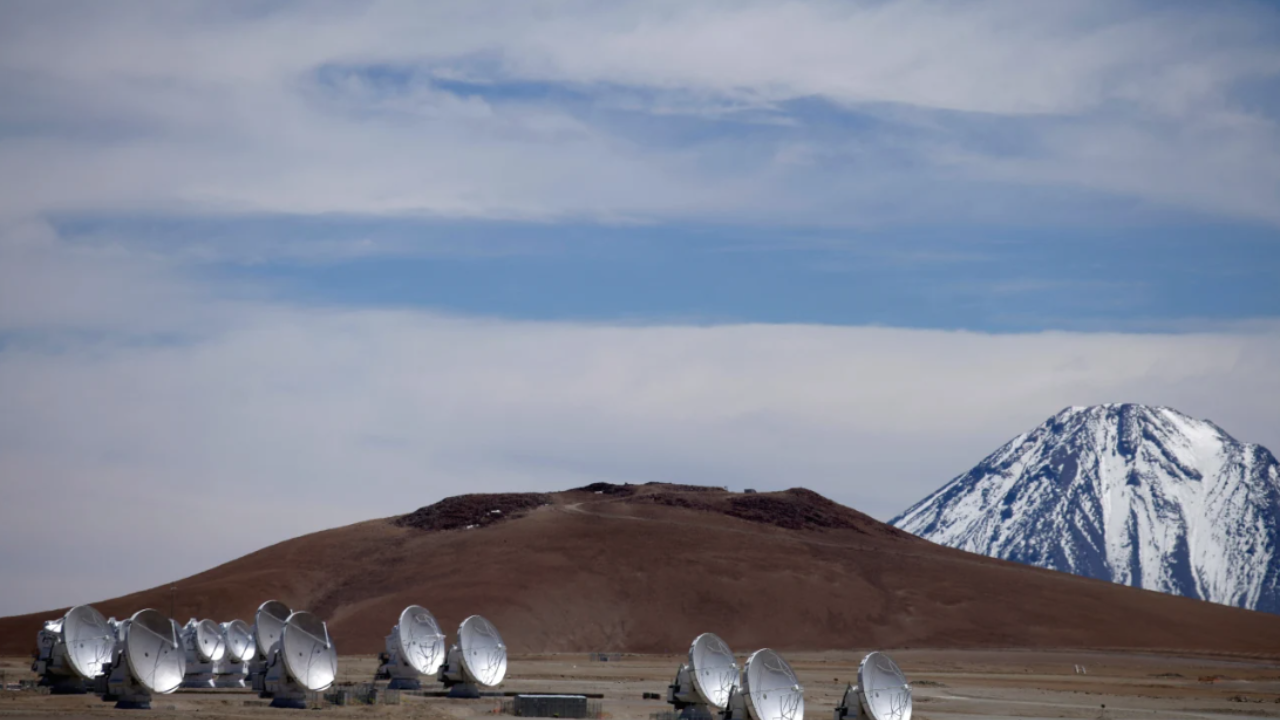
©AP Photo/Jorge Saenz, File
Vocabulary:
I will read the words, meanings, and sample sentences. Then, repeat after me.
- undermine /UHN-der-mahyn/
[verb] – to make something weaker or less effective
The change in regulations could undermine long-term research goals. - adverse /AD-vurs/
[adjective] – having a negative or harmful effect
The team warned that adverse conditions would slow future discoveries. - compromise /KOM-pruh-mahyz/
[verb] – to damage something or put it at risk
Even slight vibrations could compromise telescope accuracy. - acute /uh-KYOOT/
[adjective] – very serious or severe
Scientists described the risk as an acute challenge to astronomy. - diminish /Pronunciation: /dih-MIN-ish//
[verb] – to reduce or make something become less
New light sources could diminish the sharpness of astronomical images.
Article Reading:
Please read the whole article. Then, I will check your pronunciation and intonation.
Chile’s leading astronomy institutions issued a formal warning on Tuesday after a private developer advanced plans to build a large renewable-energy complex near the Paranal Observatory in the Atacama Desert, one of Earth’s darkest regions for scientific observation. Specialists said the proposal threatens a globally critical research site because new artificial light, dust, and atmospheric disturbance could undermine ongoing studies of planetary formation and cosmic evolution. The international community emphasized that the Atacama’s rare combination of dry climate, elevation, and minimal light pollution has enabled discoveries central to understanding the universe. Scientists argued that replacing these natural advantages with industrial activity would create an adverse environment for precision astronomy.
Officials explained that the project remains under environmental review, but astronomers expect major operational disruption if wind turbines, solar fields, and hydrogen-fuel facilities are constructed within close proximity to sensitive telescopes. ESO representatives said even small disruptions could compromise image stability, adding that light pollution in the area may increase by more than 30%. Researchers described the potential impact as an acute setback for global science because observatories in dark-sky regions are already limited. They also warned that losing Paranal’s clarity would diminish long-term progress on studies involving black holes, exoplanets, and early-universe behavior. Analysts stated that the dispute illustrates a broader global tension between conservation of natural darkness and expansion of large-scale industrial projects. Chile currently hosts nearly 40% of the world’s astronomy infrastructure, making decisions in the Atacama significant for scientific communities worldwide.
Officials explained that the project remains under environmental review, but astronomers expect major operational disruption if wind turbines, solar fields, and hydrogen-fuel facilities are constructed within close proximity to sensitive telescopes. ESO representatives said even small disruptions could compromise image stability, adding that light pollution in the area may increase by more than 30%. Researchers described the potential impact as an acute setback for global science because observatories in dark-sky regions are already limited. They also warned that losing Paranal’s clarity would diminish long-term progress on studies involving black holes, exoplanets, and early-universe behavior. Analysts stated that the dispute illustrates a broader global tension between conservation of natural darkness and expansion of large-scale industrial projects. Chile currently hosts nearly 40% of the world’s astronomy infrastructure, making decisions in the Atacama significant for scientific communities worldwide.
Discussion Questions:
I will read each question. Then, please answer them.
- What environmental concerns have been seen in the community, if any? If so, what actions followed? If not, what might occur if concerns arise?
- What development projects have been seen in local areas, if any? If so, how did the public respond? If not, how might community members respond?
- Do major scientific facilities deserve stronger protection from nearby development?
- How should governments balance industrial growth with scientific needs?
- What long-term risks arise when dark-sky locations disappear?
Summarization:
Please summarize the whole article using your own words and expressions. You will have one minute to prepare before you answer.
Describe:
Please explain the definition of each word listed below based on your understanding. You can provide example sentences if needed.
- warning
- observation
- elevation
- progress
- decision