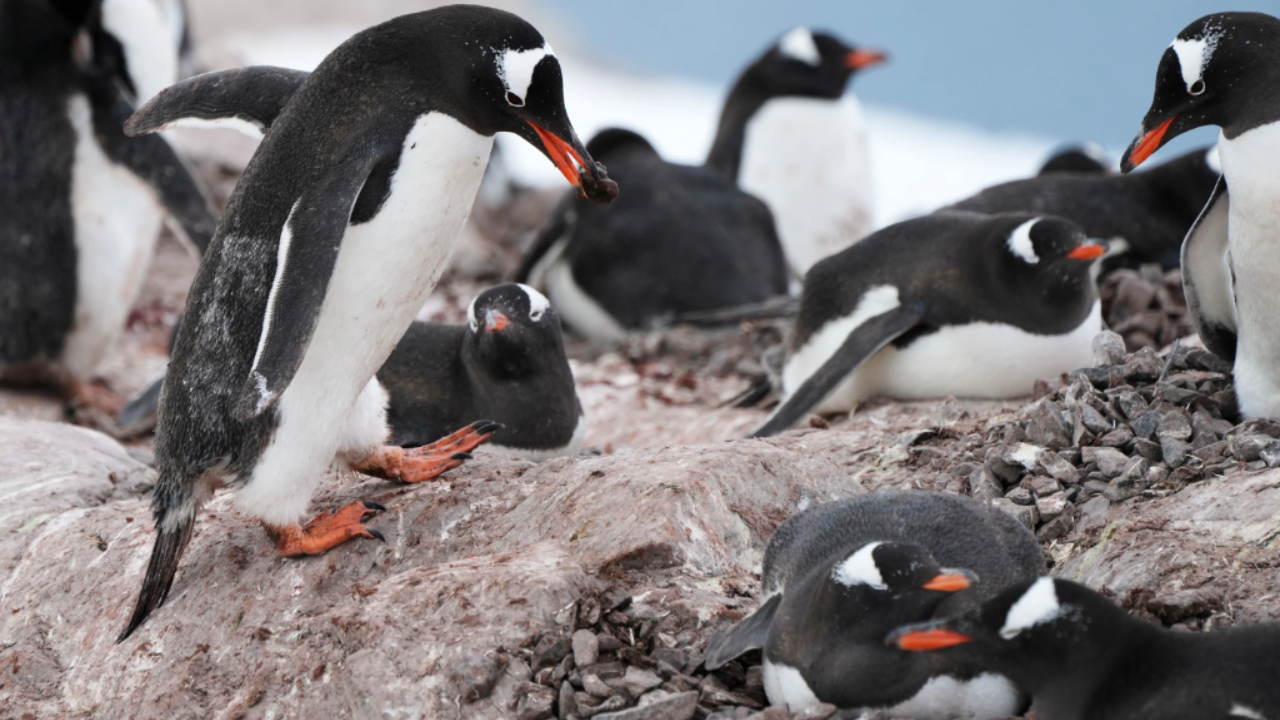
©(AP Photo/Mark Baker)
Vocabulary:
I will read the words, meanings, and sample sentences. Then, repeat after me.
- substantial /suhb-STAN-shuhl/
[adjective] – large in amount, size, or importance
The project required a substantial amount of time to complete safely. - fragile /FRAJ-uhl/
[adjective] – easily damaged or harmed
The museum protects fragile artifacts by limiting visitor access. - inevitable /in-EV-i-tuh-buhl/
[adjective] – certain to happen and unable to be prevented
Experts warned that flooding was inevitable unless stronger protection measures were put in place. - vulnerable /VUHL-ner-uh-buhl/
[adjective] – easily harmed or affected by danger or problems
Coastal communities are vulnerable to rising sea levels due to their low elevation. - implication /im-pli-KEY-shuhn/
[noun] – a possible effect or result of an action or situation
The policy change had serious implications for public transportation.
Article Reading:
Please read the whole article. Then, I will check your pronunciation and intonation.
The Antarctic Peninsula has become a major focus of scientific research because of rapid environmental change linked to global warming. Located at the northern edge of Antarctica and surrounded by the Southern Ocean, the region is known for powerful seas, glaciers, and highly adapted wildlife. In recent decades, rising global temperatures caused mainly by the burning of oil, gas, and coal have led to accelerated warming in this area compared with many other regions. Climate scientists describe the surrounding ocean as a substantial regulator of Earth’s climate because it absorbs large amounts of carbon dioxide produced by human activity. This development matters because the peninsula supports fragile ecosystems and functions as an early warning system for global climate trends. Visitors traveling through narrow passages such as the Lemaire Channel increasingly observe reduced ice cover, exposed rock, and altered animal behavior, highlighting why continued scientific observation in Antarctica is essential.
Recent studies explain how warming influences ice loss, ocean conditions, and wildlife distribution across the peninsula. Satellite measurements collected between 2002 and 2020 indicate that Antarctica lost about 149 billion metric tons of ice per year, a process viewed by researchers as inevitable without significant cuts to greenhouse gas emissions. Gentoo penguin populations have expanded farther south because open water and ice-free ground support nesting, while Adelie penguins remain vulnerable due to reliance on sea ice for resting and feeding. These changes affect food availability, predator patterns, and ocean balance, creating long-term implications for biodiversity and global sea levels.
Recent studies explain how warming influences ice loss, ocean conditions, and wildlife distribution across the peninsula. Satellite measurements collected between 2002 and 2020 indicate that Antarctica lost about 149 billion metric tons of ice per year, a process viewed by researchers as inevitable without significant cuts to greenhouse gas emissions. Gentoo penguin populations have expanded farther south because open water and ice-free ground support nesting, while Adelie penguins remain vulnerable due to reliance on sea ice for resting and feeding. These changes affect food availability, predator patterns, and ocean balance, creating long-term implications for biodiversity and global sea levels.
Discussion Questions:
I will read each question. Then, please answer them.
- Have you ever learned about climate change at school or online? If so, what topic did you find the most interesting or surprising? If not, where do you usually get information about environmental issues?
- Have you ever seen news or videos about Antarctica or polar regions? If so, what images or information stayed in your memory? If not, what part of Antarctica would you like to learn about first?
- Do you agree that Antarctica is an important place for understanding global climate change?
- Why do you think the Antarctic Peninsula is warming faster than many other regions of the world?
- What actions do you think are most important to slow down the environmental changes described in the article?
Summarization:
Please summarize the whole article using your own words and expressions. You will have one minute to prepare before you answer.
Describe:
Please explain the definition of each word listed below based on your understanding. You can provide example sentences if needed.
- research
- environmental
- global warming
- region
- wildlife