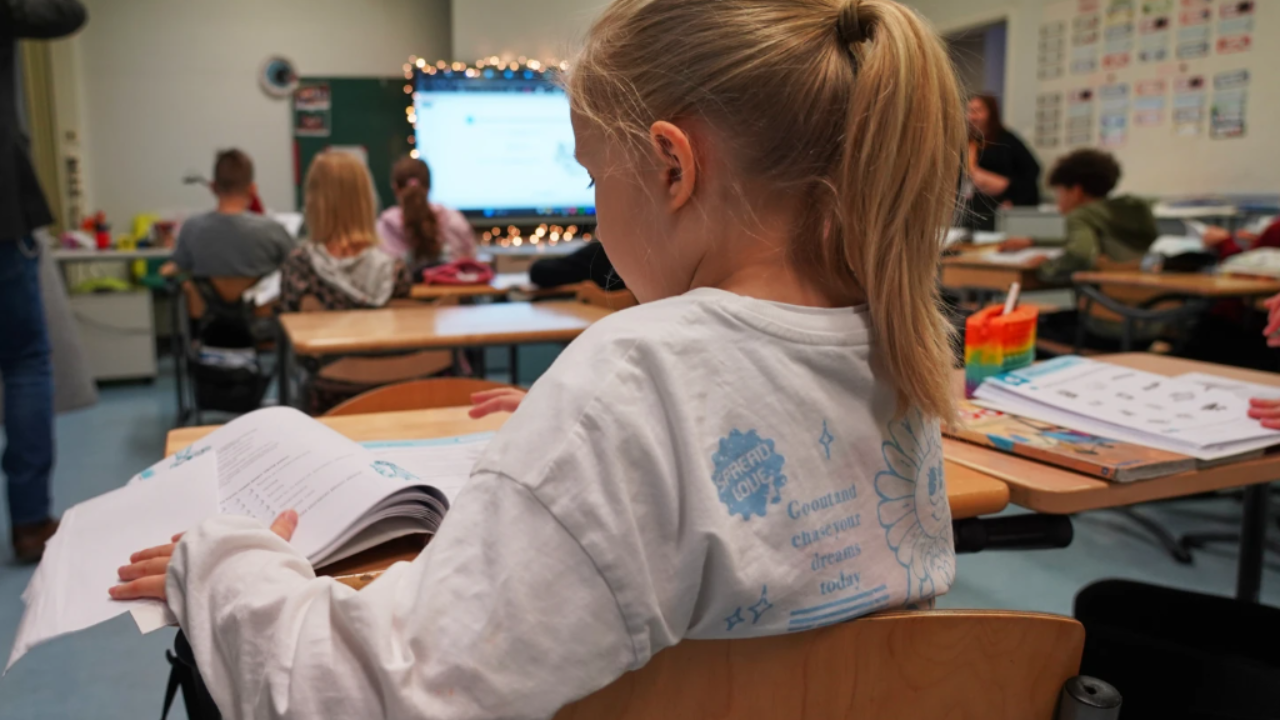
©(AP Photo/James Brooks)
Pre-reading Questions:
I will read each question. Then, please answer them.
講師がそれぞれの質問を読むので答えましょう。
- Do you read or watch news online every day?
- Do you sometimes feel unsure if online information is true?
Vocabulary:
I will read the words, meanings, and sample sentences. Then, repeat after me.
単語、意味、例文を読みます。講師に続いて音読しましょう。
- lesson /LES-uhn/
[noun] – a period of teaching on one subject
The science lesson starts with a short explanation from the teacher. - preschool /PREE-skool/
[noun] – a school for young children before elementary school
The child began preschool at the age of four. - gain /geyn/
[verb] – to get or receive something
The plan gained support after the company shared clear goals. - headline /HED-lahyn/
[noun] – the title at the top of a news story
The headline explained the main idea of the article. - influence /IN-floo-uhns/
[verb] – to affect how someone thinks or acts
Weather reports can influence travel plans.
Article Reading:
Please read the whole article. Then, I will check your pronunciation and intonation.
記事を音読しましょう。講師はあなたの発音とイントネーションを確認します。
Finland has a long-term plan to fight fake news by teaching media literacy from a young age. Media education has been part of the national school curriculum since the 1990s, and lessons begin in preschool. The program is used in schools across the country, including Helsinki, and helps students understand news, advertising, and online information. The policy gained more attention after 2022, when the war in Ukraine raised concerns about false information in Europe. Interest also increased after Finland joined NATO in 2023. Experts say Finland’s results come from long-term education and cooperation between schools, media companies, and public organizations. In classrooms, students learn how to check sources and compare headlines. Teachers explain how pictures and emotional language can influence opinions. Recent lessons include artificial intelligence, because AI images and videos are becoming more common online. Media companies support schools through programs like Newspaper Week, which offers free access to reliable news. Researchers warned that future AI tools may create more false content, but early education can reduce risks over time. This helps protect public trust in information systems nationwide.
True or False:
Read the sentences and identify if they are true or false based on the article.
文章を読んで、記事に基づいて正誤を答えましょう。
- Finland has a short-term plan to fight fake news.
- Media education started in Finland after 2020.
- Lessons about media literacy begin in preschool.
- Experts say Finland’s success comes from long-term education and cooperation.
- Teachers tell students to ignore pictures and emotional language.
Fill in the Blanks:
Choose the correct word from the table, then fill in the blanks.
適切な言葉を選んで空欄を埋めましょう。
| lesson | preschool | gained | headline | influence |
- Each driving ______ focuses on safety and basic skills.
- The athlete ______ confidence after regular practice.
- Many parents choose ______ to help children learn social skills.
- Friends often ______ each other’s choices.
- A clear ______ helps readers understand the topic quickly.