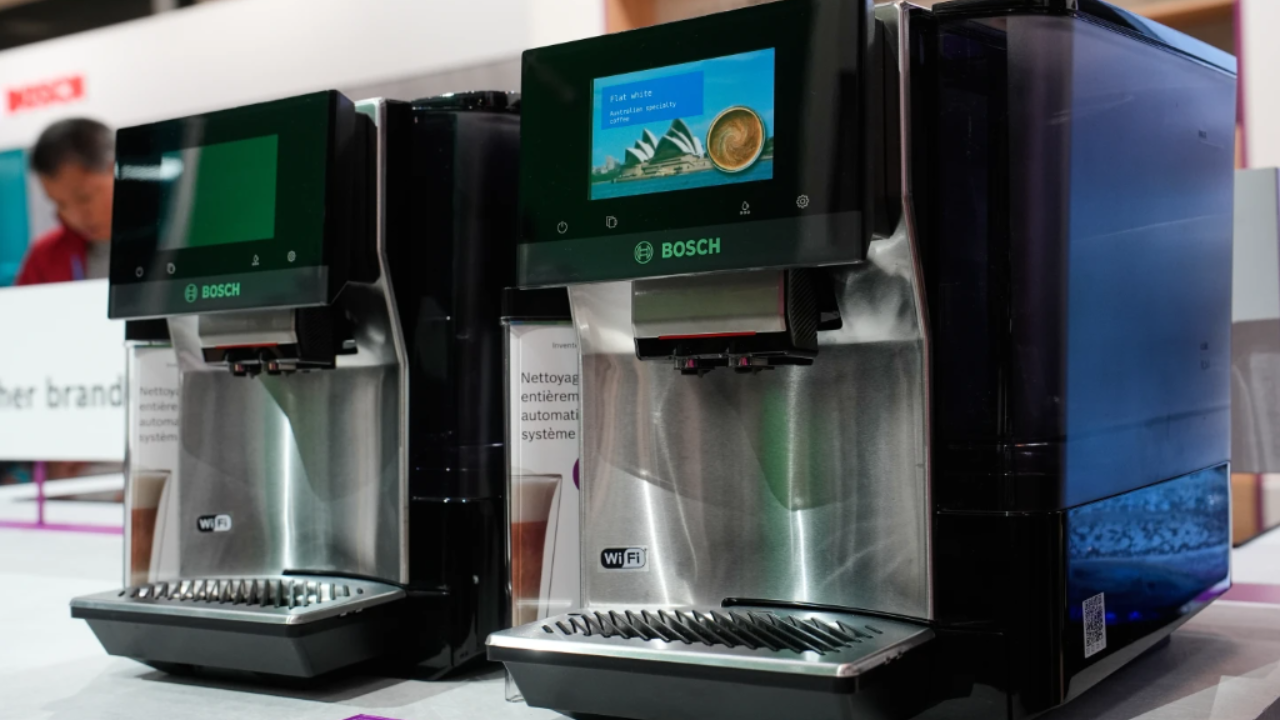
©(AP Photo/John Locher)
Pre-reading Questions:
I will read each question. Then, please answer them.
- What technology do you use at home every day?
- How does technology help you in your daily life?
Vocabulary:
I will read the words, meanings, and sample sentences. Then, repeat after me.
- privacy /PRAHY-vuh-see/
[noun] – the state of being free from unwanted attention or information sharing
The company updated its policy to improve customer privacy. - wasteful /WEYST-fuhl/
[adjective] – using more resources than necessary
The report described the old lighting system as wasteful. - reliability /ri-lahy-uh-BIL-i-tee/
[noun] – the ability to work correctly and consistently
The safety test focused on the reliability of the new train system. - disposable /dih-SPOH-zuh-buhl/
[adjective] – designed to be used once and then thrown away
The hospital reduced its use of disposable tools to cut waste. - convenience /kuhn-VEEN-yuhns/
[noun] – the state of being easy and helpful to use
Home delivery services are popular because of convenience.
Article Reading:
Please read the whole article. Then, I will check your pronunciation and intonation.
Artificial intelligence was a major focus at this year’s CES in Las Vegas in early January, where technology companies introduced new consumer products with advanced digital features. At the same time, consumer and privacy organizations announced the annual “Worst in Show” awards, which highlight products considered invasive, wasteful, or unreliable. The top award was given to a smart refrigerator made by Samsung that uses voice control and cameras to track food. Judges said these added features could reduce the reliability of an appliance meant mainly to keep food cold. The awards were organized independently from CES by groups such as Consumer Reports and iFixit, which examine how technology affects privacy, safety, and long-term use.
Judges said products were selected based on design quality, possible risks, and potential impact if widely adopted. New artificial intelligence features added to Amazon Ring doorbells were also criticized, with experts linked to the Electronic Frontier Foundation warning that increased monitoring tools need careful review. Specialists said continuous data collection could create long-term risks to privacy and security. Environmental concerns were also raised about devices that use disposable electronic parts, which increase electronic waste. Companies said artificial intelligence features are designed to improve convenience and user experience. Organizers explained that the awards aim to encourage better product design rather than target individual brands, reflecting a broader discussion about responsible use of artificial intelligence in daily technology.
Judges said products were selected based on design quality, possible risks, and potential impact if widely adopted. New artificial intelligence features added to Amazon Ring doorbells were also criticized, with experts linked to the Electronic Frontier Foundation warning that increased monitoring tools need careful review. Specialists said continuous data collection could create long-term risks to privacy and security. Environmental concerns were also raised about devices that use disposable electronic parts, which increase electronic waste. Companies said artificial intelligence features are designed to improve convenience and user experience. Organizers explained that the awards aim to encourage better product design rather than target individual brands, reflecting a broader discussion about responsible use of artificial intelligence in daily technology.
Comprehension Questions:
I will read each question. Then, please answer them based on the article.
- What was a major focus at this year’s CES in Las Vegas?
- When and where was CES held?
- What did technology companies introduce at CES?
- What product received the top “Worst in Show” award?
- What features does the smart refrigerator use to track food?
Discussion Questions:
I will read each question. Then, please answer them.
- Have you used a device with many digital features? If yes, were the features useful or confusing? If not, would you like to use a device with many features? Why or why not?
- Have you used a device that did not work well or stopped working? If so, what problem did it have? If not, what do you think is important for a device to work well?
- Do you agree that adding artificial intelligence to home appliances does not always make them better?
- How can too many features make a product less reliable?
- How can technology companies make better products for daily life?