©Chinatopix Via AP
Pre-reading Questions:
I will read each question. Then, please answer them.
- Have car exports increased in recent years? Why or why not?
- Are electric vehicles popular globally? What affects their adoption?
Vocabulary:
I will read the words, meanings, and sample sentences. Then, repeat after me.
- alternative /awl-TUR-nuh-tiv/
[adjective] – another choice or option
The company looked for an alternative option. - deliberate /di-LIB-er-it/
[adjective] – done with careful planning
The firm made deliberate export decisions. - stability /stuh-BIL-i-tee/
[noun] – the condition of being steady or balanced
Export sales improved financial stability. - restriction /ri-STRIK-shuhnz/
[noun] – limits set by rules or laws
Trade restrictions slowed exports. - transition /tran-ZISH-uhn/
[noun] – the process of change
The industry entered a transition period.
Article Reading:
Please read the whole article. Then, I will check your pronunciation and intonation.
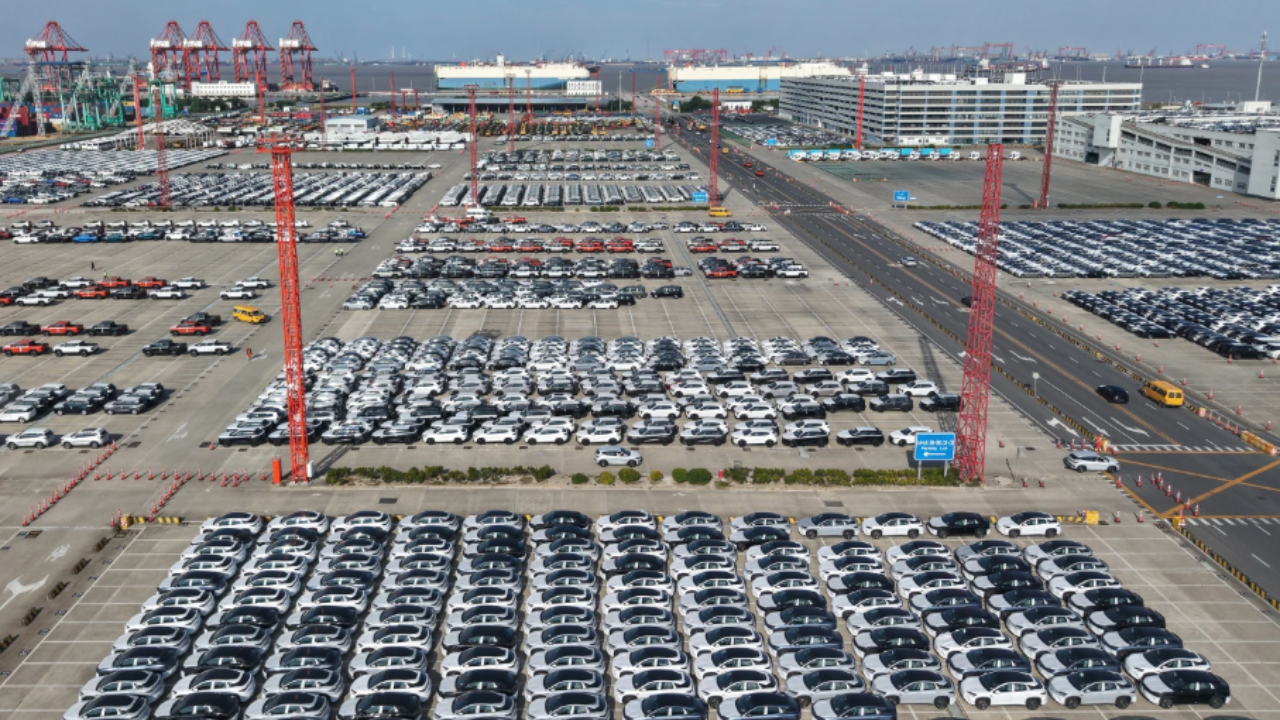
China’s car exports grew strongly in 2025, rising 21 percent as automakers increased shipments to overseas markets while local demand slowed, according to industry data released this week. The increase was mainly supported by higher sales of electric vehicles and plug-in hybrids. Faced with heavy competition at home, manufacturers searched for alternative markets where demand remained stronger. Total vehicle exports passed seven million units, while new energy vehicle exports doubled from the previous year.
The export growth shows how Chinese automakers are making deliberate moves to reduce pressure from falling domestic sales and intense price competition. Overseas markets offer better chances for profit and faster growth, which helps companies improve their stability. Analysts noted that recent discussions between China and the European Union could improve access for Chinese electric vehicles, though exporters still face restrictions in wealthier markets such as the United States and Canada. At the same time, government support programs at home have been reduced, causing sales of lower-priced vehicles to slow. Industry experts expect exports to continue rising in 2026 as automakers focus on improving product quality and expanding global sales networks. This transition highlights how China’s auto industry is adjusting to changing market conditions both at home and abroad.
The export growth shows how Chinese automakers are making deliberate moves to reduce pressure from falling domestic sales and intense price competition. Overseas markets offer better chances for profit and faster growth, which helps companies improve their stability. Analysts noted that recent discussions between China and the European Union could improve access for Chinese electric vehicles, though exporters still face restrictions in wealthier markets such as the United States and Canada. At the same time, government support programs at home have been reduced, causing sales of lower-priced vehicles to slow. Industry experts expect exports to continue rising in 2026 as automakers focus on improving product quality and expanding global sales networks. This transition highlights how China’s auto industry is adjusting to changing market conditions both at home and abroad.
Comprehension Questions:
I will read each question. Then, please answer them based on the article.
- China’s car exports increased by 21 percent in 2025.
- Electric vehicles and plug-in hybrids mainly supported the export growth.
- Chinese automakers increased exports because domestic demand slowed.
- Companies looked for alternative markets overseas due to strong competition at home.
- Total vehicle exports passed seven million units.
Discussion Questions:
I will read each question. Then, please answer them.
- Have export products increased locally, if so why, if not why not?
- Have electric vehicles become more common, if so how, if not why?
- Is export expansion necessary during slow domestic sales?
- How could export growth affect local employment?
- What challenges may appear if subsidies end?