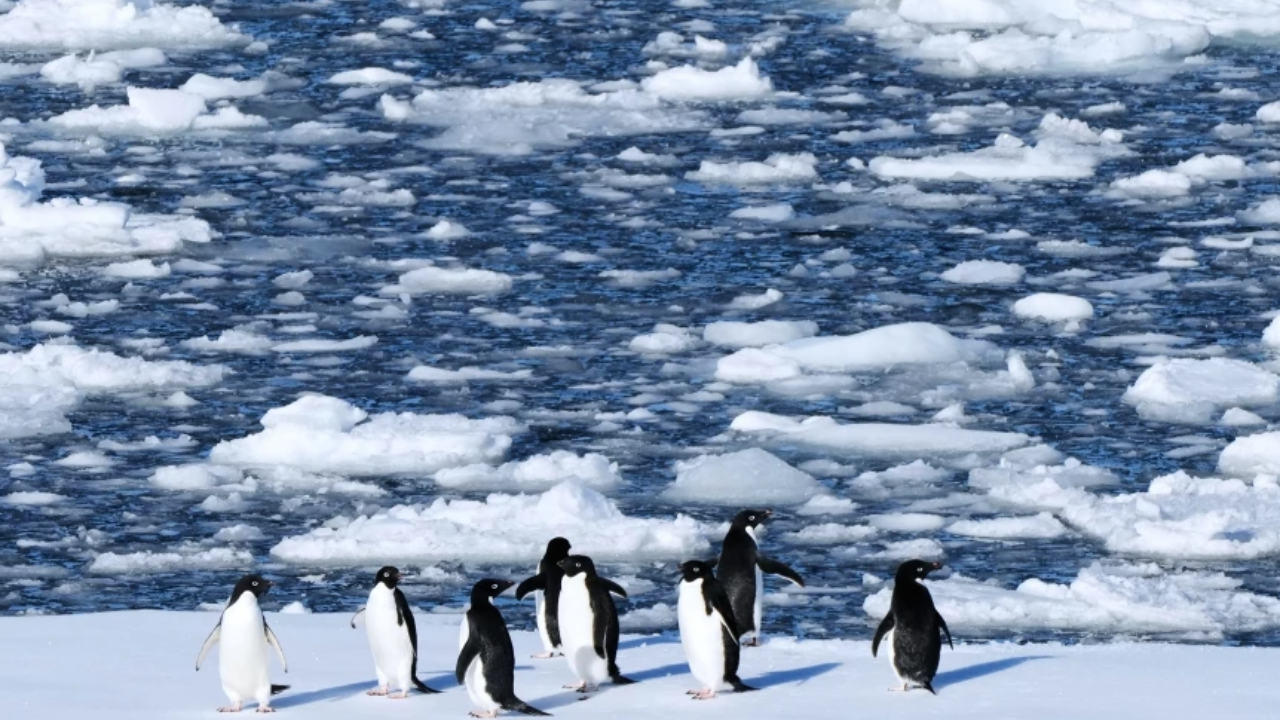
©AP Photo/Mark Baker, File
Pre-reading Questions:
I will read each question. Then, please answer them.
- What animals live in very cold environments?
- Why is food timing important for young animals?
Vocabulary:
I will read the words, meanings, and sample sentences. Then, repeat after me.
- method /METH-uhd/
[noun ] – a particular way of doing something
The study used a clear method to collect data. - response /ri-SPONS/
[noun] – a reaction to something that happens
The birds showed a response to warmer weather. - pressure /PRESH-er/
[noun] – stress or difficulty caused by demands or problems
Food shortages create pressure on penguin colonies. - connection /kuh-NEK-shuhn/
[noun] – a relationship between things
Scientists found a strong connection between ice loss and breeding. - observation /ob-zur-VAY-shuhn/
[noun] – the act of watching carefully
Long-term observation helped confirm the trend.
Article Reading:
Please read the whole article. Then, I will check your pronunciation and intonation.
Rising temperatures in Antarctica are changing the breeding schedules of several penguin species, according to a recent scientific study. Researchers found that Adélie, chinstrap, and gentoo penguins are starting their nesting periods earlier than in the past because seasonal warming now arrives sooner. This change affects the timing of food availability, especially krill, which young chicks depend on to survive. Scientists explained that when breeding no longer matches peak food supply, chick growth becomes more difficult, increasing survival risks for some species.
The research team used remote cameras placed at many breeding colonies to observe nesting behavior over several years. Their method allowed scientists to compare changes over time and confirm that warming temperatures are reducing sea ice earlier each year. This earlier ice loss leads to faster phytoplankton growth, which changes where and when krill appear. Gentoo penguins have shown a stronger response to these conditions because they eat a wider range of food and travel shorter distances. As a result, competition between species has increased, creating greater pressure on chinstrap and Adélie penguins. Experts noted that this pattern shows a clear connection between climate change and wildlife behavior. Continued observation will be necessary to understand how these shifts affect penguin populations in the future, especially as fishing activity also begins earlier in Antarctic waters.
The research team used remote cameras placed at many breeding colonies to observe nesting behavior over several years. Their method allowed scientists to compare changes over time and confirm that warming temperatures are reducing sea ice earlier each year. This earlier ice loss leads to faster phytoplankton growth, which changes where and when krill appear. Gentoo penguins have shown a stronger response to these conditions because they eat a wider range of food and travel shorter distances. As a result, competition between species has increased, creating greater pressure on chinstrap and Adélie penguins. Experts noted that this pattern shows a clear connection between climate change and wildlife behavior. Continued observation will be necessary to understand how these shifts affect penguin populations in the future, especially as fishing activity also begins earlier in Antarctic waters.
Comprehension Questions:
I will read each question. Then, please answer them based on the article.
- Which penguin species were studied?
- What environmental change affected breeding time?
- Why is earlier breeding risky?
- What food source is important for chicks?
- How did scientists collect data?
Discussion Questions:
I will read each question. Then, please answer them.
- What climate changes have been noticed locally, if so what effects appeared, if not what changes are expected?
- What wildlife behavior changes have been observed nearby, if so how were they noticed, if not why might they be difficult to see?
- Climate change should be considered a major risk to wildlife populations. Do you agree?
- Why are some species better at adapting than others?
- How can scientific studies help protect animals?