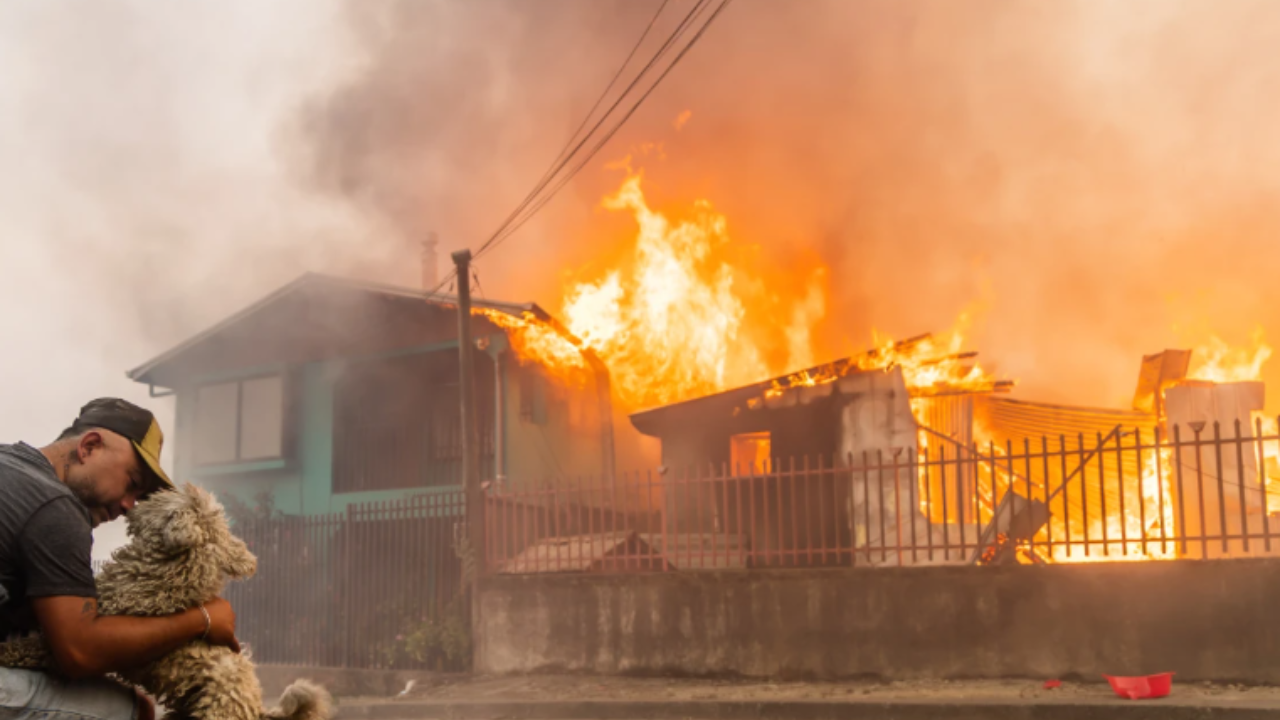
©AP Photo/Javier Torres
Pre-reading Questions:
I will read each question. Then, please answer them.
- Have wildfires occurred in Chile before? Where have they happened?
- What weather conditions cause fires to spread faster? How do these conditions affect safety?
Vocabulary:
I will read the words, meanings, and sample sentences. Then, repeat after me.
- support /suh-PAWRT/
[noun] – help given to someone or something
Government support arrived after the declaration. - control /kuhn-TROHL/
[noun] – the power to manage a situation
Fire control became difficult during strong winds. - concern /kuhn-SURN/
[noun] – a feeling of worry
Residents shared concern about slow aid. - restriction /rih-STRIK-shuhn/
[noun] – a rule that limits activity
A travel restriction was enforced at night. - shelter /SHEL-ter/
[noun] – a place providing protection
Families stayed in emergency shelters.
Article Reading:
Please read the whole article. Then, I will check your pronunciation and intonation.
Severe wildfires burned across central and southern Chile on January 18, 2026, as high temperatures and dry conditions caused fires to spread quickly, according to authorities. President Gabriel Boric declared a state of catastrophe in the Biobío and Ñuble regions, located south of the capital, Santiago. The decision was made to improve coordination between emergency services and the military. Officials said more than 8,500 hectares of forest and land were destroyed, while thousands of people were forced to leave their homes. Early reports suggested that hundreds of houses were damaged, with numbers expected to rise as inspections continued.
The declaration allowed faster support from national agencies as firefighters worked under difficult conditions. Strong winds and extreme heat reduced control over the flames, making firefighting efforts more dangerous. Local officials expressed concern about delays in assistance, especially in coastal towns where fires spread overnight. The government placed a nighttime restriction on movement to keep residents safe and allow emergency teams to work efficiently. Temporary shelters were prepared to provide shelter for families who lost their homes. Authorities warned that similar fires often occur during Chile’s summer season, especially during long periods of drought. Neighboring Argentina has also reported wildfire activity in recent weeks, showing that hot and dry weather continues to affect the region.
The declaration allowed faster support from national agencies as firefighters worked under difficult conditions. Strong winds and extreme heat reduced control over the flames, making firefighting efforts more dangerous. Local officials expressed concern about delays in assistance, especially in coastal towns where fires spread overnight. The government placed a nighttime restriction on movement to keep residents safe and allow emergency teams to work efficiently. Temporary shelters were prepared to provide shelter for families who lost their homes. Authorities warned that similar fires often occur during Chile’s summer season, especially during long periods of drought. Neighboring Argentina has also reported wildfire activity in recent weeks, showing that hot and dry weather continues to affect the region.
Comprehension Questions:
I will read each question. Then, please answer them based on the article.
- When did the fires intensify?
- Who declared the emergency?
- Why was the declaration made?
- How much land was burned?
- What weather made fires worse?
Discussion Questions:
I will read each question. Then, please answer them.
- What natural disasters have been seen in the community, if any? If so, how did people respond? If not, how could preparation help?
- What emergency rules have been used in the community, if any? If so, were they effective? If not, what rules might be useful?
- Governments should act early during wildfires. Agree or disagree?
- Why is quick response important in fire emergencies?
- How can communities reduce wildfire risks?