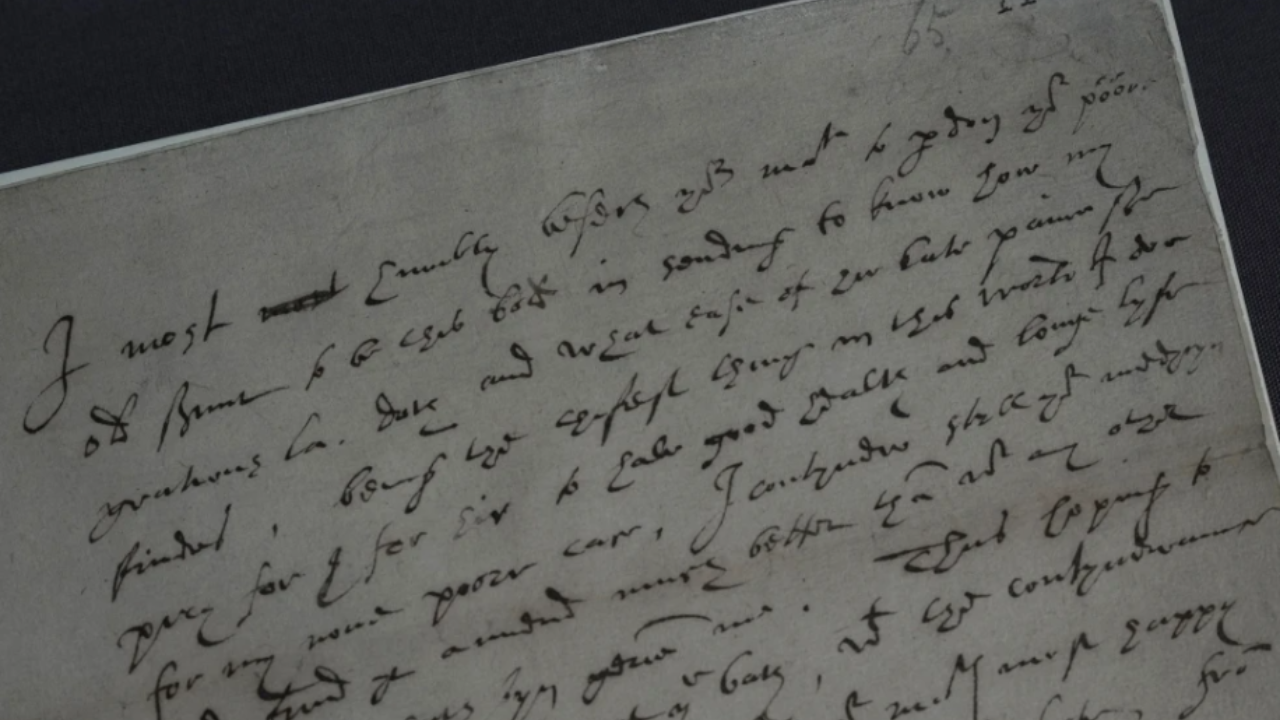
©(AP Photo/Alastair Grant)
Pre-reading Questions:
I will read each question. Then, please answer them.
- Why do people like to save old photos, cards, or letters?
- How do people today usually share their feelings with others?
Vocabulary:
I will read the words, meanings, and sample sentences. Then, repeat after me.
- exhibition /ek-suh-BISH-uhn/
[noun] – a public show of objects or works
An exhibition of old photos attracted many visitors. - notable /NOH-tuh-buhl/
[adjective] – important or easy to notice
The report included a notable example of success. - influence /IN-floo-uhns/
[verb] – to affect the way something happens
Friends often influence choices about hobbies and sports. - marriage /MAR-ij/
[noun] – the legal union of two people
The marriage took place in a small village church. - leadership /LEE-der-ship/
[noun] – the act of leading a group or organization
Strong leadership is important in times of change.
Article Reading:
Please read the whole article. Then, I will check your pronunciation and intonation.
Love in many forms is presented in a public exhibition in Britain that opened in February at the National Archives in London. The exhibition titled Love Letters presents documents from five centuries to show how love shaped personal lives and national history as Valentine’s Day approached. Curators said the purpose of the exhibition is to show how written messages reveal human emotions in different periods and social groups. The collection includes letters, songs, petitions, and legal records written by citizens, writers, soldiers, and members of the royal family. One notable item is a final letter sent in 1588 by Robert Dudley to Queen Elizabeth I, which remained beside the queen until death.
The documents are preserved and displayed with notes that explain the historical background and meaning of each text. Experts said the exhibition helps visitors understand how feelings influence public decisions and political events. A key example is the abdication document signed by King Edward VIII in 1936, which shows a ruler choosing marriage over power. Historians noted that the decision explains how personal values shape leadership. Another section presents letters written during war, illness, and imprisonment, showing how communication offered comfort. Curators added that the exhibition highlights family bonds through wills and legal petitions that asked authorities to protect marriages and children. Specialists said the exhibition shows how written records create an enduring link between emotion and memory.
The documents are preserved and displayed with notes that explain the historical background and meaning of each text. Experts said the exhibition helps visitors understand how feelings influence public decisions and political events. A key example is the abdication document signed by King Edward VIII in 1936, which shows a ruler choosing marriage over power. Historians noted that the decision explains how personal values shape leadership. Another section presents letters written during war, illness, and imprisonment, showing how communication offered comfort. Curators added that the exhibition highlights family bonds through wills and legal petitions that asked authorities to protect marriages and children. Specialists said the exhibition shows how written records create an enduring link between emotion and memory.
Comprehension Questions:
I will read each question. Then, please answer them based on the article.
- Where is the public exhibition held?
- What is the title of the exhibition?
- How many centuries of documents does the exhibition present?
- What is the purpose of the exhibition according to the curators?
- What kinds of records are included in the collection?
Discussion Questions:
I will read each question. Then, please answer them.
- Have you ever written a letter or card to someone you care about? If so, who did you write to? If not, who would you like to write to in the future?
- Have you ever visited a museum or exhibition before? If so, what did you see there? If not, what kind of exhibition would you like to visit?
- Do you agree that old letters are important for learning about history?
- How can writing help people feel better in difficult times?
- Why is it easier for some people to write feelings than to talk about them?