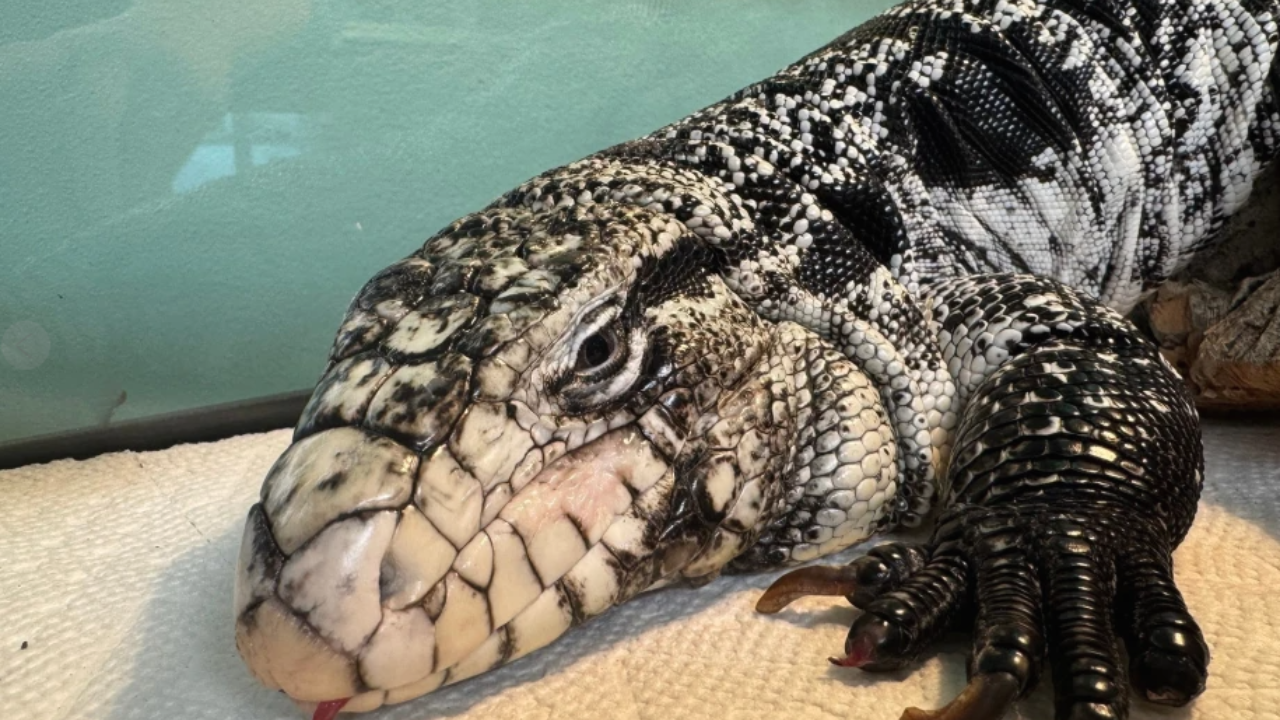
©New England Wildlife Center via AP
Pre-reading Questions:
I will read each question. Then, please answer them.
- What animals are seen near your home in Winter?
- What should be done when an animal looks sick or hurt? Who should be called?
Vocabulary:
I will read the words, meanings, and sample sentences. Then, repeat after me.
- uncommon /uhn-KOM-uhn/
[adjective] – not usual or often seen
Uncommon animal sightings increase during extreme weather. - concern /kuhn-SURN/
[noun] – a feeling of worry about a problem
Officials shared concern about exotic pet releases. - damage /DAM-ij/
[noun] – physical harm or injury
Cold weather caused damage to the lizard’s body. - monitoring /MON-i-ter-ing/
[noun] – careful watching over time
Monitoring continued throughout the animal’s recovery. - irresponsible /ir-i-SPON-suh-buhl/
[adjective] – not acting with proper care or responsibility
Irresponsible pet release puts animals at risk.
Article Reading:
Please read the whole article. Then, I will check your pronunciation and intonation.
Wildlife officials in Rhode Island reported the rescue of a large tegu lizard found buried in snow after a period of extreme winter weather this week. The reptile was discovered in Providence when a resident noticed unusual movement near a driveway and contacted local animal groups. Experts explained that the situation was uncommon because cold-blooded animals depend on warm surroundings to survive. Authorities also expressed concern about the increasing presence of exotic pets outside their natural environments in colder regions.
The lizard was taken to an animal hospital, where veterinarians found signs of frostbite, muscle weakness, and serious damage caused by long exposure to freezing temperatures. Medical staff provided heat support and carried out a small procedure to help recovery, while the animal remained under close monitoring. Wildlife groups stated that the case may be linked to irresponsible pet ownership, as tegus require special care and can be difficult to manage as they grow. Officials urged owners to use proper surrender programs instead of releasing animals outdoors, especially during winter. They warned that abandoned exotic animals may suffer or disrupt local wildlife. Agencies also encouraged the public to report unusual animal sightings quickly so trained responders can act before conditions worsen.
The lizard was taken to an animal hospital, where veterinarians found signs of frostbite, muscle weakness, and serious damage caused by long exposure to freezing temperatures. Medical staff provided heat support and carried out a small procedure to help recovery, while the animal remained under close monitoring. Wildlife groups stated that the case may be linked to irresponsible pet ownership, as tegus require special care and can be difficult to manage as they grow. Officials urged owners to use proper surrender programs instead of releasing animals outdoors, especially during winter. They warned that abandoned exotic animals may suffer or disrupt local wildlife. Agencies also encouraged the public to report unusual animal sightings quickly so trained responders can act before conditions worsen.
Comprehension Questions:
I will read each question. Then, please answer them based on the article.
- Where was the tegu found?
- What weather condition affected the animal?
- Why was the rescue described as uncommon?
- What injuries did veterinarians find?
- Why was heat support necessary?
Discussion Questions:
I will read each question. Then, please answer them.
- What animal rescue cases have been seen in the community, if so, what happened? If not, what should be done?
- What pet ownership problems exist locally, if so, how are they handled? If not, who should respond?
- Should permits be required for exotic pets?
- How can education prevent animal abandonment?
- What community actions could protect local wildlife?