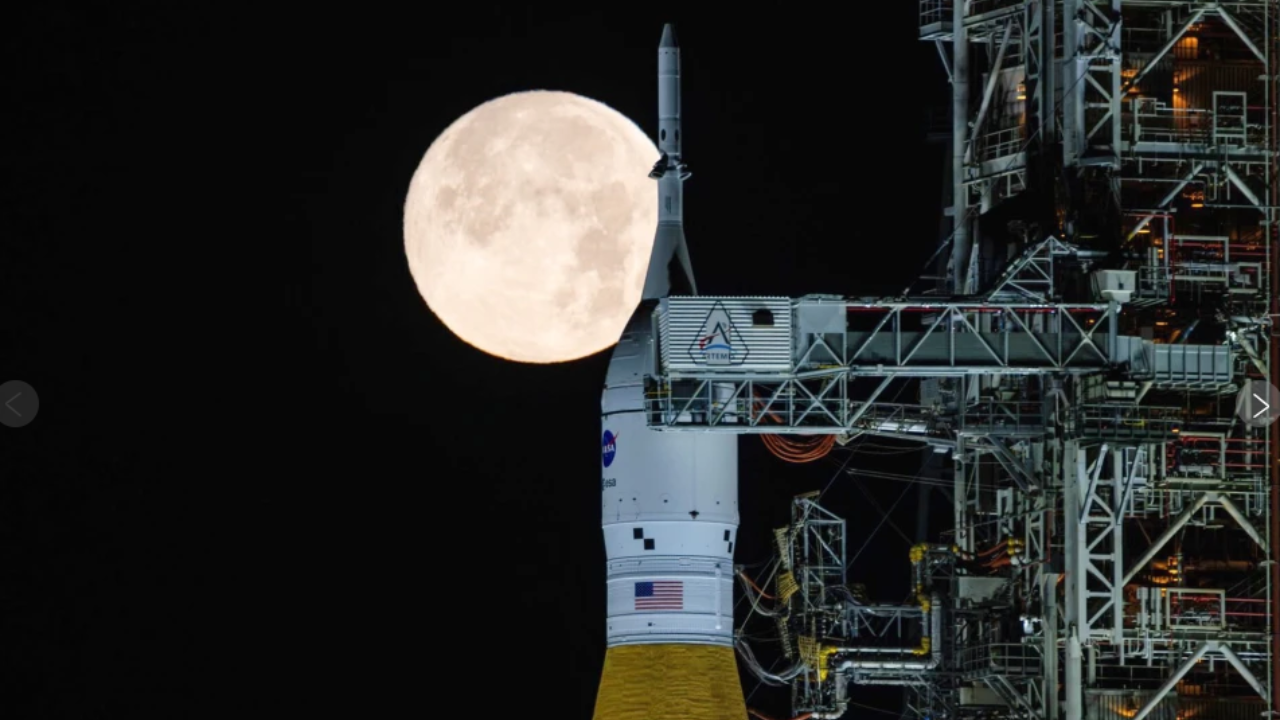
©Sam Lott/NASA via AP
Pre-reading Questions:
I will read each question. Then, please answer them.
- What is a rocket fueling test? Why is it done before launch?
- What dangers can fuel leaks cause? How can engineers reduce these risks?
Vocabulary:
I will read the words, meanings, and sample sentences. Then, repeat after me.
- concern /kuhn-SERNS/
[noun] – worries or problems
Safety concerns delayed the test schedule. - process /PRAH-ses/
[noun] – series of actions
Fueling is a slow process. - procedure /pruh-SEE-jerz/
[noun] – official methods
New procedures improved safety. - importance /im-POR-tns/
[noun] – value or significance
The test showed the importance of preparation. - critical /KRIT-i-kuhl/
[adjective] – extremely important
The test was critical for approval.
Article Reading:
Please read the whole article. Then, I will check your pronunciation and intonation.
NASA experienced unexpected delays after fuel leaks interrupted a major test of its new moon rocket on Monday at Kennedy Space Center in Florida. The test was meant to confirm whether the rocket is ready to carry astronauts around the moon for the first time in decades. However, the leaks raised concerns about timing, especially as launch opportunities are limited each month. Officials explained that similar problems occurred during earlier testing, increasing pressure to resolve the issue quickly.
The problem appeared during the process of loading extremely cold hydrogen and oxygen into the rocket. Engineers detected unsafe hydrogen levels near the base and stopped fueling several times to prevent danger. These actions followed established procedures developed after previous delays. While no injuries were reported, the situation highlighted the importance of careful monitoring. Four astronauts assigned to the mission observed the test remotely while staying in quarantine. NASA stated that the test results will help decide whether the mission can continue as scheduled. The upcoming flight will send astronauts past the moon and back to Earth to check life support and navigation systems. Officials emphasized that this mission plays a critical role in preparing for future landings, even though no landing is planned this time.
The problem appeared during the process of loading extremely cold hydrogen and oxygen into the rocket. Engineers detected unsafe hydrogen levels near the base and stopped fueling several times to prevent danger. These actions followed established procedures developed after previous delays. While no injuries were reported, the situation highlighted the importance of careful monitoring. Four astronauts assigned to the mission observed the test remotely while staying in quarantine. NASA stated that the test results will help decide whether the mission can continue as scheduled. The upcoming flight will send astronauts past the moon and back to Earth to check life support and navigation systems. Officials emphasized that this mission plays a critical role in preparing for future landings, even though no landing is planned this time.
Comprehension Questions:
I will read each question. Then, please answer them based on the article.
- Where did NASA conduct the rocket test?
- What problem interrupted the test on Monday?
- Why was the test important for the moon mission?
- What type of fuel caused the safety concern?
- Where did engineers detect unsafe hydrogen levels?
Discussion Questions:
I will read each question. Then, please answer them.
- What technical problem has occurred in local projects, if so, how was it solved? If not, why?
- What safety rule is followed at work, if so, how is it enforced? If not, what is missing?
- Is delaying a launch better than taking risks?
- How do space tests protect astronauts?
- What lessons can other industries learn?