©NASA via AP
Vocabulary:
I will read the words, meanings, and sample sentences. Then, repeat after me.
- illuminate /ih-LOO-muh-neyt/
[verb] – to make something clearer or easier to understand
The new telescope images illuminate complex galaxy movements. - objective /uhb-JEK-tiv/
[noun] – something that researchers are trying to achieve
The main objective is to explain dark matter behavior. - unprecedented /uhn-PRES-i-den-tid/
[adjective] – never done or known before
The telescope captured unprecedented cosmic detail. - compelling /kuhm-PEL-ing/
[adjective] – very convincing or believable
The images provided compelling scientific evidence. - collaborative /kuh-LAB-uh-ruh-tiv/
[adjective] – involving several people working together
The collaborative project involved many space agencies.
Article Reading:
Please read the whole article. Then, I will check your pronunciation and intonation.
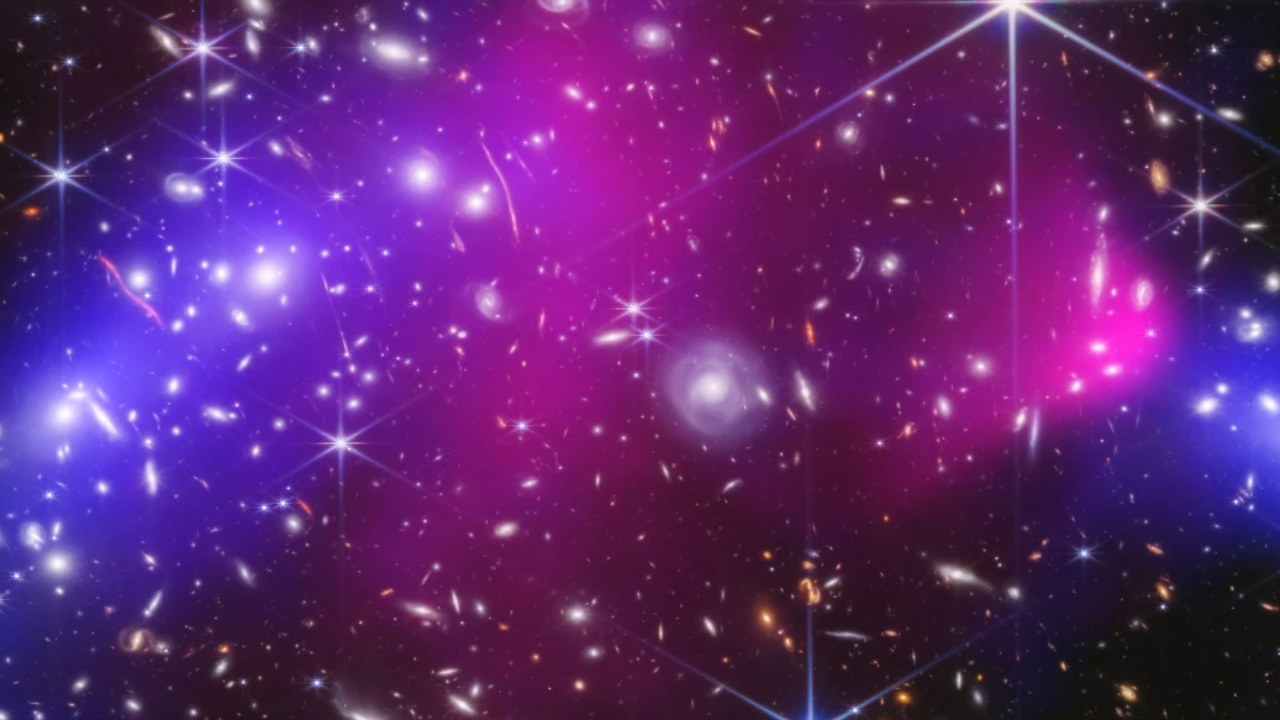
A newly released high-resolution map of distant galaxies was published on January 26, 2026, in Nature Astronomy after being produced using observations from NASA’s James Webb Space Telescope. The project aims to illuminate the long-standing mystery of dark matter, an unseen substance believed to make up over one-quarter of the universe. Ordinary matter such as stars and planets accounts for only about five percent. Scientists explained that understanding this invisible material remains a central scientific objective because it plays a vital role in shaping cosmic structures. The new map spans billions of years of cosmic history and offers an unprecedented level of detail across a vast section of the sky. Researchers believe the findings could significantly strengthen the global scientific community’s efforts to better understand how the universe formed and evolved.
The map was created by analyzing how the gravity of dark matter bends light from distant galaxies, a process that allows researchers to trace its otherwise hidden presence. This method provided compelling evidence of massive galaxy clusters linked by thin strands that form the universe’s large-scale structure. Scientists said the project highlights the collaborative work of international teams studying cosmic evolution. By examining how dark matter has gathered over time, experts hope to refine existing models of the universe’s growth and behavior. Although dark matter does not directly affect everyday life, the research reflects humanity’s deep curiosity about cosmic origins. Scientists emphasized that continued observation will help clarify the nature of the universe and its unseen forces, strengthening knowledge of humanity’s place within an ever-expanding cosmic environment for future generations worldwide.
The map was created by analyzing how the gravity of dark matter bends light from distant galaxies, a process that allows researchers to trace its otherwise hidden presence. This method provided compelling evidence of massive galaxy clusters linked by thin strands that form the universe’s large-scale structure. Scientists said the project highlights the collaborative work of international teams studying cosmic evolution. By examining how dark matter has gathered over time, experts hope to refine existing models of the universe’s growth and behavior. Although dark matter does not directly affect everyday life, the research reflects humanity’s deep curiosity about cosmic origins. Scientists emphasized that continued observation will help clarify the nature of the universe and its unseen forces, strengthening knowledge of humanity’s place within an ever-expanding cosmic environment for future generations worldwide.
Discussion Questions:
I will read each question. Then, please answer them.
- What space research projects have been seen in the community, if any? If so, what activities were shared? If not, what programs could be introduced?
- What science events have been seen in the community, if any? If so, what topics were presented? If not, what topics would be interesting?
- Space research deserves global funding. Do you agree?
- Why does studying dark matter for humanity?
- How could future telescopes improve discoveries?
Summarization:
Please summarize the whole article using your own words and expressions. You will have one minute to prepare before you answer.
Describe:
Please explain the definition of each word listed below based on your understanding. You can provide example sentences if needed.
- structure
- gravity
- highlight
- universe
- generation