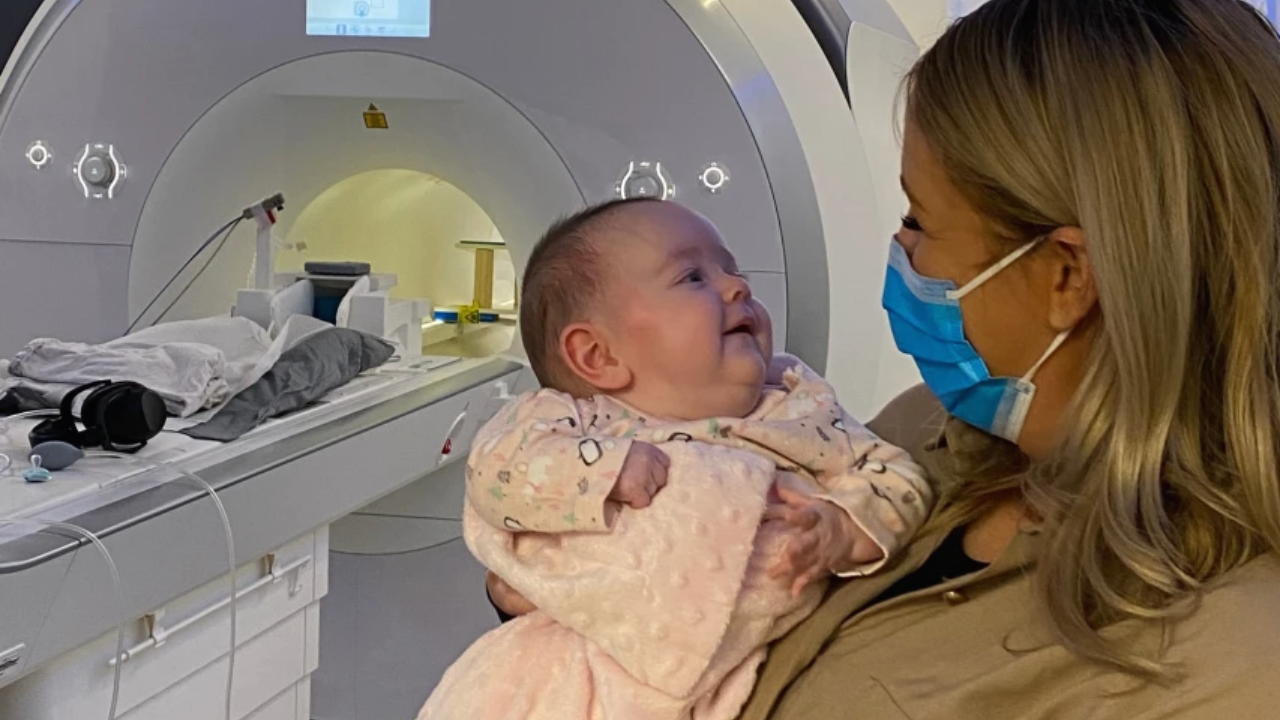
©Cusack Lab via AP
Vocabulary:
I will read the words, meanings, and sample sentences. Then, repeat after me.
- sophisticated /suh-FIS-ti-kay-tid/
[adjective] – having a good understanding of complex ideas
The new device uses sophisticated technology to track brain activity. - precise /pri-SAHYS/
[adjective] – exact and accurate
The experiment produced precise measurements of brain activity. - categorization /kat-i-guh-ruh-ZEY-shuhn/
[noun] – the process of placing things into groups
The study showed early categorization in young infants. - progression /pruh-GRESH-uhn/
[noun] – gradual development over time
The scans showed progression in brain responses by nine months. - groundbreaking /GROUND-brey-king/
[adjective] – very new and important
The research is groundbreaking for infant neuroscience.
Article Reading:
Please read the whole article. Then, I will check your pronunciation and intonation.
A new neuroscience study, published on Monday in Nature Neuroscience, reports that babies as young as two months old can already distinguish between categories of objects in their surroundings, an ability previously believed to emerge later in infancy. The research, conducted at Trinity College Dublin in Ireland, analyzed brain activity from 130 infants while they were awake and viewing images of animals, trees, and everyday items. Scientists aimed to improve understanding of early cognitive development and determine how visual recognition begins during the earliest stage of life. Lead author Cliona O’Doherty explained that the findings suggest infants interact with their environment in a far more sophisticated way than previously assumed. Researchers believe the results may help guide future pediatric research and deepen scientific knowledge of early brain growth.
Using functional magnetic resonance imaging, scientists recorded brain responses as babies viewed different image categories. The method provided a more precise measurement than earlier techniques that relied on how long infants stared at objects. Findings showed clear patterns of brain activity when infants viewed animals compared with inanimate objects, demonstrating early categorization ability. Follow-up scans of 66 infants at nine months revealed a stronger brain response, showing continued progression in recognition skills. Experts described the study as groundbreaking because brain imaging with awake infants presents major technical challenges. Researchers suggested that future studies may connect early imaging data with later learning and developmental outcomes.
Using functional magnetic resonance imaging, scientists recorded brain responses as babies viewed different image categories. The method provided a more precise measurement than earlier techniques that relied on how long infants stared at objects. Findings showed clear patterns of brain activity when infants viewed animals compared with inanimate objects, demonstrating early categorization ability. Follow-up scans of 66 infants at nine months revealed a stronger brain response, showing continued progression in recognition skills. Experts described the study as groundbreaking because brain imaging with awake infants presents major technical challenges. Researchers suggested that future studies may connect early imaging data with later learning and developmental outcomes.
Discussion Questions:
I will read each question. Then, please answer them.
- What early learning behavior has been seen in the community, if any? If so, what examples exist? If not, what might explain the lack of observations?
- What child development programs have been seen in the community, if any? If so, what activities are offered?
- Early brain research is essential for education planning. Agree or disagree?
- Why is brain imaging important for understanding learning?
- How could early detection of development differences help society?
Summarization:
Please summarize the whole article using your own words and expressions. You will have one minute to prepare before you answer.
Describe:
Please explain the definition of each word listed below based on your understanding. You can provide example sentences if needed.
- neuroscience
- distinguish
- cognitive
- measurement
- suggest