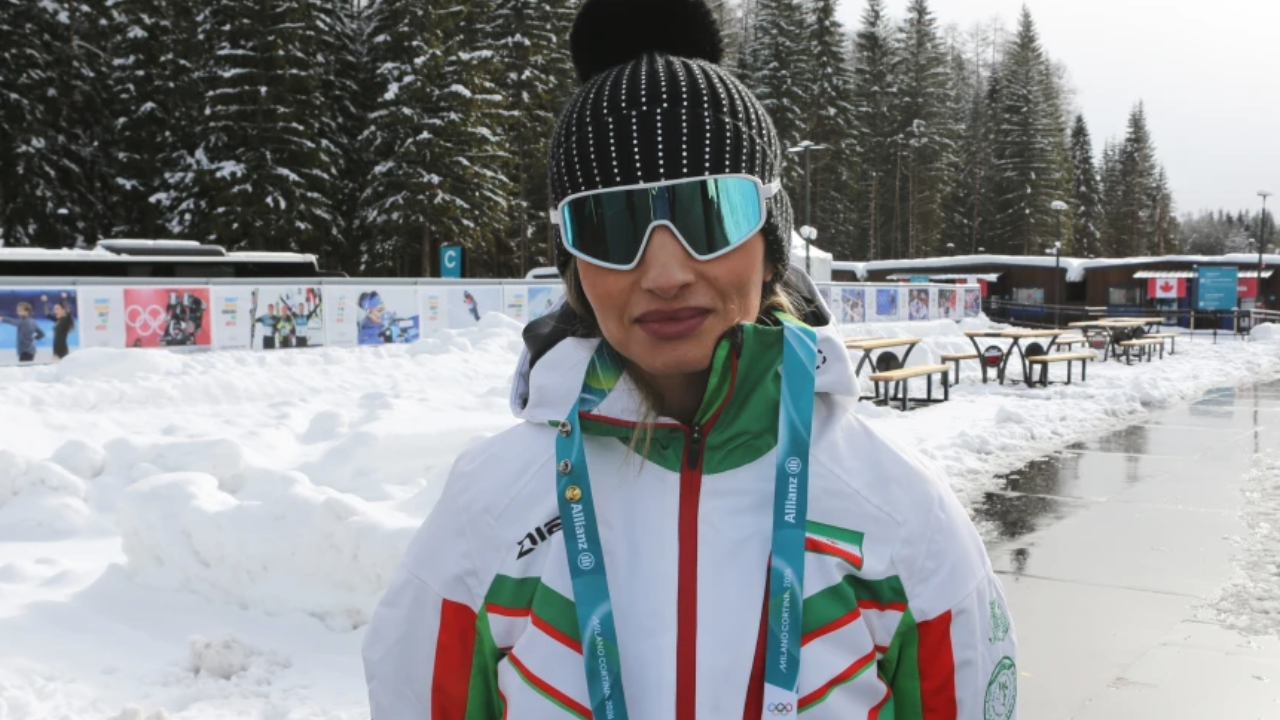
©AP Photo/Jennifer McDermott
Pre-reading Questions:
I will read each question. Then, please answer them.
- Has watching international sports ever increased respect for another country? If so, how? If not, why not?
- Has collecting items ever helped start conversations with strangers? If so, how? If not, why not?
Vocabulary:
I will read the words, meanings, and sample sentences. Then, repeat after me.
- admiration /ad-muh-REY-shuhn/
[noun] – respect and approval
The coach showed admiration for the injured athlete. - tradition /truh-DISH-uhn/
[noun] – a belief or custom that continues for a long time
Pin trading is an Olympic tradition. - exchange /iks-CHEYNJ/
[noun] – the act of giving something and receiving something
The exchange of pins started friendly conversations. - collector /kuh-LEK-ter/
[noun] – a person who collects particular objects
Every collector searched for rare Olympic pins. - unity /YOO-ni-tee/
[noun] – the state of being joined together
The event promoted unity among countries.
Article Reading:
Please read the whole article. Then, I will check your pronunciation and intonation.
At the Winter Olympic Games in Cortina, Italy, Iran’s Alpine women’s skiing coach Mitra Kalhor shared admiration for American skier Lindsey Vonn after a serious crash on Sunday. Kalhor spoke in the Olympic and Paralympic Village and described Vonn as a hero. Even though political relations between the United States and Iran remain tense, the Olympic Games create a space where athletes focus on sport rather than conflict. One strong tradition that supports this spirit is the exchange of national team pins.
Pin trading began during the early modern Olympic Games in 1896 and remains popular today. Athletes wear lanyards filled with pins and look for designs from other teams. Iran’s small team of four athletes made its pins especially popular among collectors. Many competitors searched for the Iranian design because of its limited number. Exchanges happen in training areas and around the village, helping build unity among participants. Kalhor gave away her final pin to a security guard and said the strong interest in Iran’s flag made the experience meaningful.
Pin trading began during the early modern Olympic Games in 1896 and remains popular today. Athletes wear lanyards filled with pins and look for designs from other teams. Iran’s small team of four athletes made its pins especially popular among collectors. Many competitors searched for the Iranian design because of its limited number. Exchanges happen in training areas and around the village, helping build unity among participants. Kalhor gave away her final pin to a security guard and said the strong interest in Iran’s flag made the experience meaningful.
Comprehension Questions:
I will read each question. Then, please answer them based on the article.
- Where are the Winter Olympic Games taking place?
- Who is Mitra Kalhor?
- What happened to Lindsey Vonn?
- How did Kalhor describe Vonn?
- What tradition connects athletes?
Discussion Questions:
I will read each question. Then, please answer them.
- Has watching international sports ever made another country more interesting? If so, what event changed that opinion? If not, why did it not affect that view?
- Has collecting small items ever helped start a conversation with someone from another country? If so, what happened? If not, why not?
- Do you agree that sports can bring countries closer together?
- Why do many people admire athletes from other nations?
- How can simple activities like trading pins help people understand each other better?