©AP Photo/Petar Petrov, File
Pre-reading Questions:
I will read each question. Then, please answer them.
- What kinds of objects can be seen in the night sky?
- Why do people enjoy watching special sky events?
Vocabulary:
I will read the words, meanings, and sample sentences. Then, repeat after me.
- parade /puh-REYD/
[noun] – a public celebration when people march or gather to watch something special
The town held a parade to celebrate the holiday. - cluster /KLUHS-ter/
[noun] – a group of similar things close together
A cluster of stars appeared near the moon. - visible /VIZ-uh-buhl/
[adjective] – able to be seen
The moon was clearly visible in the evening sky. - obstruct /uhb-STRUHKT/
[verb] – to block or prevent movement or view
Tall buildings can obstruct the view of the sunset. - observer /uhb-ZUR-ver/
[noun] – a person who watches something carefully
Each observer took notes during the science experiment.
Article Reading:
Please read the whole article. Then, I will check your pronunciation and intonation.
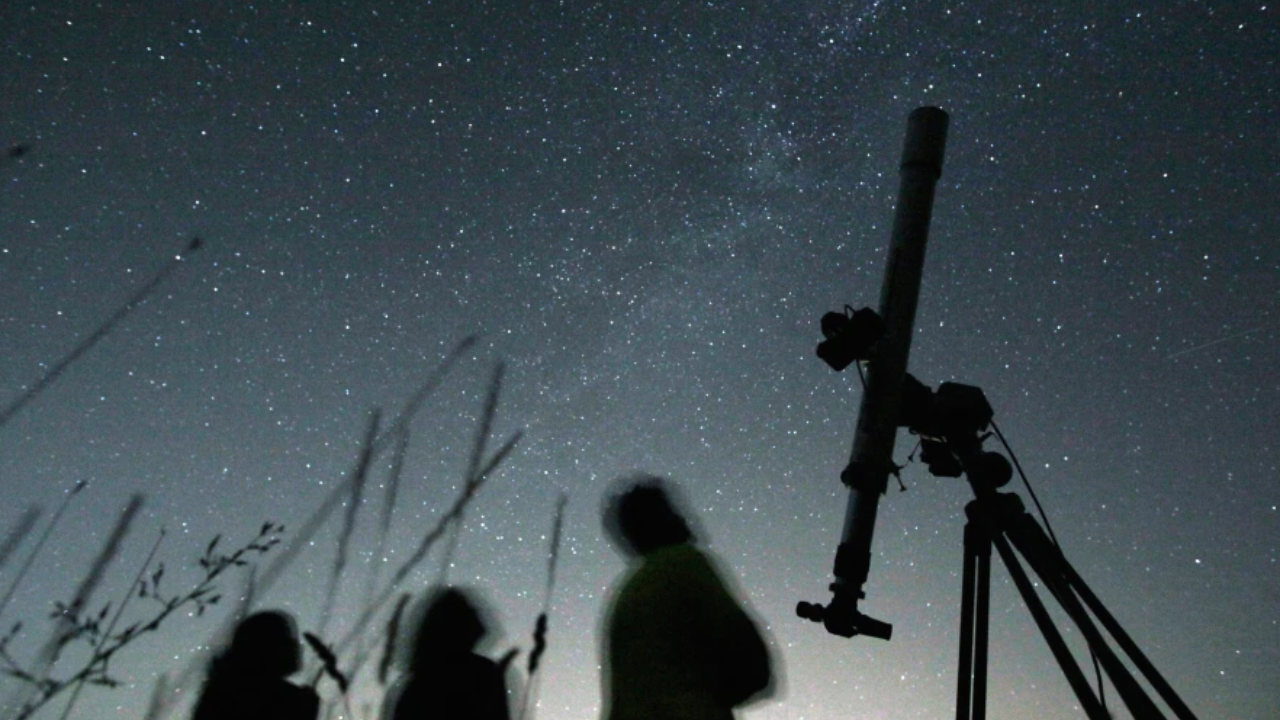
At the end of February, six planets appeared together in the evening sky in what scientists call a planetary parade. The event happened when several planets gathered on one side of the sun and seemed close together from Earth. Although they were not in a perfect line, they formed a bright cluster after sunset. NASA explained that seeing four or five planets at once is uncommon, and six in one view is even more special. The display attracted sky watchers in many countries.
The planets were visible about an hour after sunset in the western sky. Mercury, Venus, Jupiter and Saturn could be seen without equipment if clouds did not obstruct the view. Uranus and Neptune required binoculars or telescopes. An observer could tell the difference between stars and planets because stars usually twinkle while planets shine steadily. Experts encouraged people to move away from tall buildings and trees to improve visibility. The parade lasted for several days before Mercury slowly disappeared below the horizon.
The planets were visible about an hour after sunset in the western sky. Mercury, Venus, Jupiter and Saturn could be seen without equipment if clouds did not obstruct the view. Uranus and Neptune required binoculars or telescopes. An observer could tell the difference between stars and planets because stars usually twinkle while planets shine steadily. Experts encouraged people to move away from tall buildings and trees to improve visibility. The parade lasted for several days before Mercury slowly disappeared below the horizon.
Comprehension Questions:
I will read each question. Then, please answer them based on the article.
- When did the planetary parade occur?
- What caused the planets to appear close together?
- Were the planets in a perfect straight line?
- How many planets were visible without equipment?
- Which planets needed binoculars or telescopes?
Discussion Questions:
I will read each question. Then, please answer them.
- Have you ever watched the night sky for a special event? If so, what did you see? If not, would such an event be exciting?
- Have you ever tried using binoculars to look at the sky? If so, what was the experience like? If not, would it be interesting to try?
- Do you agree that sky events help people learn more about science?
- Why do many people enjoy watching planets and stars?
- How could schools encourage more interest in astronomy?