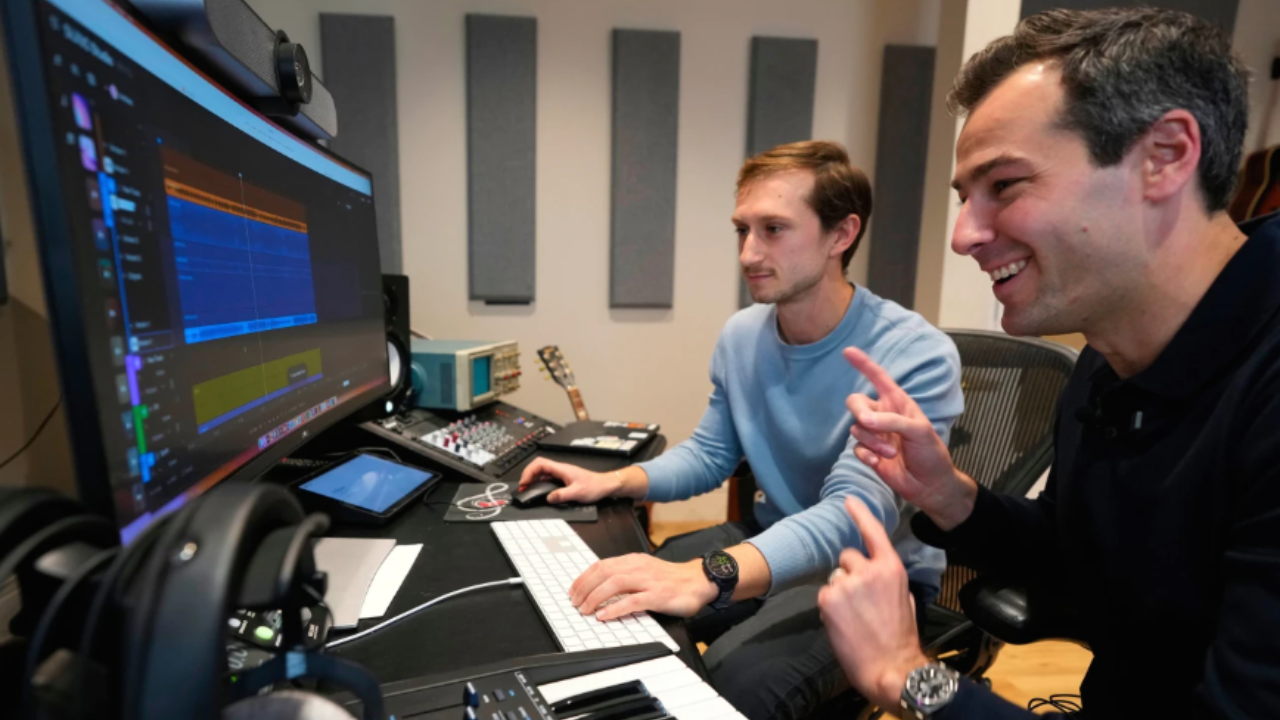
©AP Video: Rodrique Ngowi, Allen Breed, Sophie Bates
Vocabulary:
I will read the words, meanings, and sample sentences. Then, repeat after me.
- proliferation /pruh-lif-uh-REY-shuhn/
[noun] – a sudden increase in the number or amount of something
The proliferation of apps changed communication habits. - convergence /kuhn-VUR-juhns/
[noun] – the situation in which two things become similar or come together
The convergence of art and technology sparked debate. - litigation /lit-i-GEY-shuhn/
[noun] – the process of taking legal action
The company faced litigation over copyright claims. - contentious /kuhn-TEN-shuhs/
[adjective] – causing or likely to cause disagreement
The proposal became contentious during the meeting. - skepticism /SKEP-tuh-siz-uhm/
[noun] – doubt that something is true or useful
Public skepticism slowed acceptance of the policy.
Article Reading:
Please read the whole article. Then, I will check your pronunciation and intonation.
Artificial intelligence music startups Suno and Udio intensified negotiations with major record labels in 2026 in the United States as legal disputes over copyright infringement continued to reshape the industry. The talks followed lawsuits filed in 2024 by Sony Music, Universal Music and Warner Records, which accused the companies of training systems on protected recordings without authorization. The rapid proliferation of AI-generated songs on streaming platforms heightened tensions and underscored a growing convergence between technology and commercial music production.
Both companies pursued settlements to reduce ongoing litigation and secure licensing agreements that would allow artists to authorize AI-assisted experimentation. Suno reached a deal with Warner and continued discussions with other labels, while Udio signed agreements with Universal, Warner and Merlin, though Sony’s case remained active. Executives argued that collaboration offered a path beyond the contentious standoff, emphasizing structured royalties and artist consent. Nevertheless, professional musicians expressed persistent skepticism, warning that creative labor risked dilution if safeguards proved insufficient. Industry observers noted that outcomes of the federal court proceedings in Boston and New York could establish precedents influencing future AI governance in music worldwide.
Both companies pursued settlements to reduce ongoing litigation and secure licensing agreements that would allow artists to authorize AI-assisted experimentation. Suno reached a deal with Warner and continued discussions with other labels, while Udio signed agreements with Universal, Warner and Merlin, though Sony’s case remained active. Executives argued that collaboration offered a path beyond the contentious standoff, emphasizing structured royalties and artist consent. Nevertheless, professional musicians expressed persistent skepticism, warning that creative labor risked dilution if safeguards proved insufficient. Industry observers noted that outcomes of the federal court proceedings in Boston and New York could establish precedents influencing future AI governance in music worldwide.
Discussion Questions:
I will read each question. Then, please answer them.
- Have you ever used artificial intelligence to create music? If so, what was the experience like? If not, would experimentation be appealing?
- Have you ever worried about technology affecting creative jobs? If so, why? If not, what reduces concern?
- Do you agree that licensing agreements can balance innovation and artist protection?
- What responsibilities should technology companies have toward musicians?
- How might court decisions shape the long term relationship between artificial intelligence and the arts?
Summarization:
Please summarize the whole article using your own words and expressions. You will have one minute to prepare before you answer.
Describe:
Please explain the definition of each word listed below based on your understanding. You can provide example sentences if needed.
- authorization
- production
- agreement
- collaboration
- establish