©(OpenAI via AP)
Pre-reading Questions:
I will read each question. Then, please answer them.
- How do you feel about using technology to help people understand health information?
- What devices can help people check their health every day?
Vocabulary:
I will read the words, meanings, and sample sentences. Then, repeat after me.
- wearable /WAIR-uh-buhl/
[adjective] – able to be worn on the body
The company released a wearable device that tracks daily exercise. - complex /kuhm-PLEKS/
[adjective] – difficult to understand because something has many parts
The instructions looked complex, so the students asked the teacher for help. - interpret /in-TUR-prit/
[verb] – to explain the meaning of something
The guide helped visitors interpret the meaning of the old painting. - detail /DEE-teyl/
[noun] – a small piece of information
The reporter checked every detail before publishing the story. - conduct /kuhn-DUHKT/
[verb] – to organize and carry out something such as research or an activity
The manager will conduct a meeting to discuss the new project.
Article Reading:
Please read the whole article. Then, I will check your pronunciation and intonation.
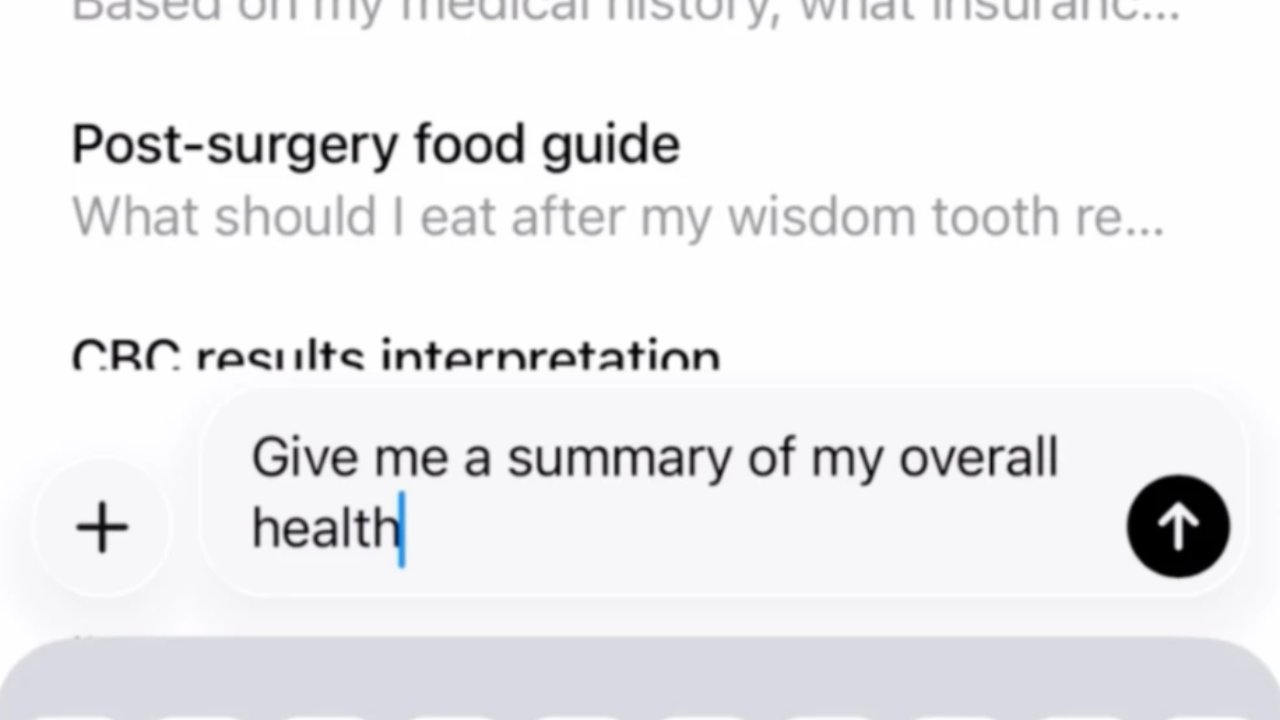
Artificial intelligence is increasingly used to answer health questions, and technology companies are developing chatbot systems designed to provide medical information. In January 2024, OpenAI introduced ChatGPT Health, a program that analyzes medical records, wellness applications, and data from wearable devices. Access to the program currently requires joining a waiting list. Similar functions are available in selected versions of the Claude chatbot developed by the company Anthropic. The systems are designed to help people understand complex medical information and recognize patterns in personal health data. Medical experts explain that the tools are not intended to replace doctors or provide medical diagnoses. Instead, artificial intelligence can explain health reports and test results that may be difficult for patients to interpret. Researchers also report that chatbots may produce more personalized explanations than traditional internet searches because the systems can examine several health details at the same time.
Medical researchers emphasize that careful use of artificial intelligence is important when discussing health concerns. A study conducted by Oxford University involving about 1,300 participants examined how people used chatbots to research health conditions. The research found that participants who relied on chatbots did not always make better health decisions than individuals who used online searches or personal judgment. However, artificial intelligence showed strong accuracy in written medical situations when sufficient information was provided. Communication problems sometimes occurred because users did not clearly describe symptoms.
Medical researchers emphasize that careful use of artificial intelligence is important when discussing health concerns. A study conducted by Oxford University involving about 1,300 participants examined how people used chatbots to research health conditions. The research found that participants who relied on chatbots did not always make better health decisions than individuals who used online searches or personal judgment. However, artificial intelligence showed strong accuracy in written medical situations when sufficient information was provided. Communication problems sometimes occurred because users did not clearly describe symptoms.
Comprehension Questions:
I will read each question. Then, please answer them based on the article.
- What is artificial intelligence increasingly used for today?
- When did OpenAI introduce ChatGPT Health?
- What types of information does ChatGPT Health analyze?
- What must people do to access the program?
- According to medical experts, what should these tools not replace?
Discussion Questions:
I will read each question. Then, please answer them.
- Have you ever used an AI chatbot or an online tool to ask a health question? If so, what question did you ask? If not, where do you usually look for health information?
- Have you ever used a smartwatch or wellness application to check health data, such as steps or sleep? If so, what health data do you check? If not, would you like to use a health app in the future? Why?
- Do you agree that AI chatbots can help people understand medical information more easily?
- What problems can happen if people depend only on AI for health advice?
- How might technology change healthcare in the future?