Pre-reading Questions:
I will read each question. Then, please answer them.
- What do you think people might feel when they see a rare event in the sky?
- If you could watch a special event in the night sky, where would you like to watch it?
Vocabulary:
I will read the words, meanings, and sample sentences. Then, repeat after me.
- occur /uh-KUR/
[verb] – to happen; to take place
A strong earthquake may occur near coastal areas during certain seasons. - surface /SUR-fis/
[noun] – the outside or top layer of something
The surface of the lake became very calm after the wind stopped. - alignment /uh-LAHYN-muhnt/
[noun] – the position of things arranged in a straight line
Scientists study the alignment of planets to understand events in space. - filter /FIL-ter/
[verb] – to pass through something that removes or changes part of it
Clouds sometimes filter sunlight and make the sky appear softer in the evening. - demonstrate /DEM-uhn-streyt/
[verb] – to show clearly how something works or is true
The experiment helps demonstrate how plants grow with sunlight.
Article Reading:
Please read the whole article. Then, I will check your pronunciation and intonation.
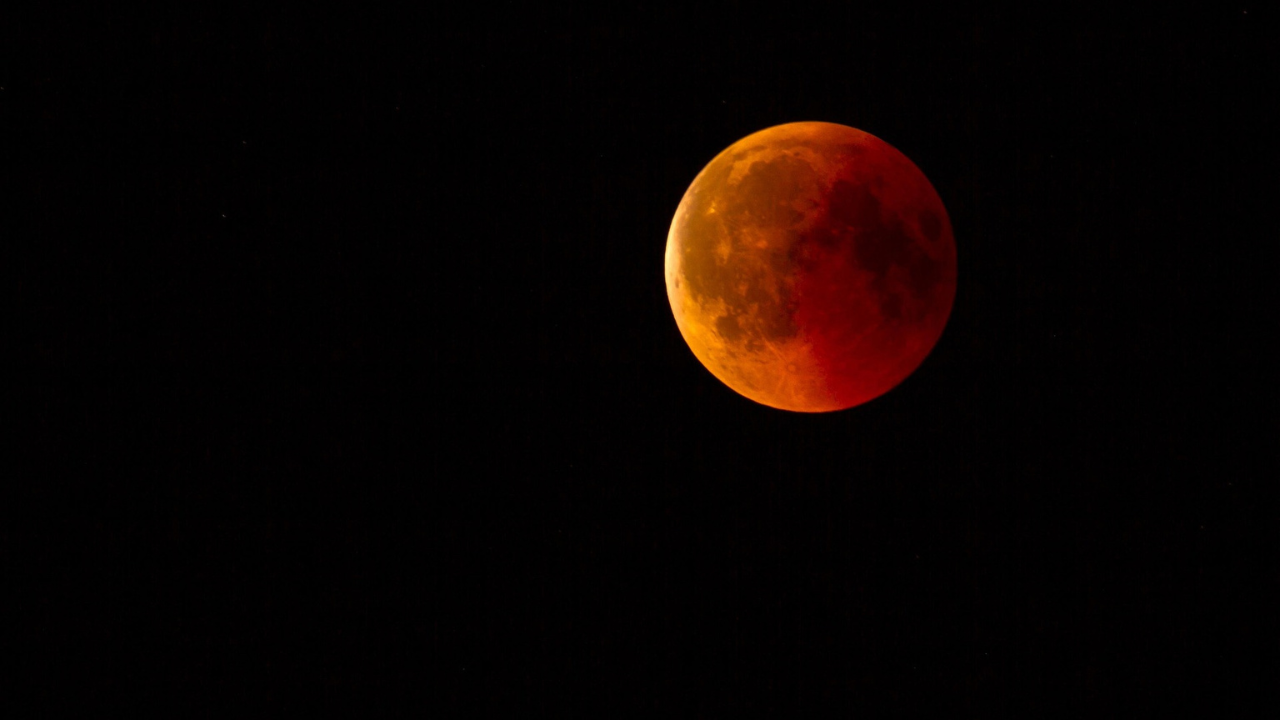
A total lunar eclipse created a blood-red moon in mid-March and attracted attention from observers and researchers in several regions. The event occurred when Earth moved directly between the sun and the full moon, casting a shadow across the lunar surface. The eclipse was visible early in the morning in North America, Central America, and western South America. Australia and Eastern Asia observed the event later at night. Astronomical groups reported that lunar eclipses occur several times each year because of the alignment of the sun, Earth, and moon. The event happened about two weeks after a ring of fire solar eclipse, showing that eclipse events sometimes appear close together because of orbital patterns.
During the stage called totality, the moon appeared dark red for about one hour when Earth’s shadow completely covered it. Researchers explained that the color appeared because Earth’s atmosphere filtered sunlight, similar to the light seen during sunrise and sunset. Observatories described the eclipse as a valuable opportunity for learning and for increasing public interest in astronomy. Digital sky-monitoring tools and mobile astronomy applications helped observers follow the timing of the event in different regions. Experts said the eclipse demonstrated the movement of celestial bodies and the role of Earth’s atmosphere. A partial lunar eclipse in August will offer another chance for observation across parts of the Americas, Europe, Africa, and western Asia.
During the stage called totality, the moon appeared dark red for about one hour when Earth’s shadow completely covered it. Researchers explained that the color appeared because Earth’s atmosphere filtered sunlight, similar to the light seen during sunrise and sunset. Observatories described the eclipse as a valuable opportunity for learning and for increasing public interest in astronomy. Digital sky-monitoring tools and mobile astronomy applications helped observers follow the timing of the event in different regions. Experts said the eclipse demonstrated the movement of celestial bodies and the role of Earth’s atmosphere. A partial lunar eclipse in August will offer another chance for observation across parts of the Americas, Europe, Africa, and western Asia.
Comprehension Questions:
I will read each question. Then, please answer them based on the article.
- What natural event created a blood-red moon in mid-March?
- Where was the eclipse visible early in the morning?
- Why do lunar eclipses happen several times each year?
- What other space event happened about two weeks before the lunar eclipse?
- What color did the moon appear during the stage called totality?
Discussion Questions:
I will read each question. Then, please answer them.
- Have you ever seen the moon at night for a long time? If so, what did the moon look like? If not, would you like to watch the moon in the future? Why?
- Have you ever used a mobile app or website to learn about space or the night sky? If so, what did you learn? If not, would you like to try an astronomy app someday? Why?
- Do you agree that events like a lunar eclipse can make people more interested in astronomy?
- How can teachers make learning about space more interesting for students?
- What space event would you like to see one day, and why?