©AP Photo/Mengshin Lin
Vocabulary:
I will read the words, meanings, and sample sentences. Then, repeat after me.
- garland /GAR-luhnd/
[noun] – a circle or chain of flowers or leaves used for decoration
The ceremony included a garland of fresh flowers. - cultivation /kuhl-tuh-VAY-shuhn/
[noun] – the process of growing plants for food or decoration
The farm focuses on the cultivation of tropical flowers. - regulation /reg-yuh-LAY-shuhn/
[noun] – an official rule that controls how something is done
The government introduced a regulation to protect farmers. - commercialization /kuh-MUR-shuh-luh-ZAY-shuhn/
[noun] – the process of making something into a product to sell
Commercialization changed how traditional crafts are produced. - heritage /HER-i-tij/
[noun] – the traditions, culture, and history of a place or people
Local festivals celebrate the cultural heritage of the region.
Article Reading:
Please read the whole article. Then, I will check your pronunciation and intonation.
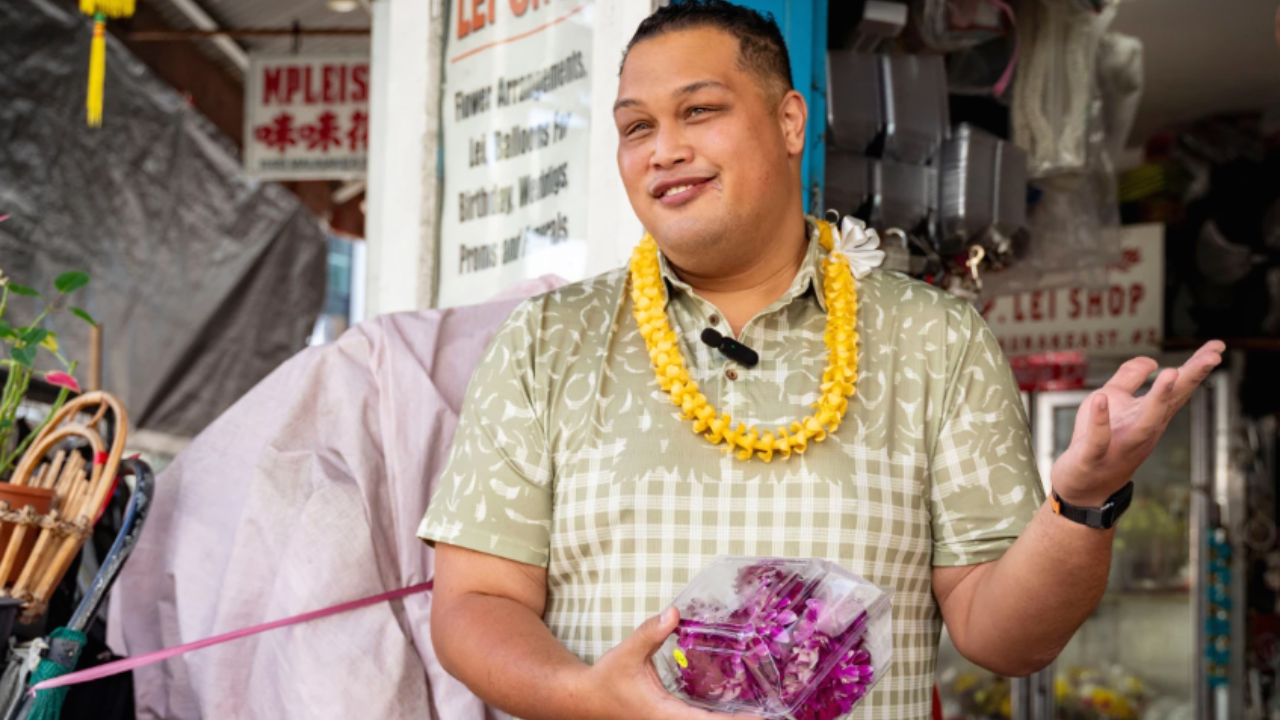
Hawaii lawmakers examined proposals in 2026 aimed at strengthening the local production of lei, the traditional floral garland closely associated with Hawaiian culture and hospitality. The discussion emerged after reports revealed that most purple orchid lei sold to visitors originate from Thailand, where flower cultivation and manufacturing costs remain significantly lower. Cultural advocates and business groups argued that heavy reliance on imports weakens local farmers and undermines the authenticity of a symbol strongly linked to Hawaiian identity. Several officials therefore began considering policies that could encourage greater use of locally grown flowers in lei production.
Proposals under discussion included labeling requirements identifying where flowers are grown and potential purchasing regulation affecting state agencies that distribute lei during ceremonies and public events. Supporters suggested that such steps could help restore balance between imported products and local growers while reducing the long-term effects of industry commercialization. However, florists and lei vendors warned that strict rules might raise prices and limit supply during periods of seasonal shortage. Hawaii’s expanding tourism sector has increased demand for lei over decades, forcing businesses to supplement local flowers with imports. Advocates emphasized that preserving the tradition requires maintaining affordability while also protecting cultural heritage. The debate reflects broader concerns about balancing economic realities with the preservation of longstanding cultural practices.
Proposals under discussion included labeling requirements identifying where flowers are grown and potential purchasing regulation affecting state agencies that distribute lei during ceremonies and public events. Supporters suggested that such steps could help restore balance between imported products and local growers while reducing the long-term effects of industry commercialization. However, florists and lei vendors warned that strict rules might raise prices and limit supply during periods of seasonal shortage. Hawaii’s expanding tourism sector has increased demand for lei over decades, forcing businesses to supplement local flowers with imports. Advocates emphasized that preserving the tradition requires maintaining affordability while also protecting cultural heritage. The debate reflects broader concerns about balancing economic realities with the preservation of longstanding cultural practices.
Discussion Questions:
I will read each question. Then, please answer them.
- Have you ever received a traditional flower garland during a celebration? If so, what occasion was it? If not, what type of cultural gift would feel meaningful?
- Have you ever bought a souvenir that represented local culture? If so, where was it from? If not, what cultural product would interest you most?
- Do you agree that governments should support local cultural industries through regulations?
- What role do traditional crafts and cultural symbols play in modern tourism?
- How can societies protect cultural traditions while still participating in global trade?
Summarization:
Please summarize the whole article using your own words and expressions. You will have one minute to prepare before you answer.
Describe:
Please explain the definition of each word listed below based on your understanding. You can provide example sentences if needed.
- examine
- discussion
- import
- shortage
- preservation