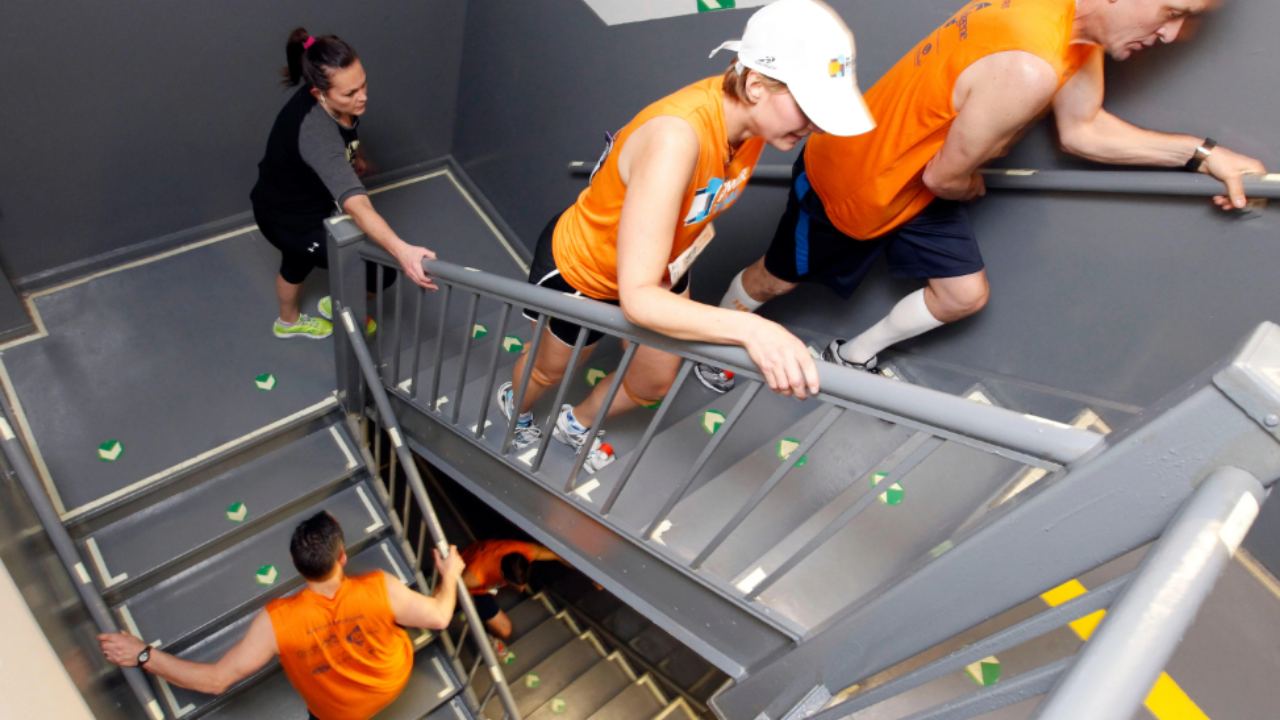
©(AP Photo/Jason DeCrow, File)
Vocabulary:
I will read the words, meanings, and sample sentences. Then, repeat after me.
- multistory /muhl-ti-STAWR-ee/
[adjective] – having many floors in one building
The company moved to a multistory office in the city center. - burst /burst/
[noun] – a short period of sudden activity or energy
The coach asked the players to do a short burst of exercise before resting. - stairwell /STAIR-wel/
[noun] – a space in a building where stairs are located
The lights in the stairwell were turned off after midnight. - structured /STRUHK-cherd/
[adjective] – organized or planned in a clear way
The teacher used a structured plan to guide the lesson. - simulate /SIM-yuh-leyt/
[verb] – to copy or imitate a real situation or activity
The program can simulate real-life conversations for language learners.
Article Reading:
Please read the whole article. Then, I will check your pronunciation and intonation.
Stair climbing has become a recognized form of daily exercise in many cities, especially in multistory buildings such as offices and hotels. Health experts report that this activity supports the legs, heart, and lungs while requiring no special equipment. Research indicates that four minutes of stair climbing can provide similar benefits to ten minutes of brisk walking, showing its efficiency as a physical activity. Updated public health guidance since 2018 has emphasized short bursts of movement during the day, encouraging actions such as taking stairs between floors. Medical researchers and exercise specialists state that this approach is beneficial for individuals with limited time. However, access to stairwells remains restricted in many buildings due to safety concerns and legal responsibility. Reports show that over one million stair-related injuries occur annually in the United States, with higher risk among older adults, influencing such policies.
Stair climbing improves physical fitness by increasing heart rate and muscle strength while also supporting mental well-being through higher energy levels. Studies demonstrate that regular use of stairs is an effective way to maintain health without structured workouts. Despite these advantages, building restrictions limit opportunities for consistent practice. Some individuals adopt alternative strategies, including using parks, parking structures, and machines that simulate stair climbing. Health advocates suggest that open stair access can be a sustainable way to promote physical activity in urban areas. Recent public health discussions propose more comprehensive approaches that combine safety measures with better accessibility, supporting wider use of stairs.
Stair climbing improves physical fitness by increasing heart rate and muscle strength while also supporting mental well-being through higher energy levels. Studies demonstrate that regular use of stairs is an effective way to maintain health without structured workouts. Despite these advantages, building restrictions limit opportunities for consistent practice. Some individuals adopt alternative strategies, including using parks, parking structures, and machines that simulate stair climbing. Health advocates suggest that open stair access can be a sustainable way to promote physical activity in urban areas. Recent public health discussions propose more comprehensive approaches that combine safety measures with better accessibility, supporting wider use of stairs.
Discussion Questions:
I will read each question. Then, please answer them.
- Have you ever used stairs instead of an elevator in a building? If so, why did you choose the stairs? If not, would you like to try using stairs for exercise? Why or why not?
- Have you ever felt tired after climbing several floors of stairs? If so, how did your body feel? If not, do you think stair climbing is difficult? Why or why not?
- Do you agree that short activities, like stair climbing, can improve health?
- Why do some buildings limit stair use even if it is good for health?
- What are some other simple ways people can stay active if stairs are not available?
Summarization:
Please summarize the whole article using your own words and expressions. You will have one minute to prepare before you answer.
Describe:
Please explain the definition of each word listed below based on your understanding. You can provide example sentences if needed.
- daily exercise
- office
- hotel
- safety concern
- comprehensive approach