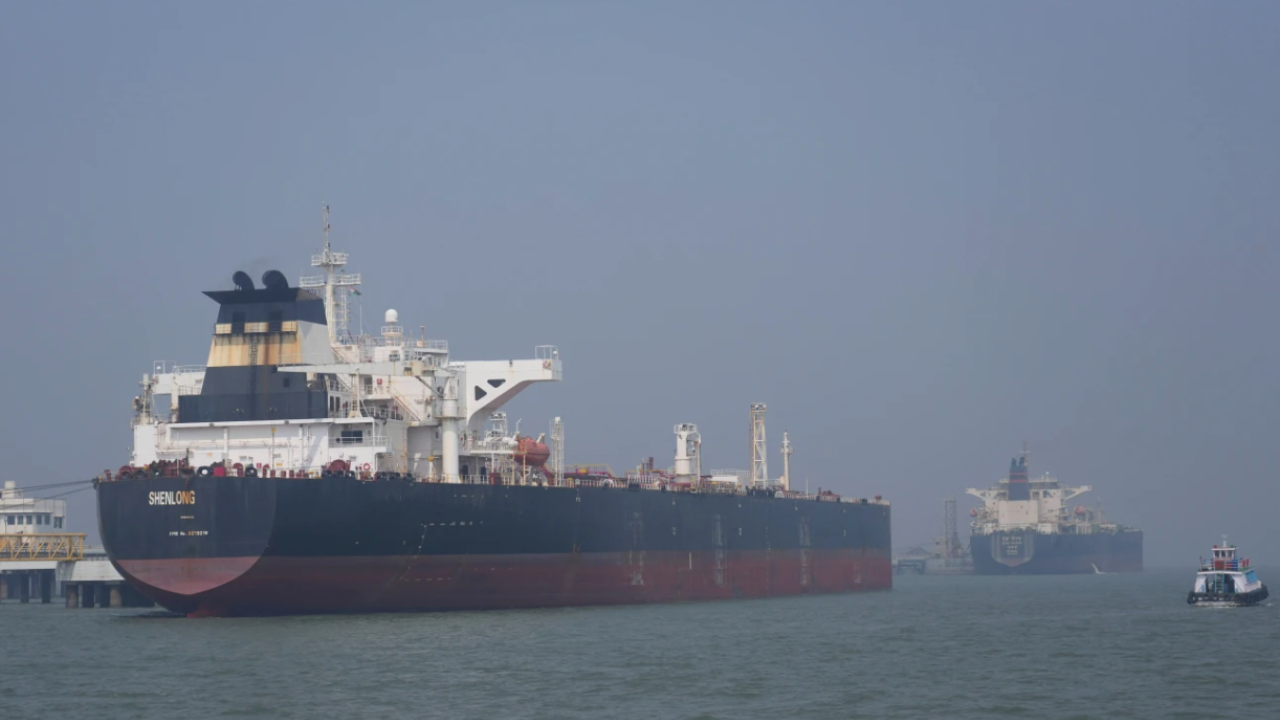
©AP Photo/Rafiq Maqbool
Pre-reading Questions:
I will read each question. Then, please answer them.
- What do you know about oil transportation around the world?
- Why do countries need oil from other places?
Vocabulary:
I will read the words, meanings, and sample sentences. Then, repeat after me.
- route /root/
[noun] – a way or course taken to get from one place to another
The ship followed a long route across the ocean. - export /EK-spawrt/
[verb] – to send goods to another country for sale
The country exports oil to many nations. - demand /dih-MAND/
[noun] – the need or desire for something
There is high demand for fuel in winter. - supply /suh-PLAHY/
[noun] – the amount of something that is available
The supply of oil affects prices. - stable /STEY-buhl/
[adjective] – not changing suddenly; firm
The company kept a stable production level.
Article Reading:
Please read the whole article. Then, I will check your pronunciation and intonation.
About 90 ships, including oil tankers, have continued to travel along an important route in the Strait of Hormuz since early March. This movement has allowed countries to export millions of barrels of oil even though overall shipping activity has remained lower than usual. The strait remains very important because it carries a large part of the world’s oil supply. Experts say that strong demand for oil has helped keep exports active, especially in countries that need fuel for daily use.
Some ships have traveled with limited tracking systems, but oil transport has continued because of agreements between different countries. Trade data shows that oil supply has remained steady, with more than 16 million barrels exported since early March. China remains one of the main buyers, showing continued interest in oil from the region. Experts explain that careful planning has helped keep transportation stable, even with fewer ships moving through the area. Oil prices have remained high, and analysts believe that shipping activity in this route has continued to affect global markets.
Some ships have traveled with limited tracking systems, but oil transport has continued because of agreements between different countries. Trade data shows that oil supply has remained steady, with more than 16 million barrels exported since early March. China remains one of the main buyers, showing continued interest in oil from the region. Experts explain that careful planning has helped keep transportation stable, even with fewer ships moving through the area. Oil prices have remained high, and analysts believe that shipping activity in this route has continued to affect global markets.
Comprehension Questions:
I will read each question. Then, please answer them based on the article.
- How many ships have continued to travel through the Strait of Hormuz since early March?
- What type of ships are mentioned in the article?
- What has this movement allowed countries to do?
- How has overall shipping activity changed?
- Why is the Strait of Hormuz important?
Discussion Questions:
I will read each question. Then, please answer them.
- Have you ever heard about oil transportation before? If so, what did you learn? If not, what do you think about it?
- Have you ever thought about how fuel reaches your country? If so, how? If not, what is your guess?
- Do you agree that oil demand affects prices?
- What do you think is the biggest challenge in transporting oil?
- How can countries improve oil transportation systems?