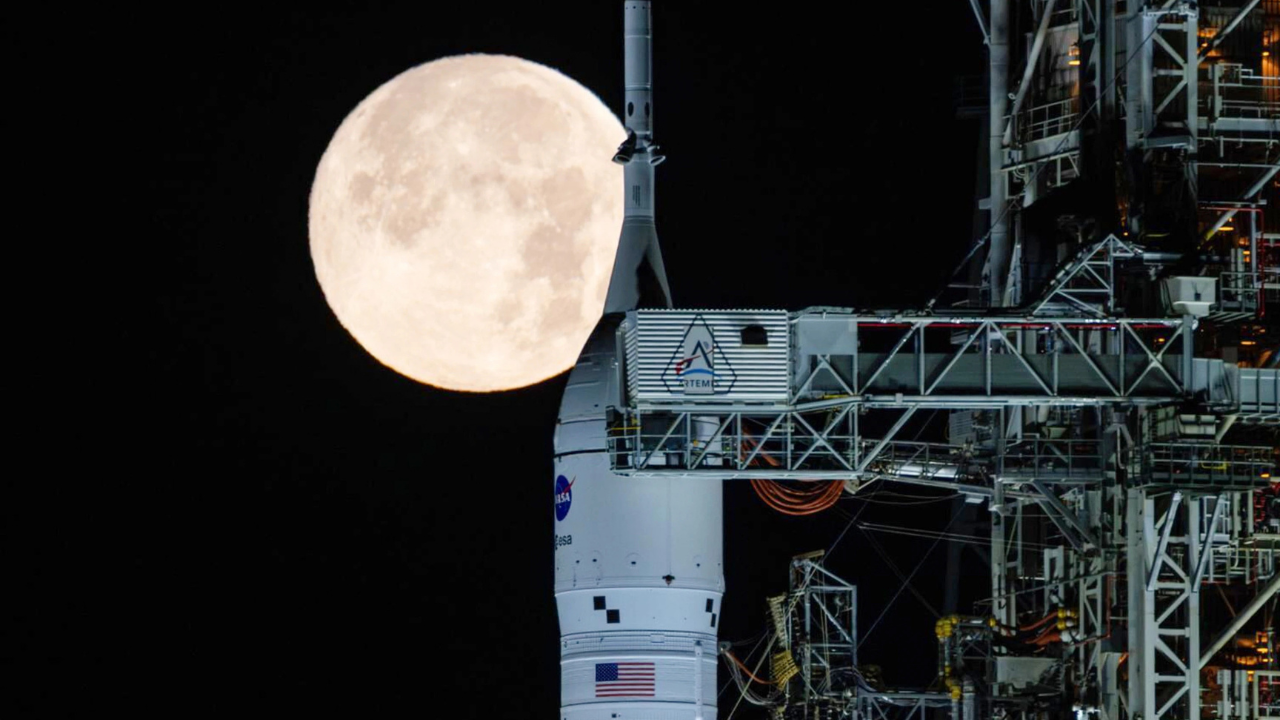
©(Sam Lott/NASA via AP, File)
Vocabulary:
I will read the words, meanings, and sample sentences. Then, repeat after me.
- intermittent /in-ter-MIT-uhnt/
[adjective] – happening sometimes and not regularly
The internet connection was intermittent during the storm. - exceed /ik-SEED/
[verb] – to go beyond a limit or expected level
The results exceeded expectations in the final test. - shield /sheeld/
[verb] – to protect someone or something from danger or harm
Trees shield the house from strong winds. - fluctuate /FLUHK-choo-eyt/
[verb] – to change or vary often between two or more amounts
Prices fluctuate depending on demand. - correspond /kawr-uh-SPOND/
[verb] – to match or be consistent with something
The data correspond to earlier findings.
Article Reading:
Please read the whole article. Then, I will check your pronunciation and intonation.
Lunar rocks collected by Apollo astronauts decades ago are offering a renewed understanding of the moon’s magnetic behavior, according to research published Wednesday in England. Scientists from the University of Oxford found that the moon’s magnetic field was mostly weak throughout history but experienced brief periods of intense activity between 3 billion and 4 billion years ago. These short bursts, described as intermittent, sometimes exceeded Earth’s magnetic strength. Magnetic fields can shield planetary surfaces from harmful radiation, making such discoveries important for understanding planetary environments.
The research team analyzed earlier measurements and observed that magnetic strength appeared to fluctuate alongside titanium-rich rock formations. These results correspond with samples collected during the Apollo missions, particularly Apollo 11 and Apollo 17, where titanium levels were high. Scientists believe volcanic activity may have pushed these materials to the surface, influencing magnetic conditions. Future missions under NASA’s Artemis program are expected to explore different lunar regions, especially the south pole, to gather new samples. These upcoming studies may provide additional evidence and help clarify how the moon’s magnetic field evolved over time, offering deeper insight into planetary development and environmental protection beyond Earth.
The research team analyzed earlier measurements and observed that magnetic strength appeared to fluctuate alongside titanium-rich rock formations. These results correspond with samples collected during the Apollo missions, particularly Apollo 11 and Apollo 17, where titanium levels were high. Scientists believe volcanic activity may have pushed these materials to the surface, influencing magnetic conditions. Future missions under NASA’s Artemis program are expected to explore different lunar regions, especially the south pole, to gather new samples. These upcoming studies may provide additional evidence and help clarify how the moon’s magnetic field evolved over time, offering deeper insight into planetary development and environmental protection beyond Earth.
Discussion Questions:
I will read each question. Then, please answer them.
- Have you ever read about space exploration? If so, what interested you? If not, what would you like to learn?
- Have you ever seen a documentary about the moon? If so, what did you learn? If not, would you watch one?
- Do you agree that studying the moon is important for science?
- What do you think scientists can learn from space rocks?
- Why is understanding magnetic fields important for future space travel?
Summarization:
Please summarize the whole article using your own words and expressions. You will have one minute to prepare before you answer.
Describe:
Please explain the definition of each word listed below based on your understanding. You can provide example sentences if needed.
- astronaut
- behavior
- research
- planetary
- radiation