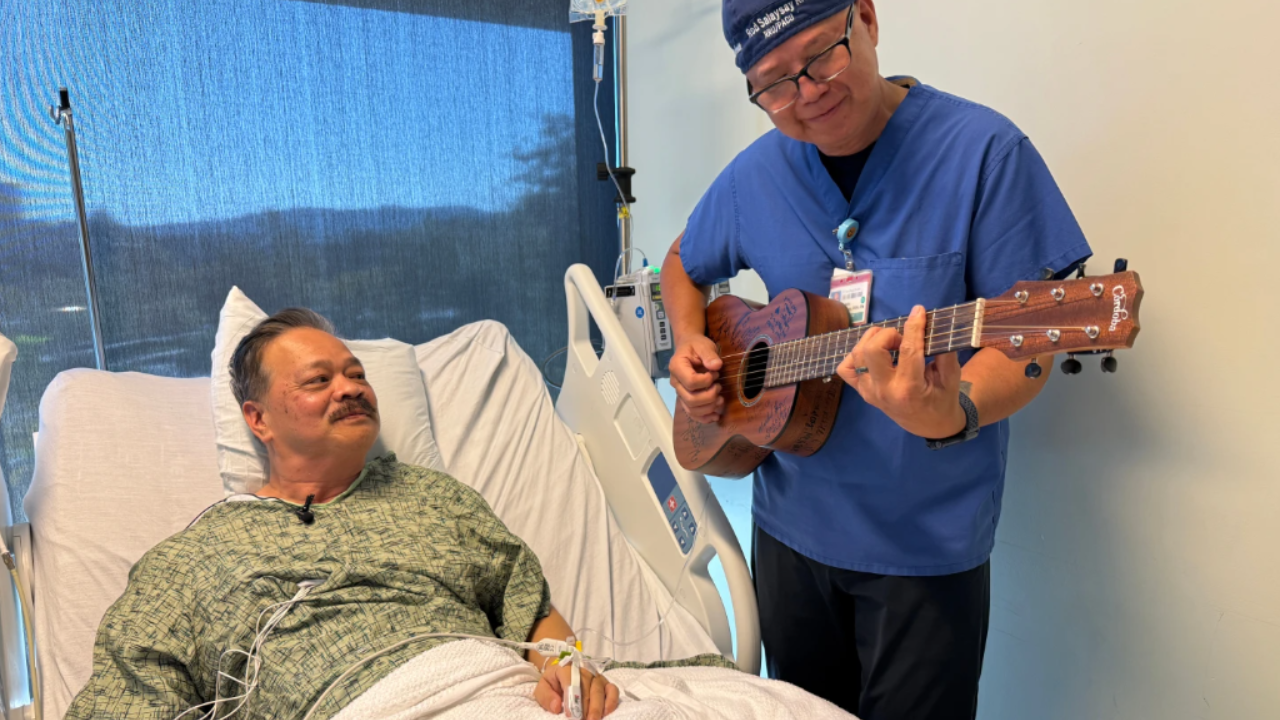
©(AP Photo/Javier Arciga)
Vocabulary:
I will read the words, meanings, and sample sentences. Then, repeat after me.
- complementary /kom-pluh-MEN-tuh-ree/
[adjective] – completing or enhancing something
Some schools offer art classes as a complementary activity to academic subjects. - chronic /KRON-ik/
[adjective] – lasting for a long time and often difficult to cure
Many office workers suffer from chronic back pain because of long hours of sitting. - relieve /ri-LEEV/
[verb] – to reduce pain, stress, or discomfort
Drinking warm tea can help relieve a sore throat during a cold. - genre /ZHAHN-ruh/
[noun] – a category or type of art, especially music, literature, or film
Students in the film club discussed different movie genres, including comedy and horror. - compassionate /kuhm-PASH-uh-nit/
[adjective] – showing kindness and a desire to help others who are suffering
Volunteers offered compassionate support to families affected by the earthquake.
Article Reading:
Please read the whole article. Then, I will check your pronunciation and intonation.
Music is increasingly being used in hospitals as a complementary method to help patients manage pain. At UC San Diego Health in the United States, a nurse named Rod Salaysay has been playing instruments such as the guitar and ukulele for recovering patients after surgery. This approach began gaining more attention in the early 2000s as research on music and pain relief expanded. Studies published in the journals Pain and Scientific Reports suggested that listening to music may reduce the perception of both acute and chronic pain. Researchers reported that music did not fully remove pain, but it helped patients feel calmer and sometimes request fewer pain medications. Experts explained that music may interrupt the cycle of anxiety, stress, and pain that is common in hospital environments.
Music appears to relieve pain in several ways. According to researchers from Erasmus University Rotterdam, music works best when patients choose the songs themselves, as familiarity and emotional connection may activate more areas of the brain. In a study involving 548 participants, listening to preferred genres such as classical, pop, rock, or electronic music increased pain tolerance during exposure to cold temperatures. Specialists such as psychologists and music therapists stated that music redirects attention away from pain, lowers stress levels, and stimulates positive emotions. However, the effect varies depending on personal taste, level of attention, and the type of pain experienced. Some studies also indicated that daily, focused listening could reduce long-term pain. While music cannot replace medical treatment, it is considered a safe, affordable, and non-invasive method that may enhance patient recovery and foster a more compassionate healthcare atmosphere. This growing interest illustrates the profound therapeutic potential of music within modern medicine.
Music appears to relieve pain in several ways. According to researchers from Erasmus University Rotterdam, music works best when patients choose the songs themselves, as familiarity and emotional connection may activate more areas of the brain. In a study involving 548 participants, listening to preferred genres such as classical, pop, rock, or electronic music increased pain tolerance during exposure to cold temperatures. Specialists such as psychologists and music therapists stated that music redirects attention away from pain, lowers stress levels, and stimulates positive emotions. However, the effect varies depending on personal taste, level of attention, and the type of pain experienced. Some studies also indicated that daily, focused listening could reduce long-term pain. While music cannot replace medical treatment, it is considered a safe, affordable, and non-invasive method that may enhance patient recovery and foster a more compassionate healthcare atmosphere. This growing interest illustrates the profound therapeutic potential of music within modern medicine.
Discussion Questions:
I will read each question. Then, please answer them.
- Have you ever listened to music when you were sick or in pain? If so, what kind of music helped you feel better? If not, what do you usually do to feel better?
- Have you seen music being used in a hospital, clinic, or school event? If so, what was the situation like? If not, where do you think music could be helpful?
- Do you agree that hospitals should offer music to patients as part of their care?
- What possible problems or challenges might hospitals face when using music for patients?
- How could hospitals use music in the future to make patients feel more comfortable and less afraid?
Summarization:
Please summarize the whole article using your own words and expressions. You will have one minute to prepare before you answer.
Describe:
Please explain the definition of each word listed below based on your understanding. You can provide example sentences if needed.
- music
- approach
- medication
- environment
- therapist