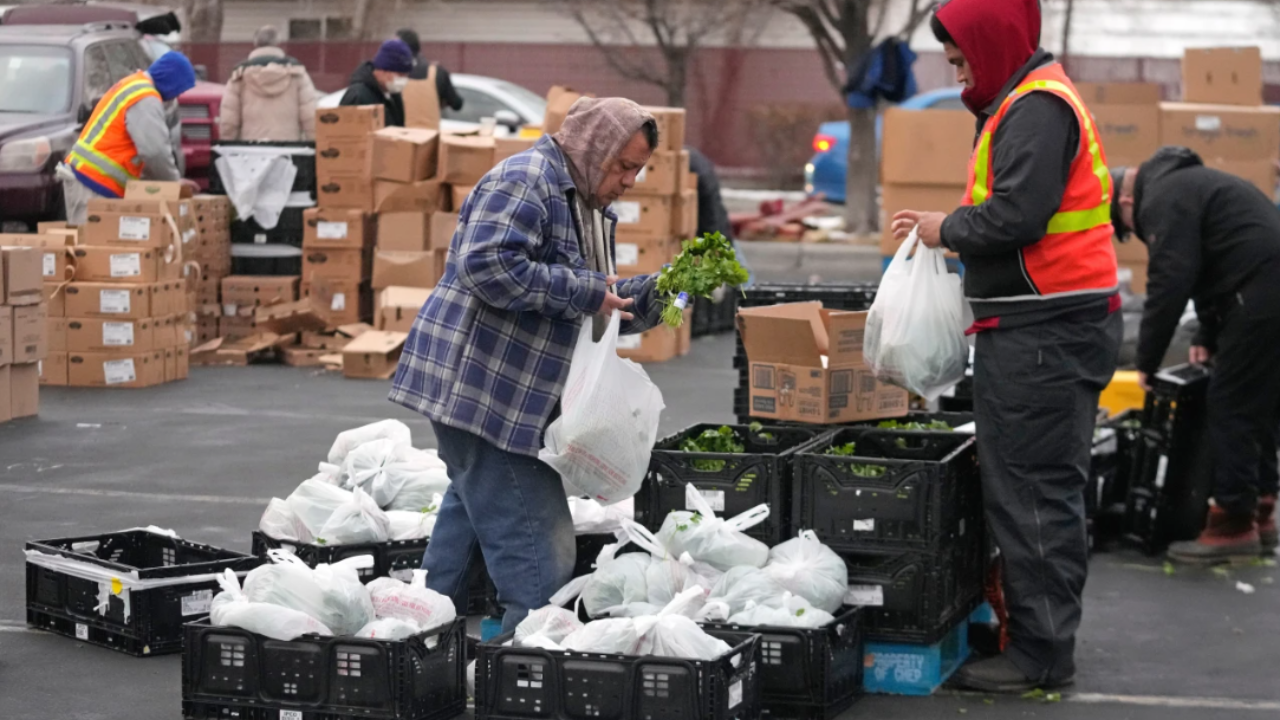
©AP Photo/Rick Bownmer, File
Vocabulary:
I will read the words, meanings, and sample sentences. Then, repeat after me.
- initiative /ih-NISH-uh-tiv/
[adjective] – a plan or action intended to improve something or solve a problem
The school started an initiative to support new learners. - highlight /HAHY-lahyt/
[verb] – to emphasize something important
Teachers highlight main ideas in lessons. - reinforce /ree-in-FORS/
[verb] – to make an idea or feeling stronger
Clear rules reinforce safe behavior. - collective /kuh-LEK-tiv/
[adjective] – done by people acting together
The team reached a collective decision. - widespread /wahyd-SPRED/
[adjective] – existing or happening in many places
The event received widespread support.
Article Reading:
Please read the whole article. Then, I will check your pronunciation and intonation.
The holiday season in the United States is marked by a rise in volunteer initiatives as food banks, community groups, and service organizations observe increased participation from late November to early January. This period includes Thanksgiving, Hanukkah, Christmas, and New Year’s, all of which highlight long-standing traditions that encourage gratitude, charitable giving, and community involvement. Many organizations depend on unpaid support to prepare meals, organize donation drives, and maintain public facilities. Experts report that these customs reinforce the idea that generosity holds an important place during seasonal celebrations across the country.
Researchers in psychology and human evolution explain that gratitude and generosity often develop together, forming a collective pattern found in global festivals such as Diwali, Ramadan, and Eid al-Fitr. Studies show that early human groups survived by cooperating despite physical limitations. Although self-interest appears in many situations, observing kind actions can encourage similar behavior in others. Experts also note that volunteer activities improve emotional well-being, strengthen social ties, and create a sense of direction, especially for older adults who assist with administrative tasks or disaster-response work after retirement. Psychologists add that small actions—including holiday cards, simple greetings, or reconnecting with old friends—can rebuild social relationships. These practices demonstrate how gratitude-centered traditions sustain widespread interest in volunteer work even after seasonal events end.
Researchers in psychology and human evolution explain that gratitude and generosity often develop together, forming a collective pattern found in global festivals such as Diwali, Ramadan, and Eid al-Fitr. Studies show that early human groups survived by cooperating despite physical limitations. Although self-interest appears in many situations, observing kind actions can encourage similar behavior in others. Experts also note that volunteer activities improve emotional well-being, strengthen social ties, and create a sense of direction, especially for older adults who assist with administrative tasks or disaster-response work after retirement. Psychologists add that small actions—including holiday cards, simple greetings, or reconnecting with old friends—can rebuild social relationships. These practices demonstrate how gratitude-centered traditions sustain widespread interest in volunteer work even after seasonal events end.
Discussion Questions:
I will read each question. Then, please answer them.
- What meaningful act of service have you witnessed in your community? If so, what part of that act impressed you the most? If not, what act of service would you like to witness someday?
- If you could design one community project, what goal would it focus on? If so, what activity would you include to achieve that goal? If not, what goal would you choose if you had the chance to create one?
- Do you agree that gratitude encourages stronger cooperation?
- How can communities encourage volunteering outside holiday seasons?
- Which small community actions could create the biggest positive impact? Why?
Summarization:
Please summarize the whole article using your own words and expressions. You will have one minute to prepare before you answer.
Describe:
Please explain the definition of each word listed below based on your understanding. You can provide example sentences if needed.
- season
- tradition
- celebration
- survive
- demonstrate