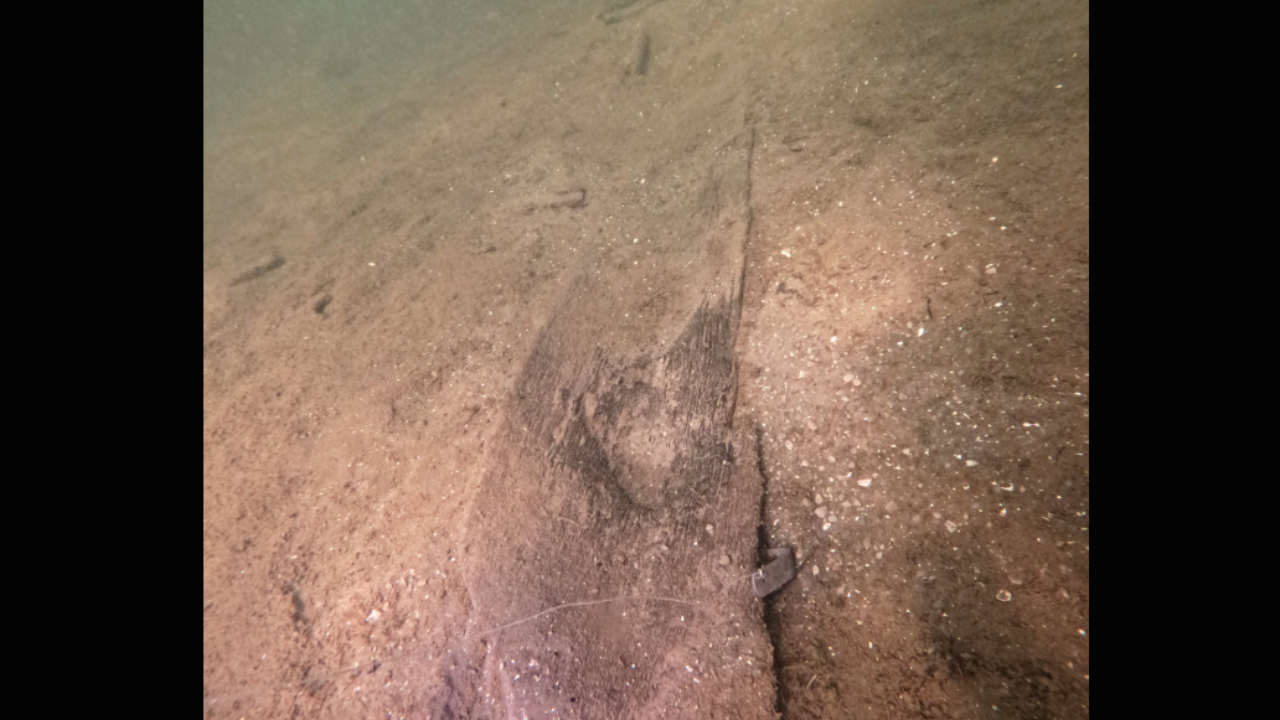
©Tamara Thomsen/Wisconsin Historical Society via AP
Pre-reading Questions:
I will read each question. Then, please answer them.
- What ancient transportation systems have been discovered in your country?
- What objects are usually found in archaeological water sites?
Vocabulary:
I will read the words, meanings, and sample sentences. Then, repeat after me.
- preeminent /pree-EM-uh-nuhnt/
[adjective] – more important or better than others
The museum holds a preeminent place in the city. - recontextualize /ree-kuhn-TECKS-chuh-wuh-lighz/
[verb] – to place something in a new context
Scholars recontextualize old records for modern study. - perpetuity /pur-pi-TOO-i-tee/
[noun] – lasting forever
The law remains in effect for perpetuity. - irrevocable /ih-REV-uh-kuh-buhl/
[adjective] – impossible to change
The team made an irrevocable decision last year. - interlocutor /in-ter-LOK-yuh-ter/
[noun] – someone who takes part in formal discussions
The interlocutor guided the cultural meeting.
Article Reading:
Please read the whole article. Then, I will check your pronunciation and intonation.
Archaeologists confirmed the presence of 16 ancient canoes in Lake Mendota after a detailed mapping project near former Indigenous travel routes. The Wisconsin Historical Society explained that the vessels provide a preeminent record of movement across the region, showing that early communities relied on shared canoe stations similar to modern public transport systems. The site sits close to historic paths once used for long-distance travel, and testing verified ages ranging from 1,200 to 5,200 years old. The findings allow researchers to recontextualize how water travel supported settlement, trade, and cultural exchange among groups living around the lakes of Madison.
Scientists reported that a long drought thousands of years ago made the shoreline shallow, turning the area into a practical landing point for travelers who buried canoes to protect them. Documentation shows boats arranged in layers, suggesting activity across generations and indicating that access to the lake may have been maintained in perpetuity. Preservation partners said the discoveries hold irrevocable cultural value, especially for Native nations whose ancestral connections to Lake Mendota and Lake Wingra remain strong. Representatives acting as cultural interlocutors described the site as evidence of long-standing relationships between communities and waterways. The discoveries help researchers build a clearer timeline of travel practices while strengthening ongoing collaborations with tribal preservation offices.
Scientists reported that a long drought thousands of years ago made the shoreline shallow, turning the area into a practical landing point for travelers who buried canoes to protect them. Documentation shows boats arranged in layers, suggesting activity across generations and indicating that access to the lake may have been maintained in perpetuity. Preservation partners said the discoveries hold irrevocable cultural value, especially for Native nations whose ancestral connections to Lake Mendota and Lake Wingra remain strong. Representatives acting as cultural interlocutors described the site as evidence of long-standing relationships between communities and waterways. The discoveries help researchers build a clearer timeline of travel practices while strengthening ongoing collaborations with tribal preservation offices.
Comprehension Questions:
I will read each question. Then, please answer them based on the article.
- How many canoes were documented?
- Which organization led the announcement?
- Where is the site located?
- What does the canoe network represent?
- What age range did scientists confirm?
Discussion Questions:
I will read each question. Then, please answer them.
- Have ancient items ever been discovered near your hometown? If so, what item? If not, what item would be surprising?
- Have you visited a lake or river before? If so, what did you see there? If not, which water place would you like to visit?
- Do you agree that archaeological discoveries should always involve Indigenous consultation?
- How can modern cities protect heritage sites while handling urban development?
- What can a community do to make sure old objects in water areas stay safe for many years?