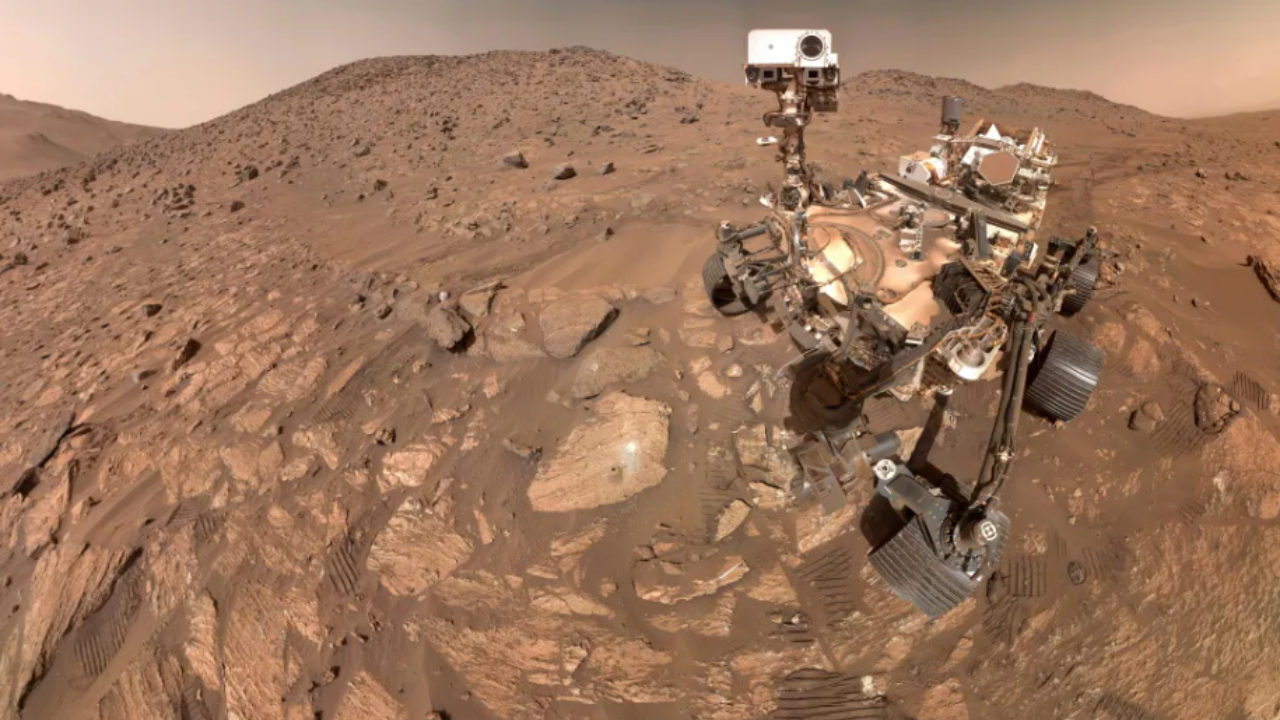
©(NASA via AP, file)
Pre-reading Questions:
I will read each question. Then, please answer them.
講師がそれぞれの質問を読むので答えましょう。
- Do you enjoy learning about space or planets?
- Would you like to listen to sounds recorded on another planet?
Vocabulary:
I will read the words, meanings, and sample sentences. Then, repeat after me.
単語、意味、例文を読みます。講師に続いて音読しましょう。
- sign /sahyn/
[noun] – an indication that something may be true or happening
Doctors found signs of improvement in the patient’s condition. - microphone /MAHY-kruh-fohn/
[noun] – a device used to record or amplify sound
The reporter used a microphone to record the interview. - storm /stawrm/
[noun] – a violent weather condition with strong winds, rain, or another disturbance
Heavy storms caused power outages in several towns. - second /SEK-uhnd/
[noun] – a very short unit of time equal to one sixtieth of a minute
The lights turned green just a few seconds after we stopped. - equipment /ih-KWIP-muhnt/
[noun] – the tools or machines needed for a task or activity
The lab bought new equipment to improve its experiments.
Article Reading:
Please read the whole article. Then, I will check your pronunciation and intonation.
記事を音読しましょう。講師はあなたの発音とイントネーションを確認します。
Scientists found new signs that very small electrical discharges may happen on Mars. The information came from wind recordings made by NASA’s Perseverance rover. The rover’s microphone recorded crackling sounds during dust storms and dust devils, and researchers said these sounds may be “mini lightning.” A French-led team studied the sounds and found 55 events over two Martian years. The team said most of the discharges happened on very windy days close to the rover’s mast. The results suggested that electrical activity, which had been suspected on Mars for many years, may be real. Experts explained that Mars has a thin atmosphere and a lot of moving dust, which can help create electrical charges.More study showed how these discharges formed and why they were hard to confirm. Measurements showed that dust devils made short bursts of electricity that lasted only a few seconds. Larger storms created longer discharges that continued for as long as 30 minutes. Because Mars’ atmosphere absorbs sound, the signals were very weak and needed careful study. Another researcher said the evidence looked good but still needed special tools to fully confirm it. Scientists added that these small discharges might affect future equipment sent to Mars. NASA is also looking for safe and cost-effective ways to bring the rover’s rock samples back to Earth.
True or False:
Read the sentences and identify if they are true or false based on the article.
文章を読んで、記事に基づいて正誤を答えましょう。
- Scientists found signs of small electrical discharges on Mars from wind recordings.
- The rover’s microphone recorded loud music during dust storms.
- Researchers said the crackling sounds might be “mini lightning.”
- The results suggested that electrical activity on Mars may be real.
- The signals were strong and easy for scientists to confirm.
Fill in the Blanks:
Choose the correct word from the table, then fill in the blanks.
適切な言葉を選んで空欄を埋めましょう。
| signs | microphone | storms | seconds | equipment |
- The photographer carried all his ______ in one large bag.
- She finished the puzzle only ______ before the time ran out.
- The dark clouds were ______ that a storm was coming.
- The singer tested the ______ before starting the concert.
- Fishermen stayed home because strong ______ were expected at sea.