©AP Photo/Jorge Saenz, File
Pre-reading Questions:
I will read each question. Then, please answer them.
- What science projects have been discussed in your school or community? How did people learn about their importance?
- What development plans have caused concern in your area? What were the main reasons for the concern?
Vocabulary:
I will read the words, meanings, and sample sentences. Then, repeat after me.
- interrupt /in-ter-UHPT/
[verb] – to stop something for a short time
Noise from the street can interrupt a lesson. - weaken /WEE-kuhn/
[verb] – to make something less strong
Heavy rain can weaken the signal of a radio. - reduce /ri-DOOS/
[verb] – to make something smaller or less
Planting trees can reduce air pollution. - limit /LIM-it/
[verb] – to prevent something from getting bigger or better
Poor weather may limit outdoor activities. - affect /uh-FEKT/
[verb] – to change or influence something
New buildings may affect the look of the night sky.
Article Reading:
Please read the whole article. Then, I will check your pronunciation and intonation.
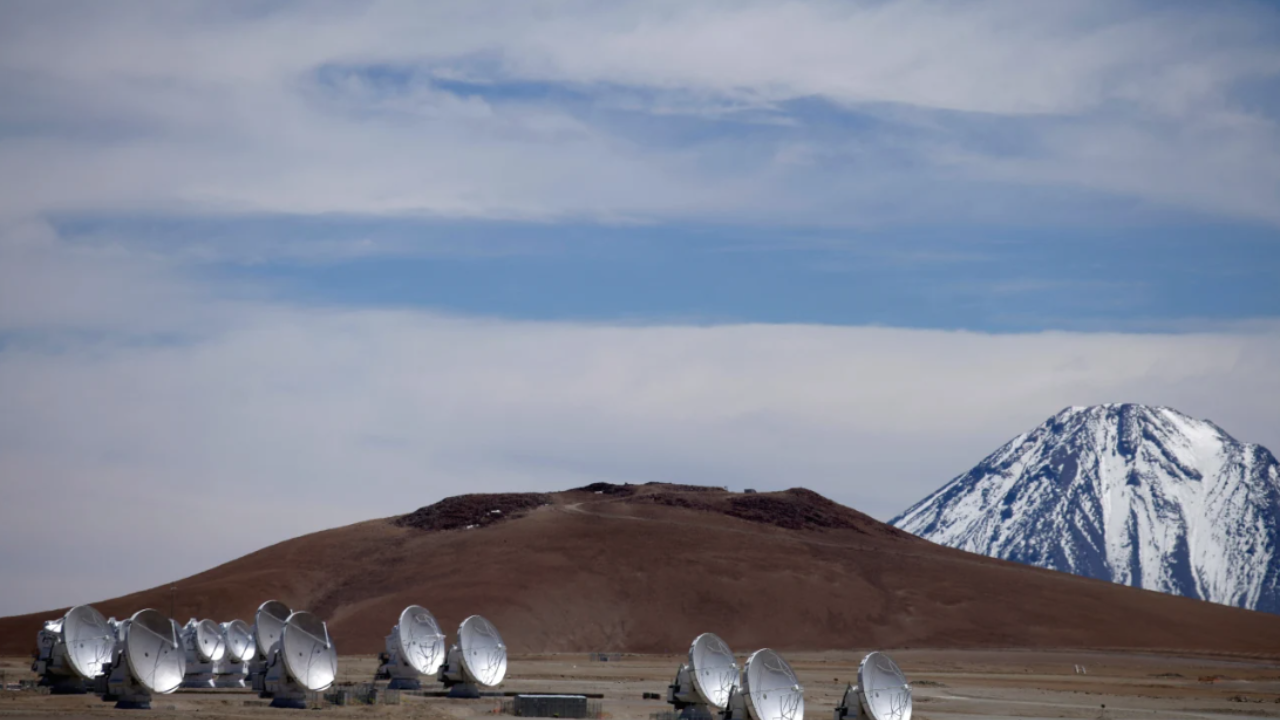
A group of international astronomers urged Chilean officials this week to reconsider a large renewable-energy project planned near the Paranal Observatory in the Atacama Desert, one of the world’s most valuable locations for space research. Scientists stated that the project could interrupt the stable darkness that allows telescopes to capture clear images of planets, stars, and distant galaxies. They noted that strong winds, new lighting, and additional movement around the site may create conditions that weaken astronomical observations. The warning followed an open letter signed by several leading researchers who explained that the Atacama’s rare environment makes it extremely important for global studies of the universe.
Officials said the energy project is still undergoing environmental review and includes wind farms, solar fields, and hydrogen-fuel facilities. Astronomers explained that these changes may reduce visibility and produce new vibrations that travel through the ground. They added that light pollution could rise more than 30%, which may limit the performance of sensitive telescopes. Experts also described the dispute as part of a larger global issue, as many dark-sky regions face pressure from industrial growth. Astronomy groups argued that protecting these areas is essential because only a few locations on Earth can provide the clarity needed for high-level research. They warned that losing the Atacama’s natural darkness would affect the scientific progress of many countries that rely on data collected in Chile.
Officials said the energy project is still undergoing environmental review and includes wind farms, solar fields, and hydrogen-fuel facilities. Astronomers explained that these changes may reduce visibility and produce new vibrations that travel through the ground. They added that light pollution could rise more than 30%, which may limit the performance of sensitive telescopes. Experts also described the dispute as part of a larger global issue, as many dark-sky regions face pressure from industrial growth. Astronomy groups argued that protecting these areas is essential because only a few locations on Earth can provide the clarity needed for high-level research. They warned that losing the Atacama’s natural darkness would affect the scientific progress of many countries that rely on data collected in Chile.
Comprehension Questions:
I will read each question. Then, please answer them based on the article.
- Who urged Chilean officials to reconsider the project?
- What type of project is being planned?
- Where is the Paranal Observatory located?
- Why is the Atacama Desert important?
- What could wind and lighting around the project do?
Discussion Questions:
I will read each question. Then, please answer them.
- What environmental issues have been seen in the community, if any? If so, what actions followed? If not, what might happen if issues appear?
- What development plans have been seen in your area, if any? If so, how did community members react? If not, how might they respond?
- Should countries protect dark-sky areas even if development becomes more difficult?
- How can governments balance economic development with scientific protection?
- What problems might arise if dark-sky sites around the world continue to disappear?