©John Dowling via AP
Pre-reading Questions:
I will read each question. Then, please answer them.
- Have you seen animals at a zoo or sanctuary? If so, what animals did you see? If not, where can you see animals?
- Do people help animals in the community? If so, how do they help? If not, how can people help animals?
Vocabulary:
I will read the words, meanings, and sample sentences. Then, repeat after me.
- distinctive /di-STINGK-tiv/
[adjective] – clearly different from others
Reteti has a distinctive management structure. - practical /PRAK-ti-kuhl/
[adjective] – useful in real situations
Goat’s milk was a practical choice for feeding. - connected /kuh-NEK-tid/
[adjective] – joined or related
Tourism and conservation are closely connected. - cooperation /koh-op-uh-RAY-shuhn/
[noun] – working together
Cooperation between villagers and staff is important. - balanced /BAL-uhnst/
[adjective] – fair and stable
A balanced system helps people and animals.
Article Reading:
Please read the whole article. Then, I will check your pronunciation and intonation.
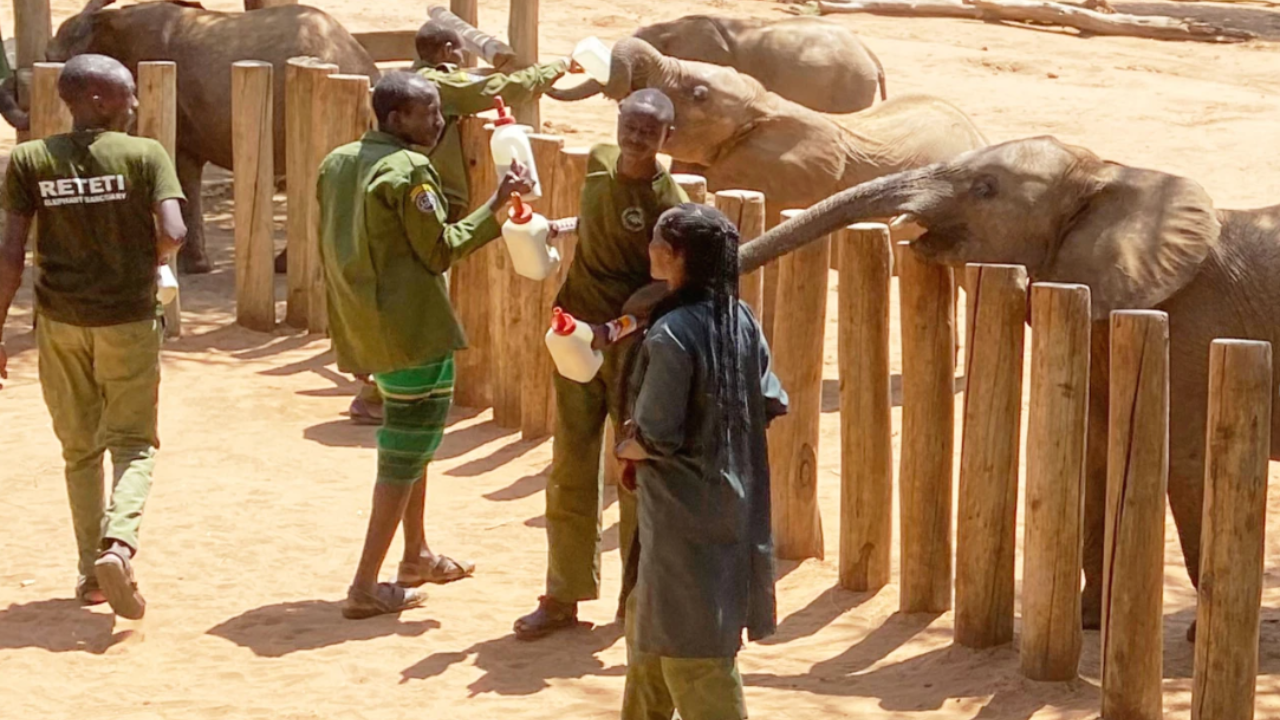
A wildlife sanctuary in Kenya is gaining attention for helping orphaned elephants while supporting local Indigenous communities. In 2025, Reteti Elephant Sanctuary continued its work in northern Kenya, where young elephants are often separated from their families because of drought or human activity. Unlike many conservation centers, Reteti is fully operated by the Samburu people, making it a distinctive example of community-led conservation.
The sanctuary rescues elephants reported by nearby villagers and provides food and medical care until the animals are strong enough to return to the wild. One major challenge was finding a safe and affordable milk source. Commercial formula was expensive and did not meet the elephants’ needs. Caretakers found a practical solution by using goat’s milk from local herds. This approach benefits elephants and creates income for Samburu families, especially women. Over one thousand women now sell milk to Reteti, helping improve daily living conditions. The sanctuary also provides jobs for about one hundred local residents. Tourism partners say the project shows how wildlife protection and economic growth can be connected. Visitors learn about conservation while their spending supports education and health programs. Conservation workers believe this model encourages cooperation between people and wildlife. By focusing on local knowledge and long-term planning, Reteti aims to create a balanced relationship between nature and community development.
The sanctuary rescues elephants reported by nearby villagers and provides food and medical care until the animals are strong enough to return to the wild. One major challenge was finding a safe and affordable milk source. Commercial formula was expensive and did not meet the elephants’ needs. Caretakers found a practical solution by using goat’s milk from local herds. This approach benefits elephants and creates income for Samburu families, especially women. Over one thousand women now sell milk to Reteti, helping improve daily living conditions. The sanctuary also provides jobs for about one hundred local residents. Tourism partners say the project shows how wildlife protection and economic growth can be connected. Visitors learn about conservation while their spending supports education and health programs. Conservation workers believe this model encourages cooperation between people and wildlife. By focusing on local knowledge and long-term planning, Reteti aims to create a balanced relationship between nature and community development.
Comprehension Questions:
I will read each question. Then, please answer them based on the article.
- Where is Reteti Elephant Sanctuary located?
- Why do some elephants become separated from their families?
- Who operates Reteti Elephant Sanctuary?
- What kind of care do rescued elephants receive at the sanctuary?
- Why was commercial milk formula not suitable for the elephants?
Discussion Questions:
I will read each question. Then, please answer them.
- What wildlife protection activities have been seen in the community, if any? If so, how did people take part? If not, what activities could help protect animals?
- What examples of tourism helping local people have been noticed, if any? If so, what benefits were seen? If not, what support could tourism provide?
- Do conservation projects work better when local people manage them?
- Why might local communities protect wildlife more carefully than outside groups?
- How could similar conservation projects succeed in places with fewer tourists?