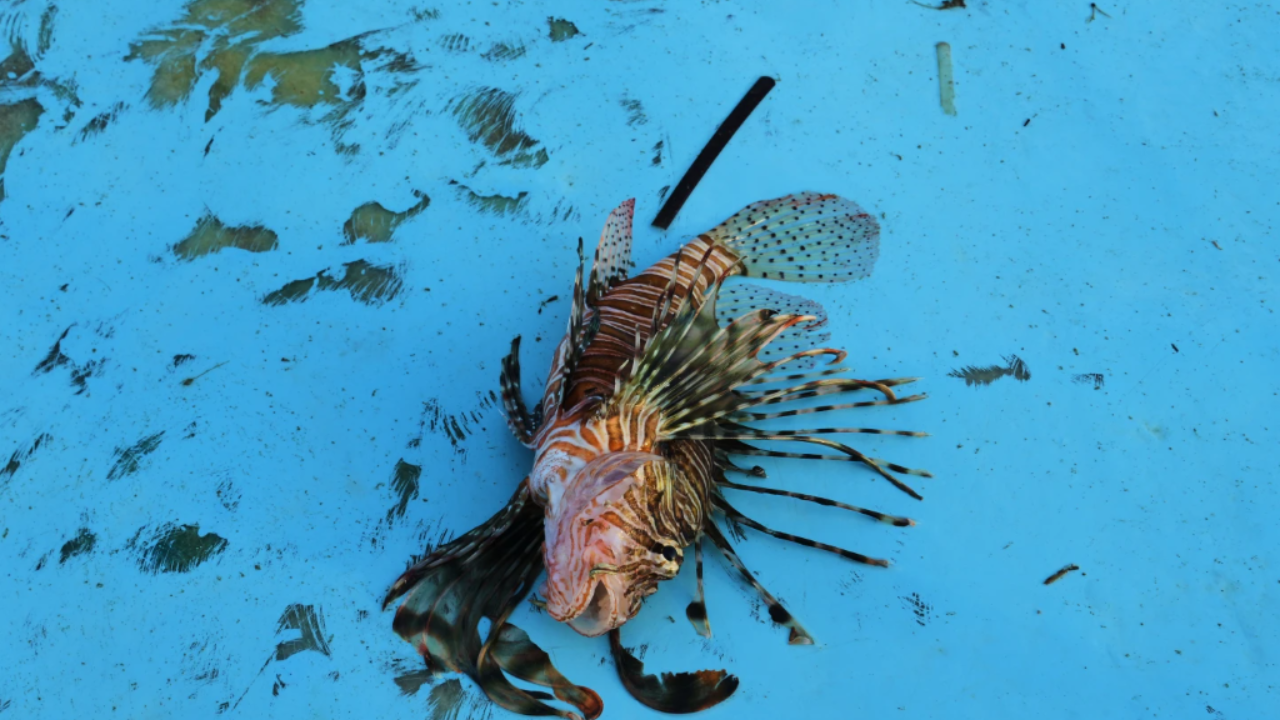
©(AP Photo/Petros Karadjias)
Pre-reading Questions:
I will read each question. Then, please answer them.
- What kinds of fish do people usually eat in your country?
- What problems could fishermen face if local fish become harder to catch?
Vocabulary:
I will read the words, meanings, and sample sentences. Then, repeat after me.
- expansion /ik-SPAN-shuhn/
[noun] – the act of becoming larger or wider
The expansion of the city caused changes in nearby farmland. - pressure /PRE-shur/
[noun] – force or stress that causes difficulty or strain
Rising costs put pressure on small local businesses. - native /NEY-tiv/
[adjective] – originally belonging to a place
Native plants grow better in local soil conditions. - sharp /shahrp/
[adjective] – sudden and clear
A sharp drop in sales affected the company’s profits. - ground /ground/
[noun] – an area of land used for a specific purpose
The park is a popular ground for outdoor events.
Article Reading:
Please read the whole article. Then, I will check your pronunciation and intonation.
Invasive fish species have become a serious issue for fishing communities in the eastern Mediterranean, with Cyprus among the most affected areas. Since the 2010s, lionfish and silver-cheeked toadfish have entered Mediterranean waters from the Red Sea. Marine scientists connect this movement to rising sea temperatures and the expansion of the Suez Canal, which has changed natural sea routes. Researchers warn that these conditions increase pressure on native fish species that support local fisheries. Surveys by fisheries departments show a sharp decline in traditional catch species near Larnaca, a coastal city once known for productive fishing grounds. This decline threatens the economic stability of professional fishermen and raises concerns about long-term food supply in the region.
Current responses focus on controlling invasive populations rather than removing them completely. European programs provide financial incentives for catching toxic silver-cheeked toadfish, which are destroyed to limit population growth. These measures aim to reduce damage to fishing nets and lower financial losses. Another method targets lionfish through organized removal by trained divers in reefs and protected areas. Research indicates that repeated removals can help native species recover. Authorities are also promoting lionfish as a food option after safe preparation. Fisheries experts state that wider acceptance of invasive species as seafood could reduce environmental damage while supporting coastal economies.
Current responses focus on controlling invasive populations rather than removing them completely. European programs provide financial incentives for catching toxic silver-cheeked toadfish, which are destroyed to limit population growth. These measures aim to reduce damage to fishing nets and lower financial losses. Another method targets lionfish through organized removal by trained divers in reefs and protected areas. Research indicates that repeated removals can help native species recover. Authorities are also promoting lionfish as a food option after safe preparation. Fisheries experts state that wider acceptance of invasive species as seafood could reduce environmental damage while supporting coastal economies.
Comprehension Questions:
I will read each question. Then, please answer them based on the article.
- What is the main problem for fishing communities in the eastern Mediterranean?
- Which two invasive fish species entered Mediterranean waters?
- What two factors do marine scientists connect to this movement?
- What kind of programs provide money for catching toxic toadfish?
- What food option are authorities promoting after safe preparation?
Discussion Questions:
I will read each question. Then, please answer them.
- Have you talked with someone who works with food or fishing? If so, what did that person say about work or food? If not, what questions would you like to ask such a person?
- Have you seen changes in fish or seafood prices in markets or restaurants? If so, what kind of change did you notice? If not, how do people usually buy fish in your area?
- Do you agree that catching invasive fish can help protect native fish species?
- What could happen if invasive fish are not controlled?
- How can government programs help fishermen during difficult times?