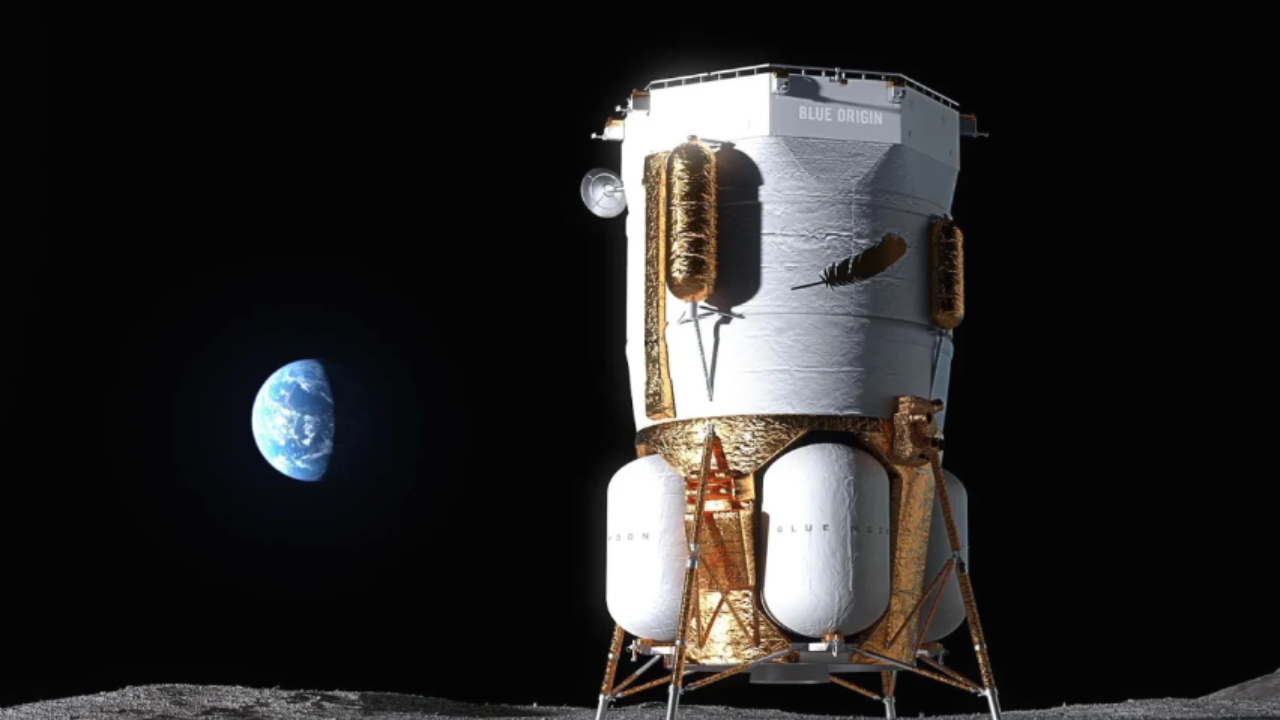
©Blue Origin via AP
Vocabulary:
I will read the words, meanings, and sample sentences. Then, repeat after me.
- consequential /kon-si-KWEN-shuhl/
[adjective] – having important results or effects
The mission was consequential for future lunar planning. - unprecedented /un-PRES-i-den-tid/
[adjective] – never having happened before
The finding was unprecedented in modern space research. - coordinated /koh-AWR-di-ney-tid/
[adjective] – organized to work together effectively
The mission followed a coordinated international plan. - methodical /muh-THOD-i-kuhl/
[adjective] – done in a careful and systematic way
Engineers used a methodical approach to testing. - granular /GRAN-yuh-ler/
[adjective] – very detailed or precise
Sensors provided granular measurements of solar wind.
Article Reading:
Please read the whole article. Then, I will check your pronunciation and intonation.
The year 2026 is shaping up as a consequential period for space exploration, marked by renewed lunar missions, rare celestial events, and growing scientific attention to interstellar objects. The year opened with heightened interest in the moon, as preparations advanced for the first crewed lunar flyby in more than five decades and multiple robotic landers scheduled launches. A supermoon appeared in early January, while an astronomical blue moon is expected in May. Solar activity also drew notice, with a ring-of-fire eclipse visible in Antarctica in February and a total solar eclipse set to cross parts of the Arctic, Europe, and the North Atlantic in August, reinforcing global interest in astronomical observation.
Beyond these events, scientists continued monitoring a fading interstellar comet, identified as 3I/Atlas, which passed Earth in late 2025 and will move beyond the solar system in coming years. Researchers described the discovery as unprecedented, noting that it represents only the third confirmed object from another star system. Planetary alignments, including a rare six-planet lineup in February and additional groupings later in the year, are expected to provide valuable opportunities for observation. Meanwhile, space agencies are advancing lunar exploration through a coordinated mix of crewed missions and private-sector landers, reflecting a methodical strategy to expand surface knowledge before future landings. Solar scientists are also preparing for continued geomagnetic activity as the sun produces eruptions capable of triggering auroras. Improved instruments launched in late 2025 are expected to deliver granular data, strengthening forecasts and contributing to a broader understanding of space weather and its effects on Earth.
Beyond these events, scientists continued monitoring a fading interstellar comet, identified as 3I/Atlas, which passed Earth in late 2025 and will move beyond the solar system in coming years. Researchers described the discovery as unprecedented, noting that it represents only the third confirmed object from another star system. Planetary alignments, including a rare six-planet lineup in February and additional groupings later in the year, are expected to provide valuable opportunities for observation. Meanwhile, space agencies are advancing lunar exploration through a coordinated mix of crewed missions and private-sector landers, reflecting a methodical strategy to expand surface knowledge before future landings. Solar scientists are also preparing for continued geomagnetic activity as the sun produces eruptions capable of triggering auroras. Improved instruments launched in late 2025 are expected to deliver granular data, strengthening forecasts and contributing to a broader understanding of space weather and its effects on Earth.
Discussion Questions:
I will read each question. Then, please answer them.
- What space-related events have been seen in the community, if any? If so, what drew attention? If not, what limited awareness?
- What scientific missions have been discussed locally, if any? If so, which ones? If not, why?
- Do large space missions deserve public funding?
- Why are interstellar discoveries scientifically valuable?
- How might space weather research affect daily life?
Summarization:
Please summarize the whole article using your own words and expressions. You will have one minute to prepare before you answer.
Describe:
Please explain the definition of each word listed below based on your understanding. You can provide example sentences if needed.
- shape
- interest
- valuable
- opportunity
- effect