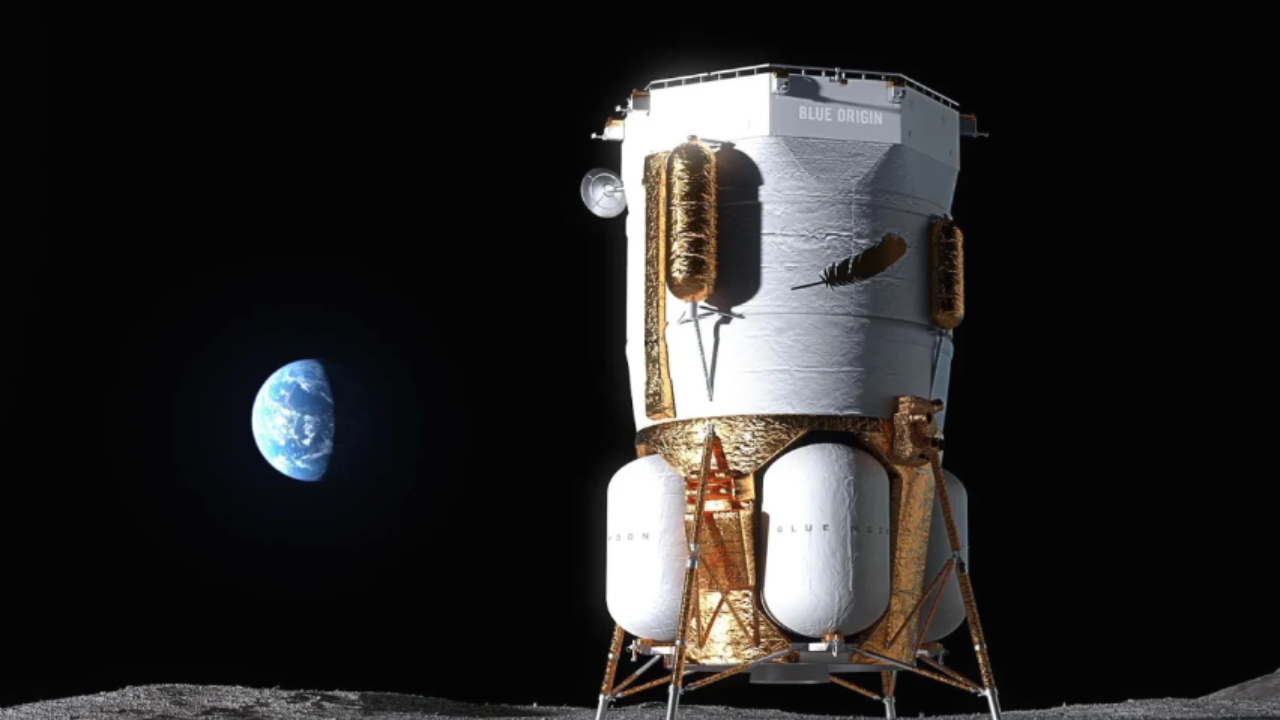
©Blue Origin via AP
Pre-reading Questions:
I will read each question. Then, please answer them.
- What space events do people usually notice each year? Why do these events attract attention?
- Have planets lining up been reported before? Where were they seen?
Vocabulary:
I will read the words, meanings, and sample sentences. Then, repeat after me.
- distant /DIS-tuhnt/
[adjective] – far away in space or location
Astronomers studied a distant object beyond the planets. - rare /rair/
[adjective] – not common or usual
Interstellar objects are rare discoveries. - noticeable /NOH-ti-suh-buhl/
[adjective] – easy to see or recognize
The alignment was noticeable after sunset. - steady /STED-ee/
[adjective] – developing in a calm and controlled way
The program followed a steady plan. - reliable /ri-LAHY-uh-buhl/
[adjective] – able to be trusted
The data came from reliable instruments.
Article Reading:
Please read the whole article. Then, I will check your pronunciation and intonation.
The year 2026 will bring many space events that attract scientists and the public. Early in the year, attention turned to the moon as space agencies prepared for a crewed flyby mission and several robotic landers. A supermoon appeared in January, and another rare blue moon is planned for May. The sun also created interest with a ring-of-fire eclipse seen from Antarctica in February, followed by a total solar eclipse expected in August across parts of Europe and the North Atlantic. These events helped increase awareness of space science and observation.
In addition, astronomers continued tracking a distant comet known as 3I/Atlas, which came from outside the solar system. The object is slowly fading but remains important because such visitors are extremely rare. Later in the year, several planets will appear close together in the sky, creating a noticeable alignment for observers. Space agencies are also taking a steady approach to lunar exploration, combining human missions with robotic landings to collect data safely. Scientists expect more solar activity, which may cause auroras in unexpected places. New space instruments will help provide reliable information about solar storms, allowing experts to better explain how space weather can affect communication systems and power grids on Earth.
In addition, astronomers continued tracking a distant comet known as 3I/Atlas, which came from outside the solar system. The object is slowly fading but remains important because such visitors are extremely rare. Later in the year, several planets will appear close together in the sky, creating a noticeable alignment for observers. Space agencies are also taking a steady approach to lunar exploration, combining human missions with robotic landings to collect data safely. Scientists expect more solar activity, which may cause auroras in unexpected places. New space instruments will help provide reliable information about solar storms, allowing experts to better explain how space weather can affect communication systems and power grids on Earth.
Comprehension Questions:
I will read each question. Then, please answer them based on the article.
- What made the moon important at the start of 2026?
- When did the first supermoon appear?
- What type of eclipse was seen from Antarctica in February?
- Where will the total solar eclipse in August be visible?
- What is the name of the comet scientists are studying?
Discussion Questions:
I will read each question. Then, please answer them.
- Have space events been discussed locally, if so what? If not, why?
- Have auroras ever been seen nearby, if so where? If not, why?
- Should governments invest more in space research?
- Why do scientists study objects from outside the solar system?
- How can space weather affect daily technology?