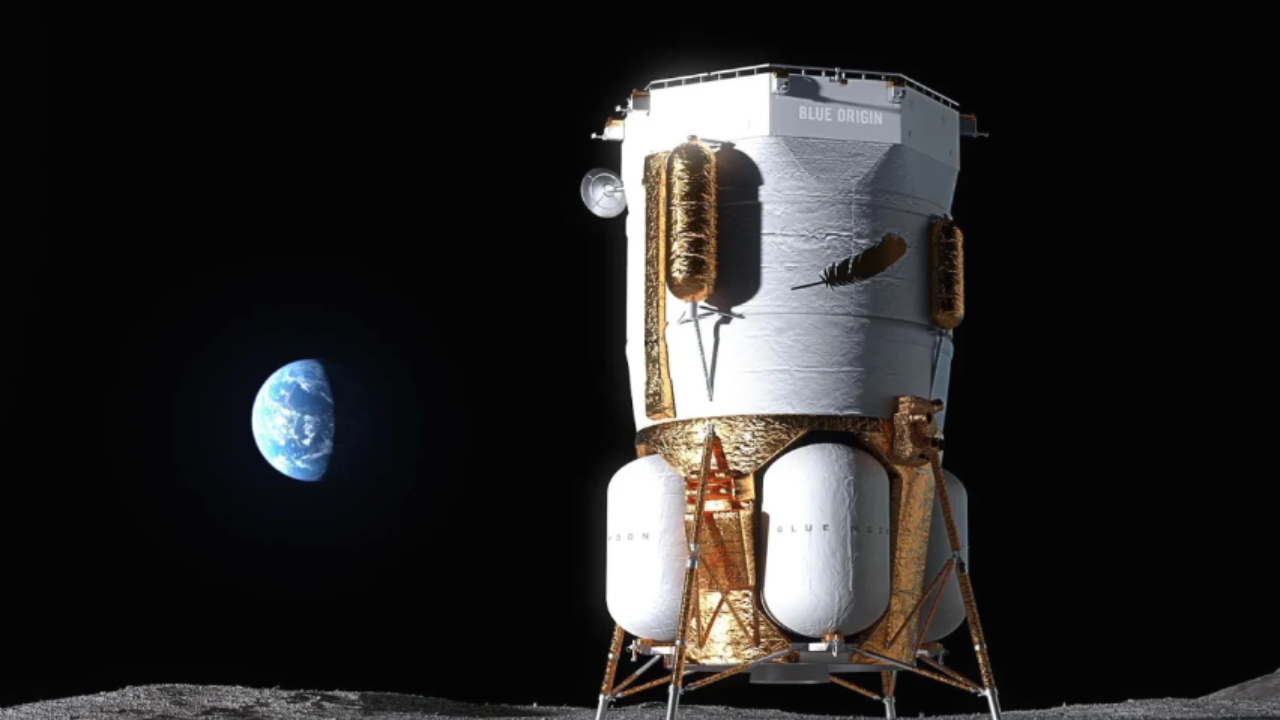
©Blue Origin via AP
Pre-reading Questions:
I will read each question. Then, please answer them.
講師がそれぞれの質問を読むので答えましょう。
- Have you ever watched the moon or stars at night?
- Do you know what a solar eclipse is?
Vocabulary:
I will read the words, meanings, and sample sentences. Then, repeat after me.
単語、意味、例文を読みます。講師に続いて音読しましょう。
- distant /DIS-tuhnt/
[adjective] – Meaning: far away
The moon looks distant at night. - rare /rair/
[adjective] – not common
Blue moons are rare. - noticeable /NOH-tuh-suh-buhl/
[adjective] – easy to see or notice
The planets were noticeable in the sky. - steady /STED-ee/
[adjective] – slow and careful, not sudden
The team made steady progress. - reliable /ri-ˈLAHY-uh-buhl/
[adjective] – can be trusted
This report is reliable.
Article Reading:
Please read the whole article. Then, I will check your pronunciation and intonation.
記事を音読しましょう。講師はあなたの発音とイントネーションを確認します。
The year 2026 will bring many space events that interest scientists and the public. Early in the year, people watched the moon as space agencies prepared for a crewed flyby and several robotic landers. A supermoon appeared in January, and a blue moon is planned for May. The sun also became important with a ring-of-fire eclipse seen from Antarctica in February. Another total solar eclipse is expected in August in parts of Europe and the North Atlantic.
Astronomers are also watching a distant comet called 3I/Atlas that came from outside the solar system. Such objects are very rare, so scientists study them carefully. Later in the year, planets will appear close together, making a noticeable view in the sky. Space agencies continue a steady plan for moon missions using robots and astronauts. New tools will provide reliable information about solar storms and their effects on Earth.
Astronomers are also watching a distant comet called 3I/Atlas that came from outside the solar system. Such objects are very rare, so scientists study them carefully. Later in the year, planets will appear close together, making a noticeable view in the sky. Space agencies continue a steady plan for moon missions using robots and astronauts. New tools will provide reliable information about solar storms and their effects on Earth.
True or False:
Read the sentences and identify if they are true or false based on the article.
文章を読んで、記事に基づいて正誤を答えましょう。
- A supermoon appeared in May.
- The comet came from outside the solar system.
- The ring-of-fire eclipse was seen in Europe.
- Space agencies use robots and astronauts.
- Solar storms can affect Earth.
Fill in the Blanks:
Choose the correct word from the table, then fill in the blanks.
適切な言葉を選んで空欄を埋めましょう。
| distant | rare | noticeable | steady | reliable |
- He gives ______ information.
- A ______ star is hard to see.
- That animal is ______ in this area.
- There is a ______ change today.
- She walks at a ______ speed.