©AP Photo/Andy Wong
Vocabulary:
I will read the words, meanings, and sample sentences. Then, repeat after me.
- fundamental /fuhn-duh-MEN-tl/
[adjective] – basic and very important
The market experienced a fundamental shift. - adaptive /uh-DAP-tiv/
[adjective] – able to change to suit new conditions
Firms used adaptive pricing strategies. - persistent /per-SIS-tuhnt/
[adjective] – continuing for a long time
Persistent pressure reduced profits. - restraint /rih-STRAYNT/
[adjective] – control over behavior
Buyers showed restraint in spending. - overarching /OH-ver-AHR-ching/
[adjective] – most important or covering everything
An overarching strategy became necessary.
Article Reading:
Please read the whole article. Then, I will check your pronunciation and intonation.
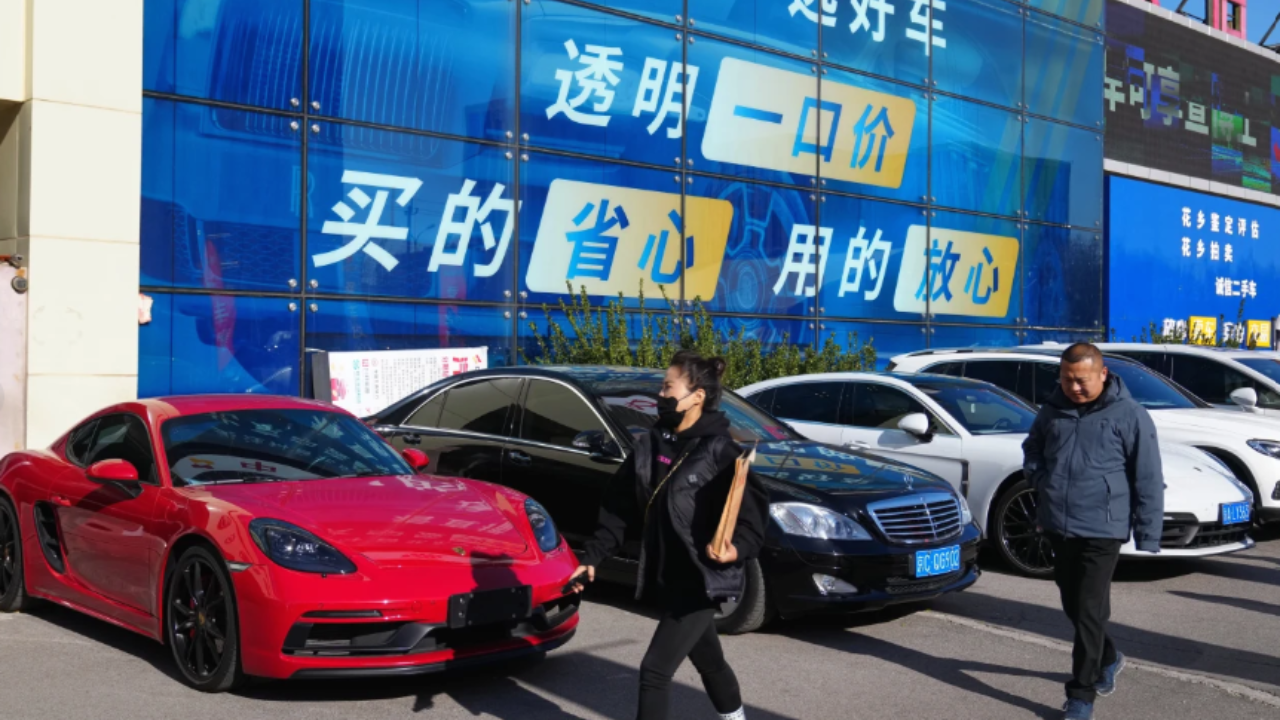
Demand for foreign luxury cars in China declined sharply in 2025 as consumers increasingly favored lower-priced domestic vehicles equipped with advanced digital systems, industry data showed. The shift occurred as slower economic growth and a prolonged property slump reduced willingness to make high-cost purchases. Premium European automakers, including Mercedes-Benz, BMW, and Porsche, recorded falling sales volumes as Chinese brands expanded offerings that better matched local expectations. Analysts described the downturn as a fundamental change in consumer behavior rather than a short-lived reaction, signaling a broader transformation within the world’s largest automotive market.
The trend has been reinforced by government trade-in incentives for electric and plug-in hybrid vehicles, which encouraged buyers to focus on models where subsidies produced greater savings. Chinese manufacturers adopted an adaptive approach, rapidly updating product lines and pricing strategies to maintain appeal. Market observers noted that this created a persistent challenge for foreign brands whose higher production costs limited flexibility. At the same time, affluent consumers showed growing restraint in displaying luxury goods publicly, further weakening demand. Industry analysts emphasized that foreign automakers now face an overarching need to reassess localization, branding, and long-term investment strategies in China. Without significant adjustments, experts warned that overseas brands risk continued erosion of market share as domestic competitors strengthen positions across both mainstream and premium segments nationwide.
The trend has been reinforced by government trade-in incentives for electric and plug-in hybrid vehicles, which encouraged buyers to focus on models where subsidies produced greater savings. Chinese manufacturers adopted an adaptive approach, rapidly updating product lines and pricing strategies to maintain appeal. Market observers noted that this created a persistent challenge for foreign brands whose higher production costs limited flexibility. At the same time, affluent consumers showed growing restraint in displaying luxury goods publicly, further weakening demand. Industry analysts emphasized that foreign automakers now face an overarching need to reassess localization, branding, and long-term investment strategies in China. Without significant adjustments, experts warned that overseas brands risk continued erosion of market share as domestic competitors strengthen positions across both mainstream and premium segments nationwide.
Discussion Questions:
I will read each question. Then, please answer them.
- What shift in consumer spending has been seen in the community, if any? If so, what caused it? If not, why not?
- What response from luxury brands has been seen in the community, if any? If so, how effective was it? If not, why?
- Should luxury brands change prices to protect market share?
- How can foreign automakers rebuild trust with Chinese buyers?
- What long-term impact could domestic innovation have globally?
Summarization:
Please summarize the whole article using your own words and expressions. You will have one minute to prepare before you answer.
Describe:
Please explain the definition of each word listed below based on your understanding. You can provide example sentences if needed.
- demand
- expectation
- observer
- strategy
- erosion