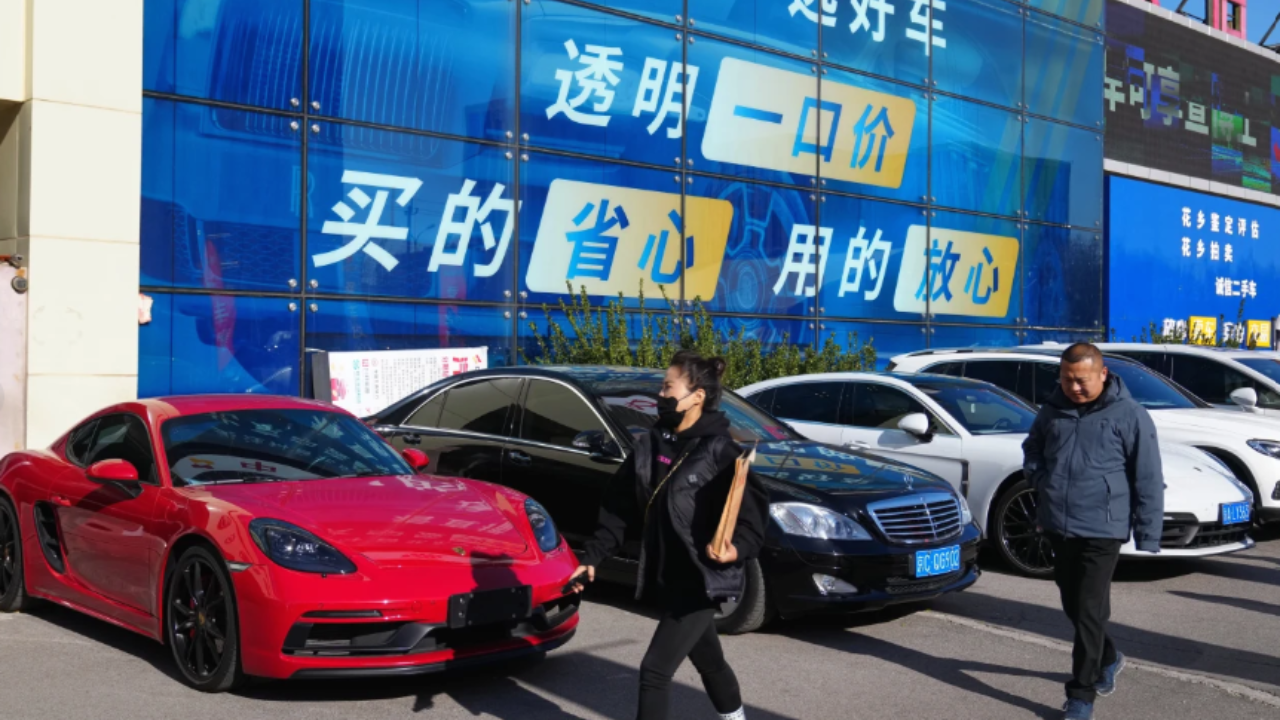
©AP Photo/Andy Wong
Pre-reading Questions:
I will read each question. Then, please answer them.
- Why do people avoid expensive items during slow economies?
- What features matter most when choosing a car today?
Vocabulary:
I will read the words, meanings, and sample sentences. Then, repeat after me.
- clear /KLEER/
[adjective] – easy to see or understand
A clear trend appeared in sales. - efficient /ih-FISH-uhnt/
[adjective] – working well without waste
Efficient factories lowered costs. - pressure /PRESH-e/
[noun] – strong influence or stress
Brands felt pressure to adjust prices. - practical /PRAK-ti-kuhl/
[adjective] – useful in real situations
Practical pricing attracted customers. - hesitant /HEZ-i-tuhnt/
[adjective] – unsure or slow to act
Shoppers felt hesitant about spending.
Article Reading:
Please read the whole article. Then, I will check your pronunciation and intonation.
Sales of foreign luxury cars in China fell in 2025 as more buyers chose affordable domestic vehicles with modern technology and comfort features. The decline followed slower economic growth and a long property downturn, which made people more cautious about expensive purchases. Famous European brands such as BMW, Mercedes-Benz, and Porsche lost customers as Chinese carmakers gained attention. Analysts said the trend showed a clear change in buying habits rather than a temporary slowdown.
Government trade-in programs for electric and hybrid cars also played an important role. Many buyers selected entry-level models because discounts had a stronger effect on lower-priced vehicles. Chinese manufacturers increased efficient production and released new models more often, helping them stay competitive. As a result, foreign brands faced growing pressure in keeping sales steady. Experts noted that domestic companies benefited from practical pricing and faster product updates. At the same time, some wealthy buyers became hesitant to show luxury cars in public, which reduced demand further. Market researchers described the situation as uncertain, warning that foreign automakers must change strategies to remain competitive. Without better local adaptation, analysts said overseas brands could continue losing customers to domestic firms across both standard and premium segments.
Government trade-in programs for electric and hybrid cars also played an important role. Many buyers selected entry-level models because discounts had a stronger effect on lower-priced vehicles. Chinese manufacturers increased efficient production and released new models more often, helping them stay competitive. As a result, foreign brands faced growing pressure in keeping sales steady. Experts noted that domestic companies benefited from practical pricing and faster product updates. At the same time, some wealthy buyers became hesitant to show luxury cars in public, which reduced demand further. Market researchers described the situation as uncertain, warning that foreign automakers must change strategies to remain competitive. Without better local adaptation, analysts said overseas brands could continue losing customers to domestic firms across both standard and premium segments.
Comprehension Questions:
I will read each question. Then, please answer them based on the article.
- What change occurred in demand for foreign luxury cars in China in 2025?
- Which economic conditions reduced consumers’ willingness to make expensive purchases?
- Which foreign automakers experienced declining sales in China?
- How did analysts describe the nature of the market downturn?
- What government policy encouraged buyers to choose electric and hybrid vehicles?
Discussion Questions:
I will read each question. Then, please answer them.
- Have buying habits changed locally, if so, how? If not, why not?
- Has interest in local brands increased, if so, why? If not, why?
- Should foreign brands focus more on local needs?
- What risks do foreign brands face if they do not adapt?
- How could competition improve car quality?