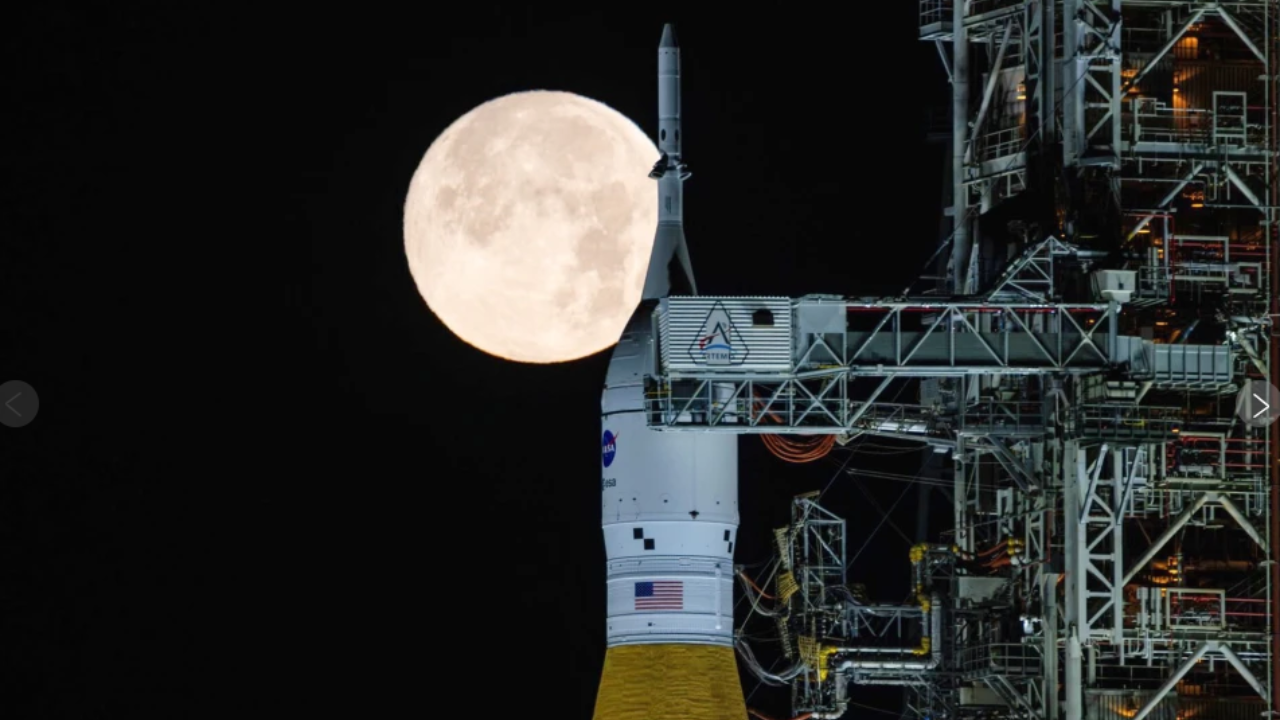
©Sam Lott/NASA via AP
Vocabulary:
I will read the words, meanings, and sample sentences. Then, repeat after me.
- exasperating /ig-ZAS-puh-ray-ting/
[adjective] – causing intense frustration
Repeated delays created an exasperating situation for mission planners. - volatility /vol-uh-TIL-i-tee/
[noun] – tendency to change rapidly or dangerously
Hydrogen volatility requires strict safety controls during fueling. - pivotal /PIV-uh-tl/
[adjective] – extremely important
The rehearsal was pivotal for confirming launch readiness. - consequential /kon-si-KWEN-shuhl/
[adjective] – producing important effects
The delay had consequential impacts on mission planning. - resilience /ri-ZIL-yuhns/
[noun] – ability to recover quickly
System resilience was tested during repeated shutdowns.
Article Reading:
Please read the whole article. Then, I will check your pronunciation and intonation.
NASA faced renewed uncertainty after exasperating fuel leaks disrupted a critical test of its next-generation moon rocket on February 2, 2026, at Kennedy Space Center in Florida. The issue emerged during a high-stakes fueling rehearsal designed to determine readiness for the first crewed lunar mission in more than fifty years. Officials confirmed that the leaks raised concerns about schedule reliability, particularly as the launch window narrowed due to seasonal conditions. The malfunction echoed earlier delays that affected the rocket’s initial debut, prompting scrutiny over whether the mission timeline remained viable.
The leaks occurred while teams attempted to load super-cooled hydrogen and oxygen into the massive launch system, a process requiring prolonged stability to replicate final countdown conditions. Engineers halted operations multiple times after detecting abnormal hydrogen accumulation near the rocket’s base, applying mitigation methods refined during earlier tests. While the situation did not endanger personnel, the volatility of hydrogen demanded immediate procedural adjustments. The rehearsal was considered pivotal because it determined whether astronauts could proceed toward launch clearance. Four crew members monitored the operation remotely while remaining under quarantine protocols. NASA officials emphasized that further evaluation was required to assess whether technical safeguards were sufficient under compressed timelines. The mission aimed to validate spacecraft performance during a lunar flyby, not a landing, marking a consequential step in long-term exploration strategy. Any additional delays could have altered mission sequencing, reinforcing concerns about the program’s resilience amid recurring technical challenges.
The leaks occurred while teams attempted to load super-cooled hydrogen and oxygen into the massive launch system, a process requiring prolonged stability to replicate final countdown conditions. Engineers halted operations multiple times after detecting abnormal hydrogen accumulation near the rocket’s base, applying mitigation methods refined during earlier tests. While the situation did not endanger personnel, the volatility of hydrogen demanded immediate procedural adjustments. The rehearsal was considered pivotal because it determined whether astronauts could proceed toward launch clearance. Four crew members monitored the operation remotely while remaining under quarantine protocols. NASA officials emphasized that further evaluation was required to assess whether technical safeguards were sufficient under compressed timelines. The mission aimed to validate spacecraft performance during a lunar flyby, not a landing, marking a consequential step in long-term exploration strategy. Any additional delays could have altered mission sequencing, reinforcing concerns about the program’s resilience amid recurring technical challenges.
Discussion Questions:
I will read each question. Then, please answer them.
- What technical issue has been observed in the community, if any? If so, how was it handled? If not, what systems prevent it?
- What safety concern has been discussed publicly, if any? If so, what response followed? If not, why?
- Should mission schedules prioritize safety over deadlines?
- How do recurring delays influence public trust in space programs?
- What long-term strategies could reduce testing disruptions?
Summarization:
Please summarize the whole article using your own words and expressions. You will have one minute to prepare before you answer.
Describe:
Please explain the definition of each word listed below based on your understanding. You can provide example sentences if needed.
- critical
- emerge
- stability
- exploration
- altered