©(AP Photo/Kristin M. Hall)
Vocabulary:
I will read the words, meanings, and sample sentences. Then, repeat after me.
- archive /AHR-kahyv/
[noun] – a place where historical records are stored and kept safe
The city keeps old maps in a public archive for researchers. - correspondence /kawr-uh-SPON-duhns/
[noun] – written communication between people
The company saved all email correspondence for legal reasons. - segregation /seg-ri-GEY-shuhn/
[noun] – the separation of people into different groups, often by law or rule
The law ended segregation in public transportation. - comprehensive /kom-pri-HEN-siv/
[adjective] – complete and including many parts or details
The report gives a comprehensive review of the safety rules. - fragile /FRAJ-uhl/
[adjective] – easily broken or damaged
The museum protects fragile glass items carefully.
Article Reading:
Please read the whole article. Then, I will check your pronunciation and intonation.
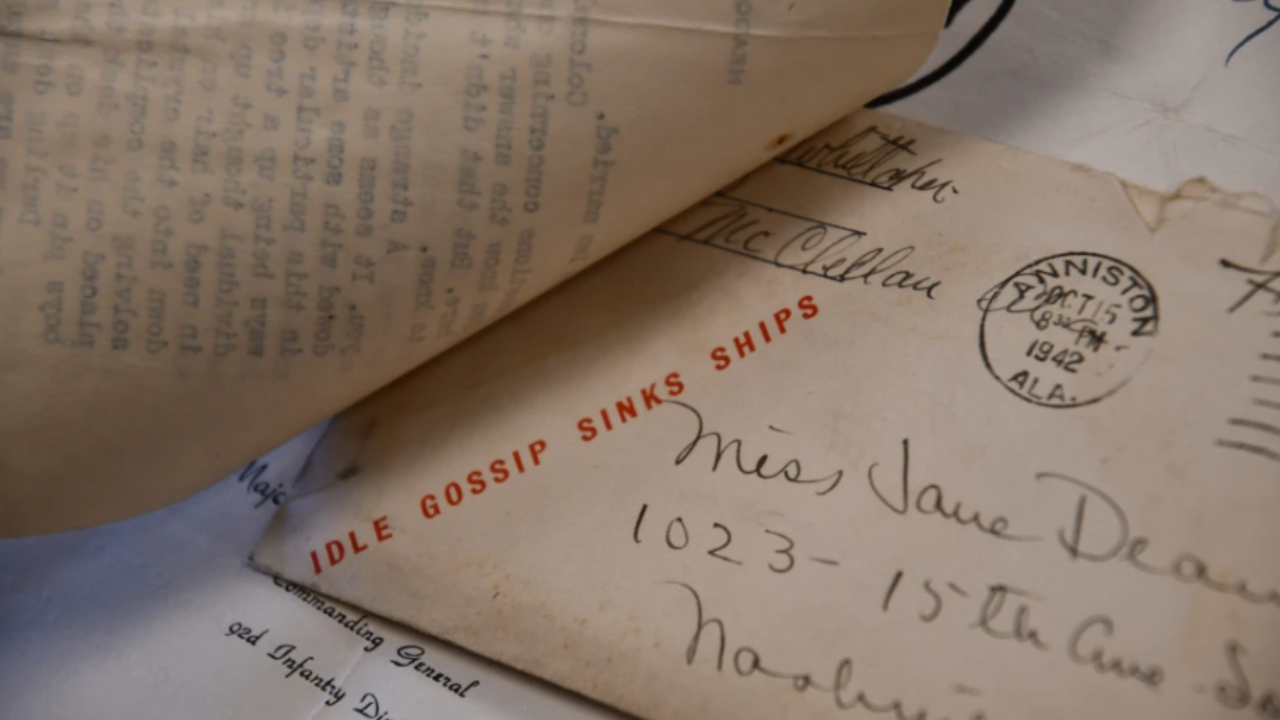
A digital collection of World War II love letters is now available through the Nashville Public Library, offering historical context about personal life during wartime America. The archive presents more than 200 letters written between 1942 and 1945 by William Raymond Whittaker and Jane Dean, a couple connected to Nashville through education and work. The materials were donated in 2016 after discovery in a family home and are managed by the Metro Nashville Archives. The correspondence documents a courtship that began at Meharry Medical College and continued after military service separated the couple. Archivists explain that the project aims to preserve everyday history during a global conflict, using a meticulous approach to protect original documents while sharing meaningful content with the public. The collection is noteworthy because the letters provide rare insight into emotional life during segregation and wartime service.
The digital exhibit explains how archivists organized, scanned, and described each item to support research and public learning. According to professional staff, modern digitization tools made a comprehensive presentation possible without risking damage to fragile paper. The archive also highlights challenges, including limited biographical records and the absence of living relatives, which required careful analysis of written evidence. The project shows how digital access can support sustainable preservation while expanding public understanding of social history. Educators note that the letters help explain work, marriage, and military life during the 1940s in a clear way. The exhibit also demonstrates resilience during wartime, showing how personal relationships continued despite distance and uncertainty. Library officials report that online access allows students and researchers worldwide to explore the materials, supporting broader engagement with historical records.
The digital exhibit explains how archivists organized, scanned, and described each item to support research and public learning. According to professional staff, modern digitization tools made a comprehensive presentation possible without risking damage to fragile paper. The archive also highlights challenges, including limited biographical records and the absence of living relatives, which required careful analysis of written evidence. The project shows how digital access can support sustainable preservation while expanding public understanding of social history. Educators note that the letters help explain work, marriage, and military life during the 1940s in a clear way. The exhibit also demonstrates resilience during wartime, showing how personal relationships continued despite distance and uncertainty. Library officials report that online access allows students and researchers worldwide to explore the materials, supporting broader engagement with historical records.
Discussion Questions:
I will read each question. Then, please answer them.
- Have you ever read old letters, messages, or documents from the past? If so, what did they help you understand about the people or time? If not, what kind of past documents would you like to read, and why?
- Have you ever stayed in touch with someone when meeting was difficult because of distance or work? If so, how did you communicate, and what was challenging about it? If not, how do you think distance can affect relationships?
- Do you agree that personal letters can help people understand history better than official records?
- Why is it important to preserve personal stories, not only major historical events?
- What challenges might archivists face when sharing old letters with the public?
Summarization:
Please summarize the whole article using your own words and expressions. You will have one minute to prepare before you answer.
Describe:
Please explain the definition of each word listed below based on your understanding. You can provide example sentences if needed.
- collection
- personal life
- couple
- document
- historical record