©Cusack Lab via AP
Pre-reading Questions:
I will read each question. Then, please answer them.
- Do babies recognize objects early in life? What signs show this?
- How do scientists study baby brain activity? Why is it difficult?
Vocabulary:
I will read the words, meanings, and sample sentences. Then, repeat after me.
- reliable /ri-LAHY-uh-buhl/
[adjective] – able to be trusted as accurate
The new method provided reliable results for the study. - difference /DIF-er-uhn-siz/
[noun] – ways in which things are not the same
The scans showed differences in brain activity. - challenging /CHAL-in-jing/
[adjective] – difficult but interesting
The research was challenging because babies moved often. - comfortable /KUHM-fer-tuh-buhl/
[adjective] – feeling relaxed and without pain
The babies were placed in a comfortable position. - connect /verb/
[kuh-NEKT] – to link things together
Scientists want to connect brain scans with learning
Article Reading:
Please read the whole article. Then, I will check your pronunciation and intonation.
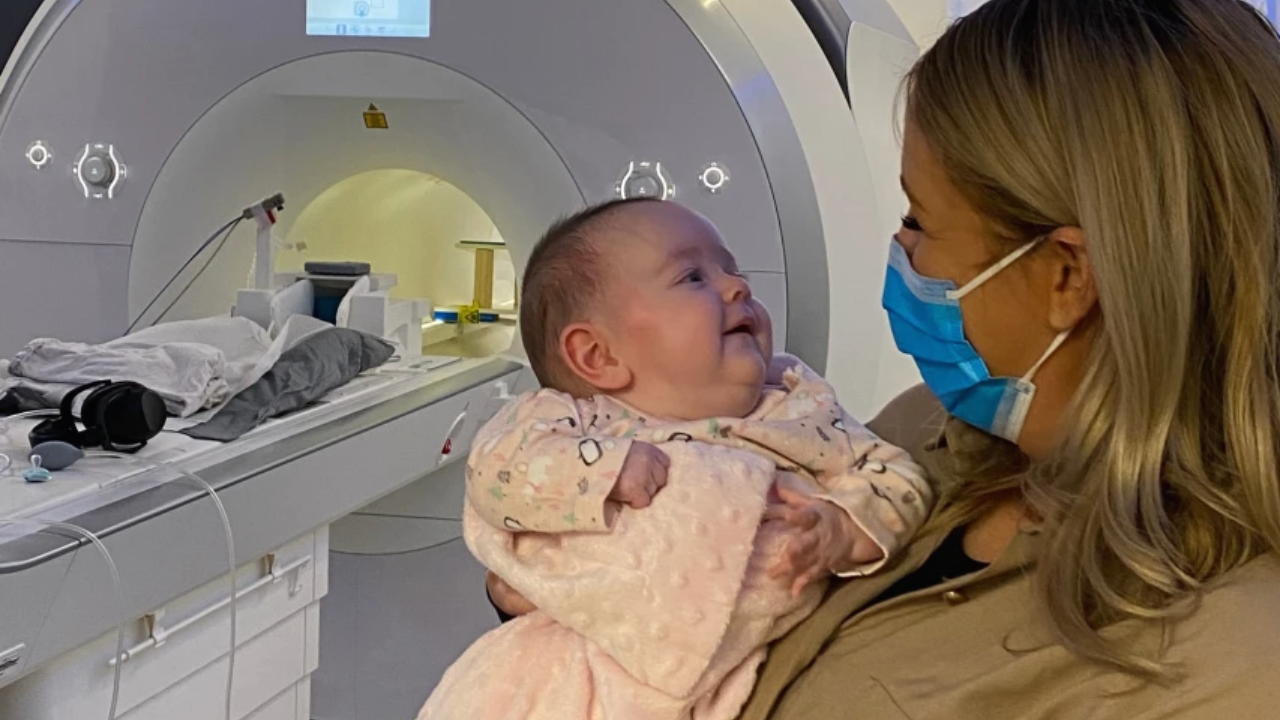
A new study has found that babies can tell the difference between types of objects at just two months old. The research was published in Nature Neuroscience and carried out by scientists at Trinity College Dublin. The team studied brain activity in 130 babies while they were awake and looking at pictures of animals, trees, and everyday objects. Scientists wanted to learn how early the brain begins to recognize the world. Lead researcher Cliona O’Doherty said the results show infants understand their surroundings earlier than expected. The findings may help doctors better support child development in the future.
Researchers used brain scans called functional magnetic resonance imaging to record how infants reacted to different images. This method gave more reliable results than older studies that measured how long babies looked at objects. Brain patterns showed clear differences when babies viewed animals compared with nonliving objects. Many babies returned for another scan at nine months, and results showed stronger recognition skills. Experts said the study was challenging because babies needed to stay calm and awake during scanning. Scientists created a comfortable environment using bean bags and large images above the infants. Researchers hope future studies will connect early brain activity with later learning ability.
Researchers used brain scans called functional magnetic resonance imaging to record how infants reacted to different images. This method gave more reliable results than older studies that measured how long babies looked at objects. Brain patterns showed clear differences when babies viewed animals compared with nonliving objects. Many babies returned for another scan at nine months, and results showed stronger recognition skills. Experts said the study was challenging because babies needed to stay calm and awake during scanning. Scientists created a comfortable environment using bean bags and large images above the infants. Researchers hope future studies will connect early brain activity with later learning ability.
Comprehension Questions:
I will read each question. Then, please answer them based on the article.
- What age were the babies studied?
- Where was the research published?
- How many babies joined the first study?
- What images did babies look at?
- What scanning method was used?
Discussion Questions:
I will read each question. Then, please answer them.
- What child development programs have been seen in the community, if so what activities exist, if not what programs could be created?
- What parenting education has been seen in the community, if so what topics are taught, if not what topics are needed?
- Early learning begins earlier than people expect. Agree or disagree?
- Why is studying babies important for education?
- How might technology improve child development research?