©(AP Photo/Duke Monari)
Pre-reading Questions:
I will read each question. Then, please answer them.
- What kinds of gifts do people usually give on special days like Valentine’s Day?
- What makes a gift feel meaningful to you: the thought, the use, or the design? Why?
Vocabulary:
I will read the words, meanings, and sample sentences. Then, repeat after me.
- promotion /pruh-MOH-shuhn/
[noun] – the act of making something known to many people
The company used online promotion to introduce a new product. - hyperinflation /hahy-per-in-FLEY-shuhn/
[noun] – extremely fast increase in prices
Hyperinflation caused food prices to rise very quickly. - liquidity /li-KWID-i-tee/
[noun] – the ability to use money easily for payment
The business improved liquidity by keeping more cash available. - discarded /dis-KAHR-did/
[adjective] – no longer wanted and thrown away
The workshop reused discarded wood to make simple furniture. - stability /stuh-BIL-i-tee/
[noun] – a steady and balanced condition
The system showed stability during the test period.
Article Reading:
Please read the whole article. Then, I will check your pronunciation and intonation.
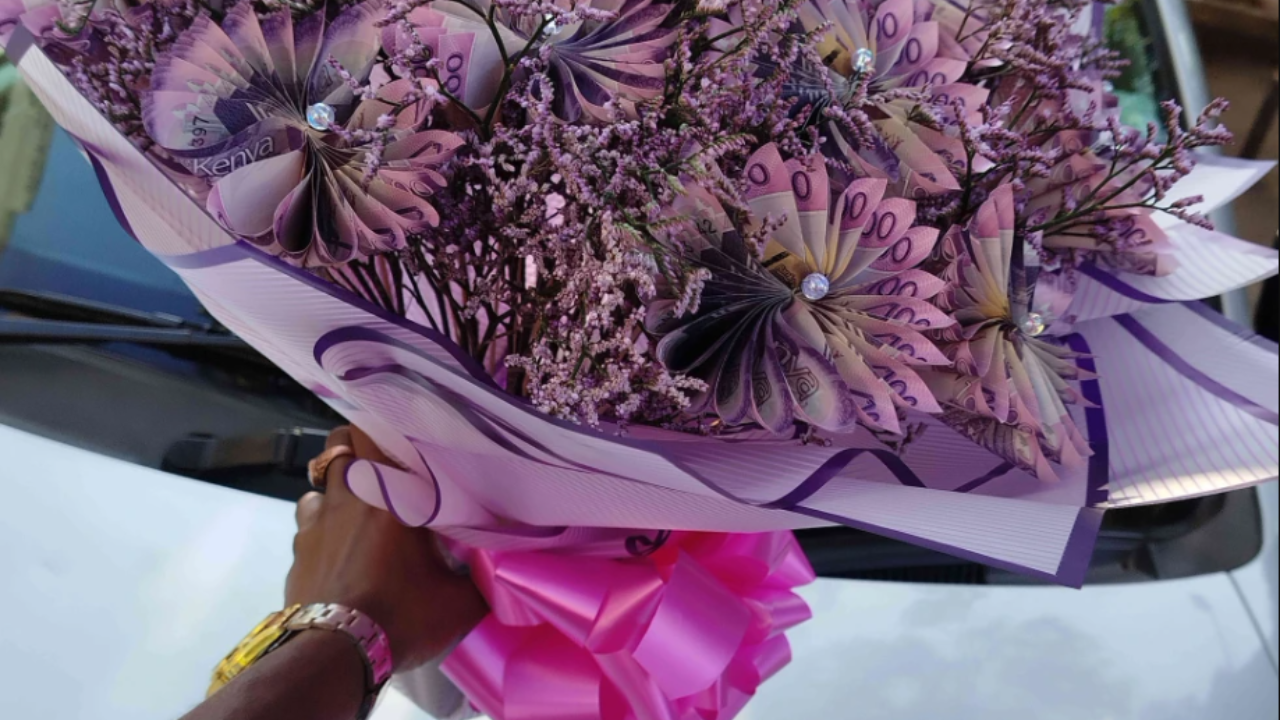
Romantic gift-giving in Zimbabwe has changed in recent years, especially during Valentine’s Day, as economic conditions influence personal relationships. In Harare and other urban areas, cash bouquets made from folded U.S. dollar notes arranged like flowers have become popular alternatives to traditional floral gifts. The trend has expanded over the past few years through social media promotion and changing consumer behavior. Zimbabwe has relied heavily on the U.S. dollar since 2009 after severe hyperinflation, which made liquidity important in everyday transactions. Because of this context, money-based gifts carry both symbolic and practical value. Market vendors report increased demand during Valentine’s season, and analysts describe the practice as a practical response to economic pressure rather than a rejection of romance.
At the same time, recycled metal gifts have gained attention in Harare. Artisans collect discarded scrap metal and transform it into heart-shaped jewelry and decorative items. Environmental specialists note that this practice reduces waste and supports local employment. The production process requires skill and consistency, which increases the perceived value of each item. Retailers report growing interest from local buyers, showing stability within small creative businesses. However, challenges remain, including limited access to equipment and rising material costs. Despite these difficulties, the trend continues, reflecting changing social values that connect romance with sustainability and long-lasting meaning.
At the same time, recycled metal gifts have gained attention in Harare. Artisans collect discarded scrap metal and transform it into heart-shaped jewelry and decorative items. Environmental specialists note that this practice reduces waste and supports local employment. The production process requires skill and consistency, which increases the perceived value of each item. Retailers report growing interest from local buyers, showing stability within small creative businesses. However, challenges remain, including limited access to equipment and rising material costs. Despite these difficulties, the trend continues, reflecting changing social values that connect romance with sustainability and long-lasting meaning.
Comprehension Questions:
I will read each question. Then, please answer them based on the article.
- In which city have cash bouquets become popular?
- What helped the trend grow in recent years?
- What do market vendors report during Valentine’s season?
- What material do artisans use to make recycled gifts?
- What problem do small creative businesses face?
Discussion Questions:
I will read each question. Then, please answer them.
- Have you ever given or received a gift on Valentine’s Day? If so, what kind of gift was it? If not, what gift would you like to give or receive?
- Have you ever seen a gift made from money or recycled material? If so, where did you see it? If not, what do you think such a gift would look like?
- Do you agree that money-based gifts can be meaningful?
- Why do you think some people prefer cash bouquets instead of flower bouquets?
- How does using money as a gift change the meaning of romance for some people?