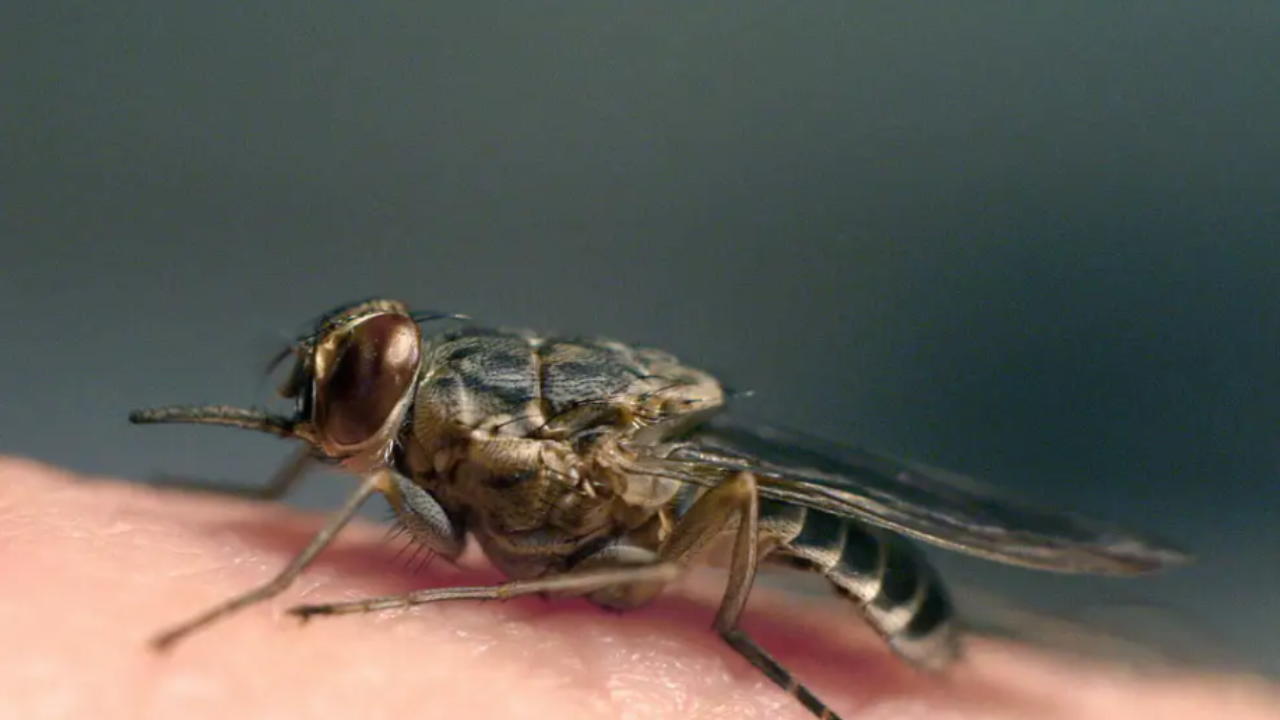
©(Anton Fric/CTK via AP)
Vocabulary:
I will read the words, meanings, and sample sentences. Then, repeat after me.
- infectious /in-FEK-shuhs/
[adjective] – able to spread from one person to another and cause illness
Schools closed early because an infectious illness was reported in the area. - confusion /kuhn-FYOO-zhuhn/
[noun] – a state of not understanding clearly
The unclear instructions caused confusion among the new employees. - simplify /SIM-pluh-fahy/
[verb] – to make something easier to understand or do
The company simplified the process to save time and reduce errors. - dose /dohs/
[noun] – a single amount of medicine taken at one time
The nurse prepared one dose of medicine for the patient. - transmission /trans-MISH-uhn/
[noun] – the act of passing something from one person or place to another
Wearing masks helped reduce the transmission of illness in public areas.
Article Reading:
Please read the whole article. Then, I will check your pronunciation and intonation.
European drug regulators have approved a new treatment for sleeping sickness, a serious infectious disease found mainly in rural parts of sub-Saharan Africa. The decision was announced by a scientific committee of the European Medicines Agency and supports global efforts to eliminate the disease. The medicine, called acoziborole and developed by Sanofi, is planned for use in the Democratic Republic of Congo, where most reported cases occur, with access expected to expand to other African countries. Sleeping sickness spreads through the bite of tsetse flies and can cause fever, confusion, and dangerous changes in sleep patterns. Health records show fewer than 600 cases of the most common form were reported in 2024, compared with thousands several decades ago, showing major progress. However, current treatments often require long hospital stays, complex testing, and strong medical infrastructure, which is limited in many affected regions.
The new treatment simplifies care by using a single dose of three pills taken at one time, reducing the need for hospital travel. Clinical research involving about 200 patients in Congo and Guinea showed that more than 95 percent were considered cured after 18 months of follow-up. These results supported approval for patients aged 12 and older and for both early and advanced stages of the disease. The treatment also removes the need for spinal taps, which were previously required to guide care. Public health experts say easier treatment could help reach remote communities and support the World Health Organization goal to stop transmission by 2030. Some uncertainty remains about hidden infections, but Sanofi plans to donate the medicine through the World Health Organization to ensure free access.
The new treatment simplifies care by using a single dose of three pills taken at one time, reducing the need for hospital travel. Clinical research involving about 200 patients in Congo and Guinea showed that more than 95 percent were considered cured after 18 months of follow-up. These results supported approval for patients aged 12 and older and for both early and advanced stages of the disease. The treatment also removes the need for spinal taps, which were previously required to guide care. Public health experts say easier treatment could help reach remote communities and support the World Health Organization goal to stop transmission by 2030. Some uncertainty remains about hidden infections, but Sanofi plans to donate the medicine through the World Health Organization to ensure free access.
Discussion Questions:
I will read each question. Then, please answer them.
- Have you ever learned about a serious disease that affects people in rural areas? If so, where did you learn about it, and what information stayed with you? If not, where do you usually get information about health issues?
- Have you or someone you know ever needed to travel far to receive medical care? If so, what was difficult about the experience? If not, why do you think medical care is not easy to reach in some places?
- Do you agree that donating medicine is an effective way to support global health programs?
- What challenges might health workers still face even with a new and improved treatment?
- Why should governments and organizations continue to monitor diseases even when case numbers are low?
Summarization:
Please summarize the whole article using your own words and expressions. You will have one minute to prepare before you answer.
Describe:
Please explain the definition of each word listed below based on your understanding. You can provide example sentences if needed.
- sickness
- disease
- rural
- medicine
- access