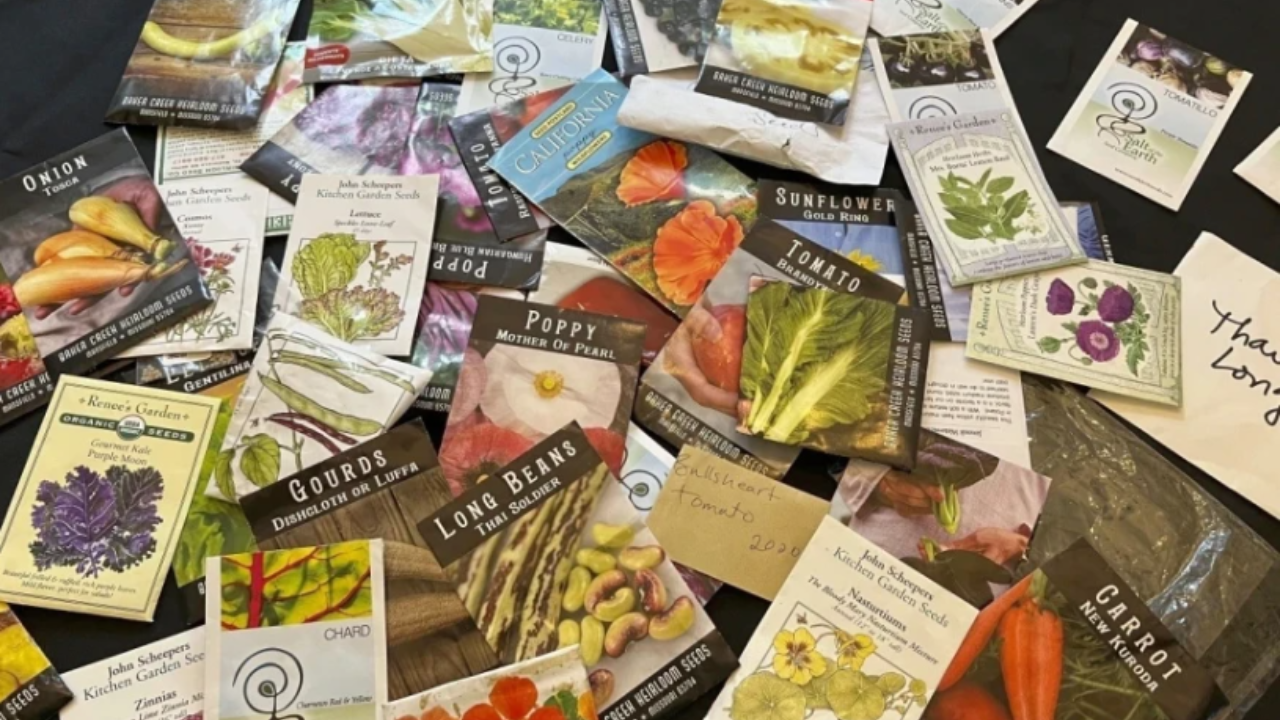
©(Jessica Damiano via AP)
Vocabulary:
I will read the words, meanings, and sample sentences. Then, repeat after me.
- contain /kuhn-TEYN/
[verb] – to have something inside or include something as part of something else
The training guide contains steps that explain how to operate the new machine. - germination /jur-muh-NEY-shuhn/
[noun] – the process in which a seed begins to grow and develop into a plant
Warm temperature can improve the germination of vegetable seeds in spring. - biennial /bahy-EN-ee-uhl/
[noun] – a plant that completes the life cycle in two years
The carrot is a biennial that usually produces seeds in the second year. - cultivation /kuhl-tuh-VEY-shuhn/
[noun] – the process of preparing and using land for growing plants or crops
Modern tools have improved the cultivation of crops in many farming communities. - scarification /skar-uh-fi-KEY-shuhn/
[noun] – the process of scratching or weakening the hard outer covering of a seed to help it grow
Botanists sometimes use scarification to help hard seeds absorb water.
Article Reading:
Please read the whole article. Then, I will check your pronunciation and intonation.
Seed packets provide essential information for gardeners planning to grow plants from seeds. Many beginner gardeners believe planting requires only soil, water, and sunlight. However, instructions printed on seed packets often contain technical terms that explain when and where seeds should be planted. Garden experts report that correct timing is important because plants grow best under suitable weather conditions. Most packets recommend starting seeds indoors several weeks before the average last frost date in a region. Agricultural researchers state that understanding these instructions can increase the success rate of home gardening. A horticulture report published in 2024 stated that accurate planting schedules improve germination and plant survival in home gardens. The report also explained that seed packets describe plant life cycles such as annual, biennial, and perennial growth patterns, offering valuable insight into how long plants live and produce crops.
Seed packets also explain planting methods and seed characteristics that guide gardeners during cultivation. Some packets recommend broadcasting seeds across soil instead of planting in rows, while others advise direct sowing in outdoor garden beds. Agricultural specialists report that germination rate percentages show how many seeds are expected to sprout under suitable conditions, a figure that requires careful interpretation when planning garden space. Modern gardening research has introduced improved hybrid seeds developed through controlled cross-pollination, an innovation in plant breeding. These hybrids often demonstrate stronger resistance to diseases and pests, which researchers describe as an important advantage for crop reliability. Seed preparation techniques such as scarification and stratification represent a scientific approach used to improve germination by preparing seeds for environmental conditions.
Seed packets also explain planting methods and seed characteristics that guide gardeners during cultivation. Some packets recommend broadcasting seeds across soil instead of planting in rows, while others advise direct sowing in outdoor garden beds. Agricultural specialists report that germination rate percentages show how many seeds are expected to sprout under suitable conditions, a figure that requires careful interpretation when planning garden space. Modern gardening research has introduced improved hybrid seeds developed through controlled cross-pollination, an innovation in plant breeding. These hybrids often demonstrate stronger resistance to diseases and pests, which researchers describe as an important advantage for crop reliability. Seed preparation techniques such as scarification and stratification represent a scientific approach used to improve germination by preparing seeds for environmental conditions.
Discussion Questions:
I will read each question. Then, please answer them.
- Have you ever planted seeds in a garden or in a pot at home? If so, what kind of seeds did you plant? If not, what plants would you like to grow in the future?
- Have you ever read the instructions on a seed packet before planting seeds? If so, what information on the packet helped you the most? If not, how would you learn the correct way to plant seeds?
- Do you agree that reading seed packet instructions can help gardeners grow plants more successfully?
- Why do you think correct planting time is important for plant growth?
- How can learning basic gardening skills help people in everyday life?
Summarization:
Please summarize the whole article using your own words and expressions. You will have one minute to prepare before you answer.
Describe:
Please explain the definition of each word listed below based on your understanding. You can provide example sentences if needed.
- gardener
- plant
- beginner
- soil
- sunlight