Pre-reading Questions:
I will read each question. Then, please answer them.
講師がそれぞれの質問を読むので答えましょう。
- Do you like waking up early in the morning?
- Do you think changing your sleep schedule is difficult?
Vocabulary:
I will read the words, meanings, and sample sentences. Then, repeat after me.
単語、意味、例文を読みます。講師に続いて音読しましょう。
- practice /PRAK-tis/
[noun] – a usual way of doing something
The school started a new practice of checking student IDs at the gate. - standard /STAN-derd/
[adjective] – normal or commonly accepted
The hotel follows standard safety rules for all guests. - wartime /WAWR-tahym/
[noun] – a period when a country is involved in war
During wartime, many factories changed production to support the military. - sudden /SUHD-n/
[adjective] – happening quickly and without warning
A sudden storm forced the airport to delay several flights. - accident /AK-si-duhnt/
[noun] – an unexpected event that causes damage or injury
A traffic accident caused a long delay on the highway.
Article Reading:
Please read the whole article. Then, I will check your pronunciation and intonation.
記事を音読しましょう。講師はあなたの発音とイントネーションを確認します。
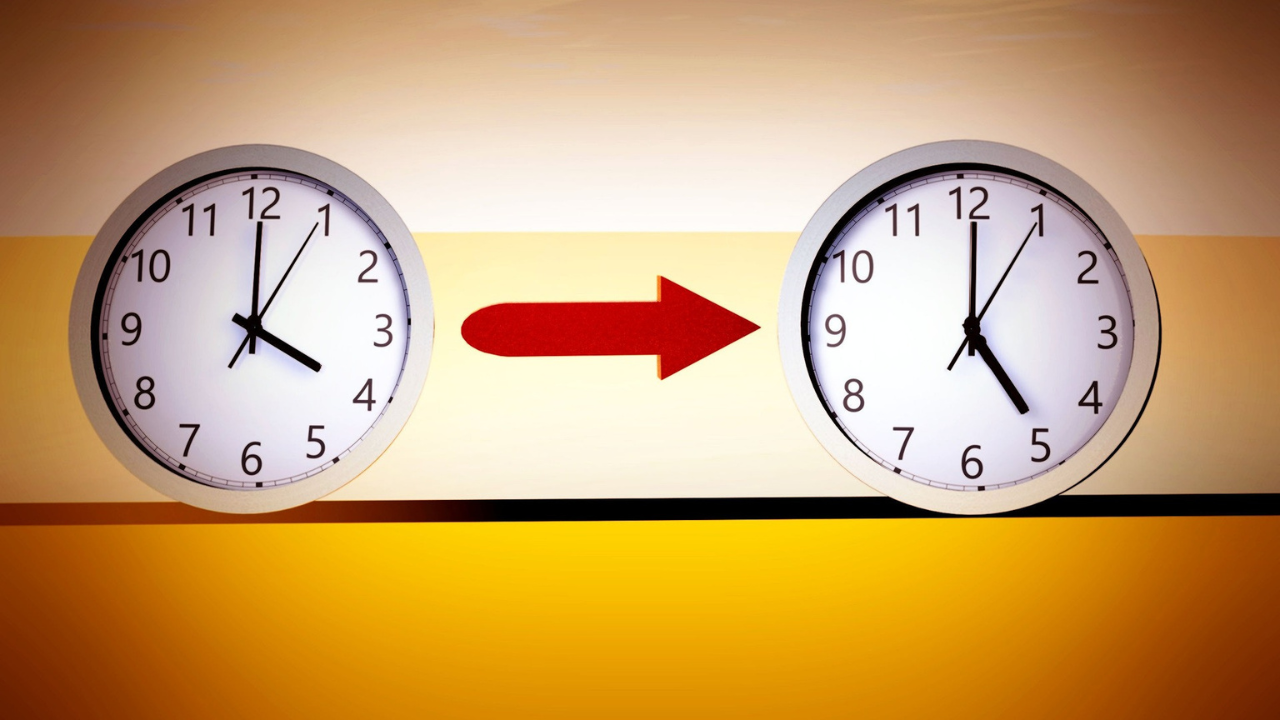
Daylight saving time began in most parts of the United States at 2 a.m. Sunday, March 8. Clocks moved forward by one hour, creating a 23-hour day. The change affected daily routines such as travel to work and sleep schedules. Many Americans continue to question the system of changing clocks twice each year. A national poll shows that many people do not support the practice. Lawmakers and experts remain divided about whether the country should keep daylight saving time all year or return to standard time permanently.Daylight saving time started as a way to use more evening daylight and possibly reduce energy use. Time zones in the United States were first organized in 1883 to help railroad schedules. Governments later used daylight saving time during several periods, including wartime. International records show that about 140 countries have used the system, although fewer countries still use it today. Some studies say sudden clock changes can affect sleep patterns and daily body cycles. Transportation research also shows a short increase in accidents after the spring clock change. Congress has discussed plans to create a permanent national time system, but leaders have not reached an agreement. For now, most parts of the United States continue changing clocks each spring and fall.
True or False:
Read the sentences and identify if they are true or false based on the article.
文章を読んで、記事に基づいて正誤を答えましょう。
- During daylight saving time, clocks moved back by one hour.
- The time change created a 24-hour day.
- The change affected daily routines such as travel to work and sleep schedules.
- Many people support the practice of changing clocks twice each year.
- Lawmakers and experts have already agreed on one permanent time system.
Fill in the Blanks:
Choose the correct word from the table, then fill in the blanks.
適切な言葉を選んで空欄を埋めましょう。
| practice | standard | wartime | sudden | accident |
- The company introduced new safety training after a factory ______.
- ______ often brings changes to transportation and communication systems.
- The factory uses ______ equipment to check product quality.
- The company ended the ______ of using paper forms and moved to digital records.
- The team made a ______ change in strategy during the game.