Pre-reading Questions:
I will read each question. Then, please answer them.
講師がそれぞれの質問を読むので答えましょう。
- Do you sometimes look at the moon at night?
- Would you like to learn more about space and astronomy?
Vocabulary:
I will read the words, meanings, and sample sentences. Then, repeat after me.
単語、意味、例文を読みます。講師に続いて音読しましょう。
- block /blok/
[verb] – to stop something from passing through or moving forward
The moon can block sunlight during a solar eclipse. - space /speys/
[noun] – the large area beyond Earth where the sun, moon, stars, and planets exist
Scientists study space to learn about planets and stars. - reach /reech/
[verb] – to arrive at or get to a place or person
Sunlight can reach the moon during certain phases of the lunar cycle. - astronomy /uh-STRON-uh-mee/
[noun] – the scientific study of stars, planets, and objects in space
Many students study astronomy to learn about the universe. - partial /PAHR-shuhl/
[adjective] – not complete; affecting only part of something
A partial eclipse happens when only part of the moon is covered.
Article Reading:
Please read the whole article. Then, I will check your pronunciation and intonation.
記事を音読しましょう。講師はあなたの発音とイントネーションを確認します。
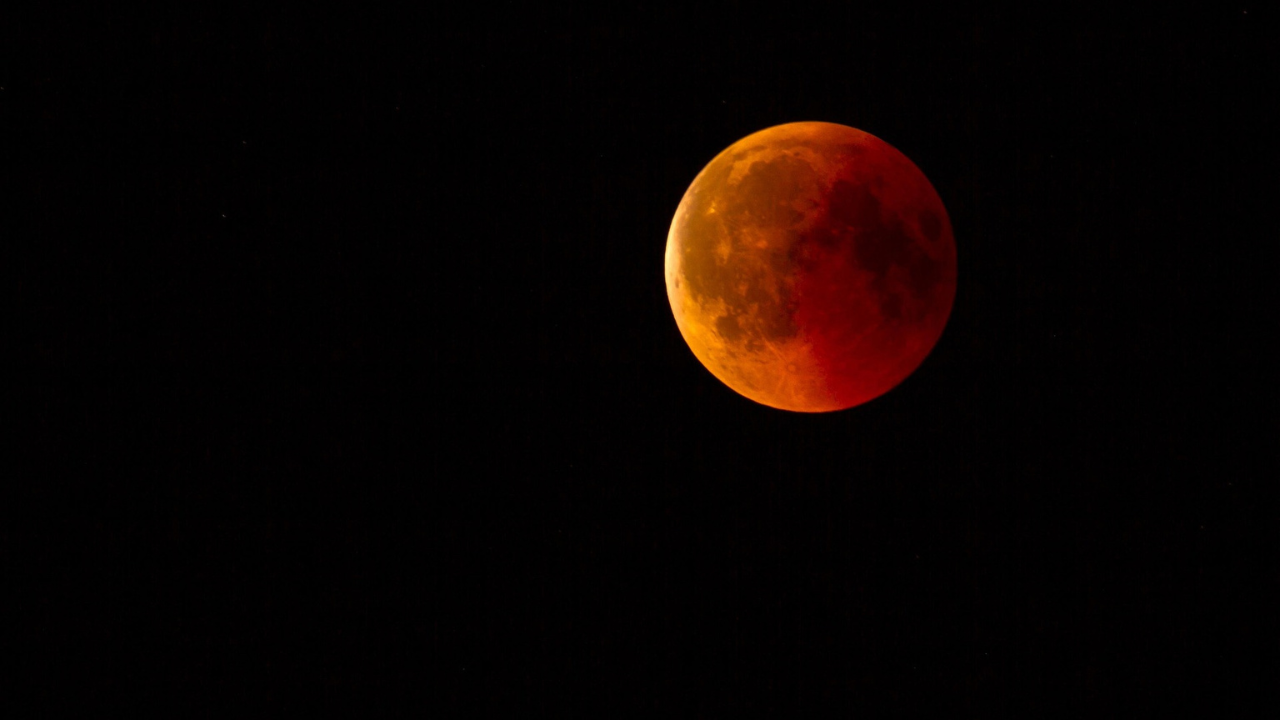
A total lunar eclipse created a red moon in mid-March and attracted attention from observers in many regions. The eclipse happened when Earth moved between the sun and the full moon and blocked sunlight. This caused Earth’s shadow to cover the moon. The eclipse was visible early in the morning in North America, Central America, and western South America. People in Australia and eastern Asia saw the event later at night. Astronomical groups said lunar eclipses happen several times each year when the sun, Earth, and moon line up in space.During the main stage of the eclipse, the moon looked dark red for about one hour. Researchers said the color appeared because Earth’s atmosphere changed the sunlight that reached the moon. The light effect is similar to colors seen during sunrise and sunset. Observatories said the eclipse helped increase public interest in astronomy. Astronomy applications and sky-monitoring tools helped observers follow the timing of the event. Another partial lunar eclipse will happen in August and will be visible in parts of the Americas, Europe, Africa, and western Asia.
True or False:
Read the sentences and identify if they are true or false based on the article.
文章を読んで、記事に基づいて正誤を答えましょう。
- A total lunar eclipse created a red moon in mid-March.
- The eclipse happened when the moon moved between Earth and the sun.
- People in Australia and eastern Asia saw the eclipse later at night.
- Astronomical groups said lunar eclipses happen only once every ten years.
- Researchers said the color of the moon changed because of Earth’s atmosphere.
Fill in the Blanks:
Choose the correct word from the table, then fill in the blanks.
適切な言葉を選んで空欄を埋めましょう。
| block | space | reach | astronomy | partial |
- Light from the sun can ______ Earth and warm the planet.
- Interest in ______ often increases after people observe events like eclipses in the night sky.
- The city experienced a ______ power outage during the storm.
- Dark clouds sometimes ______ sunlight and make the sky look gray.
- A new satellite was sent into ______ to collect weather data.