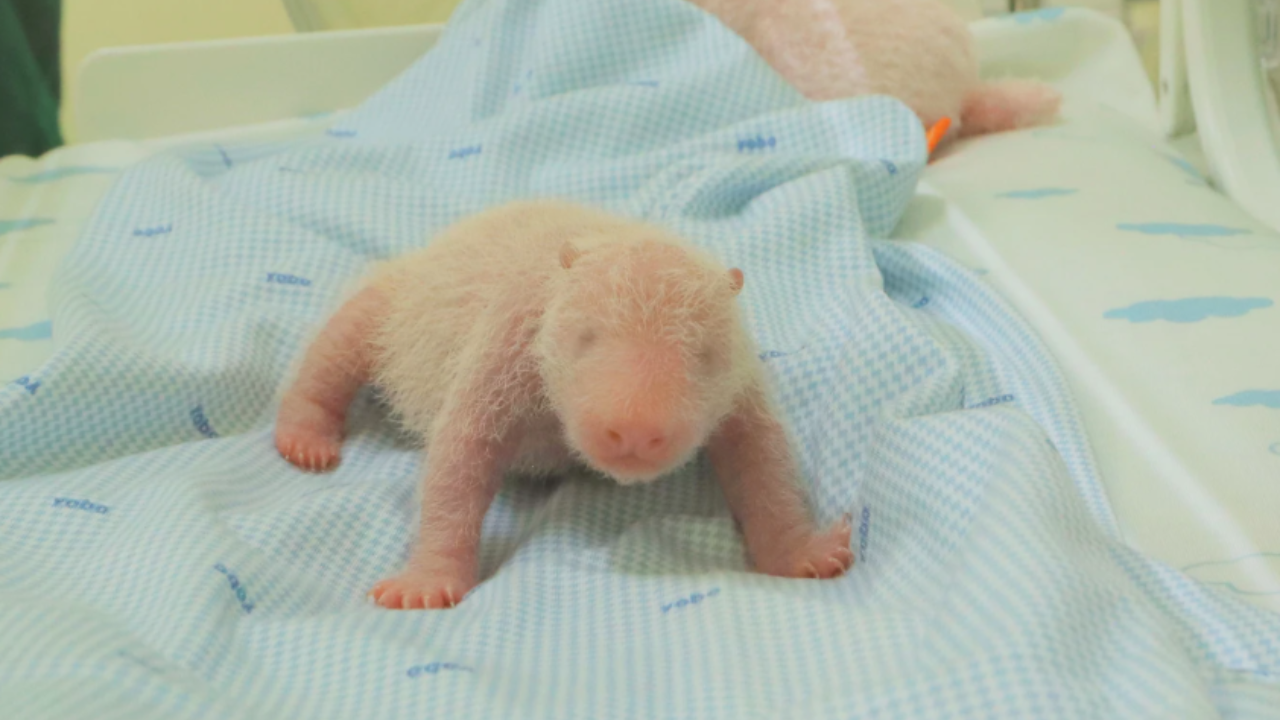
©Taman Safari Indonesia via AP
Pre-reading Questions:
I will read each question. Then, please answer them.
- What animals are famous symbols of certain countries?
- Why do people try to protect endangered animals?
Vocabulary:
I will read the words, meanings, and sample sentences. Then, repeat after me.
- endangered /en-DEYN-jerd/
[adjective] – in danger of becoming extinct
The government created laws to protect endangered animals. - partnership /PAHRT-ner-ship/
[noun] – the state of working with someone else to achieve something
The two countries formed a partnership to study wildlife. - monitor /MON-i-ter/
[verb] – to watch and check something carefully over a period of time
Scientists monitor animal health in research centers. - habitat /HAB-i-tat/
[noun] – the natural environment in which an animal or plant usually lives
Many animals lose their habitat because of forest destruction. - cooperation /koh-op-uh-REY-shuhn/
[noun] – the process of working together to achieve the same goal
International cooperation helps solve environmental problems.
Article Reading:
Please read the whole article. Then, I will check your pronunciation and intonation.
Indonesia recently celebrated an important wildlife event with the birth of the country’s first giant panda cub. The cub, named Satrio Wiratama and also called Rio, was born on Nov. 27 at Indonesian Safari Park in Cisarua, West Java. Park officials reported Sunday that the newborn panda is healthy and active, making strong sounds and feeding well from the mother panda, Hu Chun. Indonesian President Prabowo Subianto later introduced the cub’s name during a meeting with a senior Chinese political adviser. The birth highlights growing international efforts to protect endangered species and strengthen wildlife partnership programs between Indonesia and China.
Park veterinarians and animal specialists continue to monitor the cub closely to ensure healthy development. Early signs show steady weight gain, strong nursing behavior, and increasing movement inside the nursery area. Over the next few weeks, the cub is expected to develop better temperature control, thicker fur, and the ability to open the eyes. The adult pandas arrived in Indonesia in 2017 as part of a ten-year wildlife program supported by both governments. Giant pandas are native to mountainous forests in China, where their natural habitat remains limited. Because pandas are rare and difficult to breed, every successful birth is considered valuable for global cooperation in protecting wildlife populations.
Park veterinarians and animal specialists continue to monitor the cub closely to ensure healthy development. Early signs show steady weight gain, strong nursing behavior, and increasing movement inside the nursery area. Over the next few weeks, the cub is expected to develop better temperature control, thicker fur, and the ability to open the eyes. The adult pandas arrived in Indonesia in 2017 as part of a ten-year wildlife program supported by both governments. Giant pandas are native to mountainous forests in China, where their natural habitat remains limited. Because pandas are rare and difficult to breed, every successful birth is considered valuable for global cooperation in protecting wildlife populations.
Comprehension Questions:
I will read each question. Then, please answer them based on the article.
- Where was the panda cub born?
- When was the panda cub born?
- What name was given to the cub?
- What signs show that the cub is healthy?
- Who introduced the cub’s name?
Discussion Questions:
I will read each question. Then, please answer them.
- Have you ever seen a giant panda in real life? If so, where did you see it? If not, where would you like to see one?
- Have you ever learned about endangered animals at school or online? If so, what animal did you learn about? If not, which animal would you like to learn about?
- Do you agree that countries should work together to protect endangered animals?
- Why do people feel excited when rare animals are born?
- How might conservation programs help animals survive in the future?