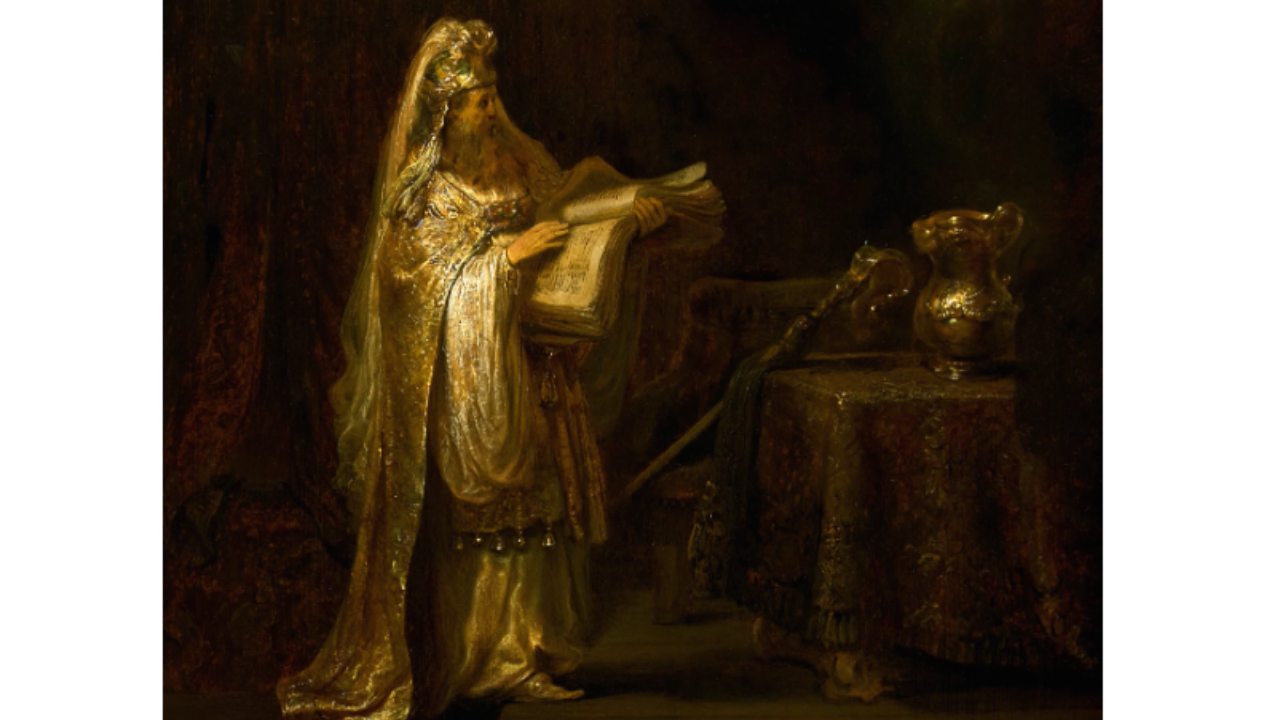
©AP Photo/Peter Dejong
Vocabulary:
I will read the words, meanings, and sample sentences. Then, repeat after me.
- scrutiny /SKROO-tuh-nee/
[noun] – careful and detailed examination of something
The proposal faced intense scrutiny from international experts. - unveil /uhn-VAYL/
[verb] – to show or introduce something new to the public for the first time
The museum unveiled a rare sculpture during the ceremony. - painstaking /PEYNZ-tey-king/
[adjective] – done with great care and attention to detail
Scientists conducted painstaking research before publishing the results. - anonymous /uh-NON-uh-muhs/
[adjective] – made or done by someone whose name is not known or not made public
An anonymous donor funded the new library building. - depict /dih-PIKT/
[verb] – to represent or show something in a picture or story
The painting depicts a peaceful village beside a river.
Article Reading:
Please read the whole article. Then, I will check your pronunciation and intonation.
A painting once dismissed as a work by Dutch master Rembrandt van Rijn has now been authenticated after two years of scrutiny in Amsterdam, the Netherlands, where the artist created the piece in 1633 at age twenty-seven. The Rijksmuseum, the nation’s leading museum of art and history, unveiled the painting titled “Vision of Zacharias in the Temple” on Monday, confirming that detailed research supports Rembrandt’s authorship. The artwork had remained hidden from public view for decades after a private collector purchased it in 1961, shortly after experts rejected the attribution. Beginning Wednesday, the painting will appear on public display at the Rijksmuseum on long-term loan. Specialists say rediscoveries of works by the celebrated Golden Age painter occur rarely among the roughly three hundred fifty paintings currently recognized as authentic.
Researchers conducted painstaking technical analysis, including macro X-ray fluorescence scanning and comparisons with other works known to belong to Rembrandt. Evidence from wood panels, pigments, and painting techniques strongly aligned with materials and methods used by the artist during the early seventeenth century. Museum director Taco Dibbits explained that collectors frequently contact the institution seeking confirmation of possible Rembrandt works, yet successful discoveries resemble finding a needle in a haystack. The anonymous owner initially requested only confirmation that the artwork originated in the Netherlands. Further study revealed that the painting depicts a biblical moment in which the Archangel Gabriel appears to the priest Zacharias, announcing the birth of John the Baptist. Scholars believe the discovery strengthens understanding of Rembrandt’s early Amsterdam period.
Researchers conducted painstaking technical analysis, including macro X-ray fluorescence scanning and comparisons with other works known to belong to Rembrandt. Evidence from wood panels, pigments, and painting techniques strongly aligned with materials and methods used by the artist during the early seventeenth century. Museum director Taco Dibbits explained that collectors frequently contact the institution seeking confirmation of possible Rembrandt works, yet successful discoveries resemble finding a needle in a haystack. The anonymous owner initially requested only confirmation that the artwork originated in the Netherlands. Further study revealed that the painting depicts a biblical moment in which the Archangel Gabriel appears to the priest Zacharias, announcing the birth of John the Baptist. Scholars believe the discovery strengthens understanding of Rembrandt’s early Amsterdam period.
Discussion Questions:
I will read each question. Then, please answer them.
- Have you ever visited an art museum that displayed famous paintings? If so, what did the experience feel like? If not, what type of art museum would be interesting to visit?
- Have you ever discovered that an old object had unexpected historical value? If so, what was learned from the discovery? If not, what object might contain hidden value?
- Do you agree that advanced technology should always be used to verify historical artworks?
- What role do museums play in preserving cultural heritage?
- Why might discoveries of previously unknown artworks influence the understanding of history?
Summarization:
Please summarize the whole article using your own words and expressions. You will have one minute to prepare before you answer.
Describe:
Please explain the definition of each word listed below based on your understanding. You can provide example sentences if needed.
- authenticate
- artwork
- research
- comparison
- strengthen