©AP Photo/Yuki Iwamura
Vocabulary:
I will read the words, meanings, and sample sentences. Then, repeat after me.
- strategic /struh-TEE-jik/
[adjective] – carefully planned to achieve a specific goal
Retailers made strategic investments to attract younger shoppers. - paradigm shift /PAIR-uh-dime shift/
[noun] – a major change in the way people think about or do something
Online shopping caused a paradigm shift in how people buy beauty products. - iterative /IT-uh-rey-tiv/
[adjective] – involving repeated improvement over time
The retailer used an iterative process to refine customer experience. - credibility /kred-uh-BIL-i-tee/
[noun] – Meaning: the quality of being trusted or believed
Expert reviews helped build credibility for new brands. - viability /vahy-uh-BIL-i-tee/
[noun] – ability to succeed or continue effectively
Physical stores questioned their long-term viability.
Article Reading:
Please read the whole article. Then, I will check your pronunciation and intonation.
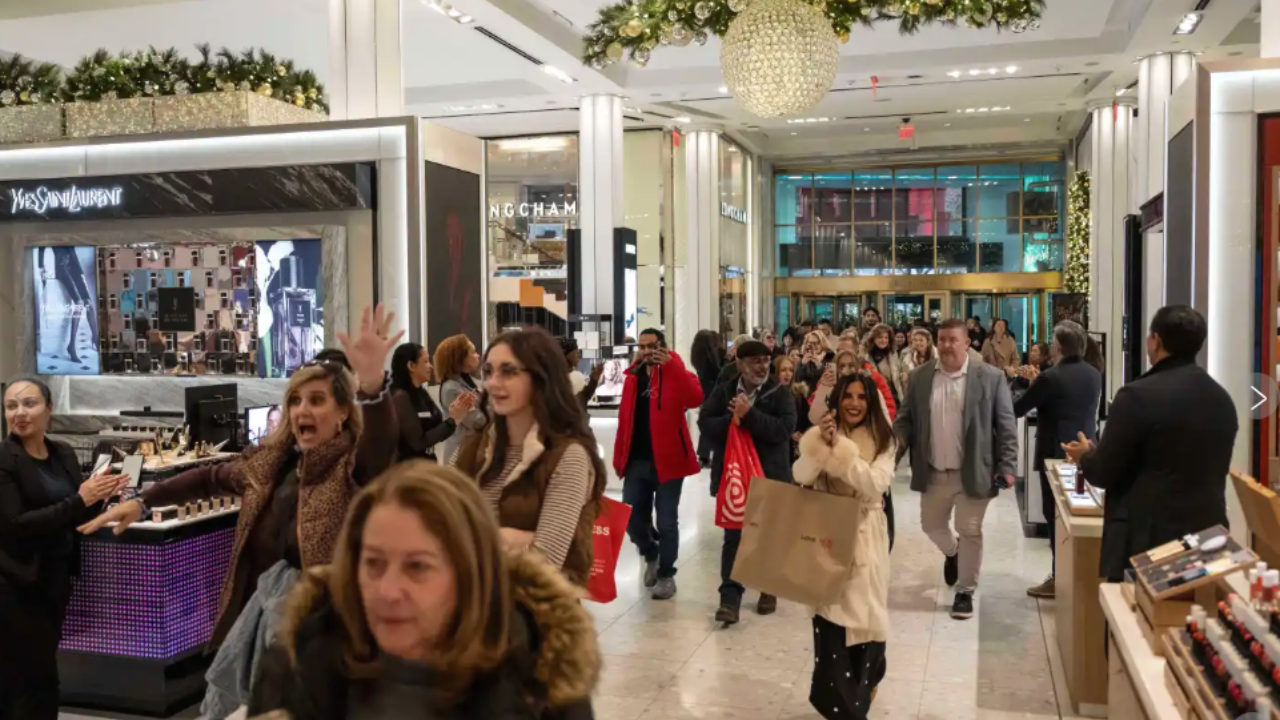
Department stores across the United States are accelerating investments in beauty technology and in-store services as social media and artificial intelligence reshape how consumers discover and purchase cosmetics. The shift reflects mounting pressure from online platforms such as TikTok, Amazon, and AI-powered recommendation tools, which increasingly influence buying decisions once guided by in-store advisers. Retail executives report that beauty shoppers now prioritize convenience, personalization, and digital inspiration, weakening department stores’ traditional role as trend authorities. Industry analysts estimate the U.S. beauty and personal care market at $129 billion, intensifying competition as retailers attempt to reclaim relevance during the critical holiday season, which generates roughly one-quarter of annual prestige beauty sales.
To respond, department stores are pursuing strategic renovations that emphasize immersive experiences unavailable through mobile screens alone. Macy’s and Nordstrom have redesigned flagship beauty floors to incorporate robotics, virtual reality, and appointment-based services, signaling a paradigm shift toward experiential retail. Executives describe the upgrades as an iterative process informed by consumer behavior rather than a single transformation. Market researchers note that while these initiatives enhance brand credibility, online rivals continue expanding at a faster pace. TikTok Shop has emerged as a major sales channel, while Amazon dominates nearly half of online beauty purchases. Despite these pressures, retailers argue that physical locations can retain viability by blending digital tools with sensory engagement, such as fragrance sampling and guided consultations. Whether these investments reverse declining market share remains uncertain, but industry leaders acknowledge that adaptation is no longer optional in an ecosystem increasingly shaped by algorithms, influencers, and self-directed consumers.
To respond, department stores are pursuing strategic renovations that emphasize immersive experiences unavailable through mobile screens alone. Macy’s and Nordstrom have redesigned flagship beauty floors to incorporate robotics, virtual reality, and appointment-based services, signaling a paradigm shift toward experiential retail. Executives describe the upgrades as an iterative process informed by consumer behavior rather than a single transformation. Market researchers note that while these initiatives enhance brand credibility, online rivals continue expanding at a faster pace. TikTok Shop has emerged as a major sales channel, while Amazon dominates nearly half of online beauty purchases. Despite these pressures, retailers argue that physical locations can retain viability by blending digital tools with sensory engagement, such as fragrance sampling and guided consultations. Whether these investments reverse declining market share remains uncertain, but industry leaders acknowledge that adaptation is no longer optional in an ecosystem increasingly shaped by algorithms, influencers, and self-directed consumers.
Discussion Questions:
I will read each question. Then, please answer them.
- What changes in beauty shopping have been seen in the community, if any? If so, how? If not, why?
- What technology use in stores has been observed, if any? If so, where? If not, why?
- Should stores invest heavily in in-person experiences?
- Can physical stores survive without digital integration?
- How might influencers affect consumer trust long-term?
Summarization:
Please summarize the whole article using your own words and expressions. You will have one minute to prepare before you answer.
Describe:
Please explain the definition of each word listed below based on your understanding. You can provide example sentences if needed.
- social media
- cosmetic
- immersive
- experiential
- uncertain